Quick summary
- A reindeer area sits beside the kennel, and seeing them is part of the two hours rather than a separate ticket.
- Nearly every reindeer in Finland is owned, earmarked and herded, even the ones standing in open forest.
- Winter feed is lichen and pellet, and visitors are generally able to hand it over.
- They are animals rather than an exhibit. Seeing them is likely; being promised them is not something an honest operator does.
Why there are reindeer next to a dog kennel
It looks incongruous to a visitor and it is completely normal in Lapland. Reindeer husbandry covers most of northern Finland, herds range across country that is also forest, farm and resort, and a husky operation sited outside a village is very likely to have reindeer somewhere near it.
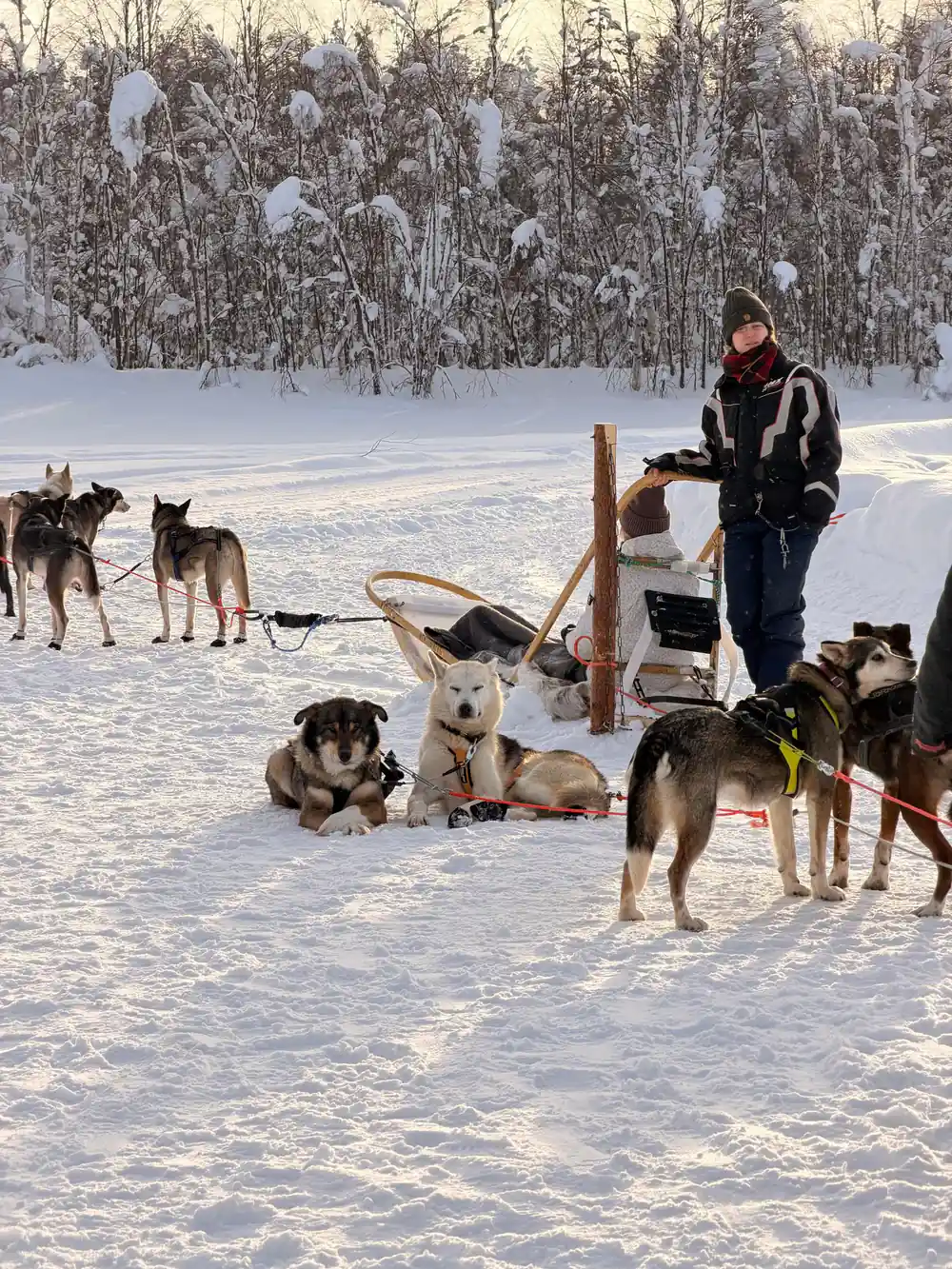
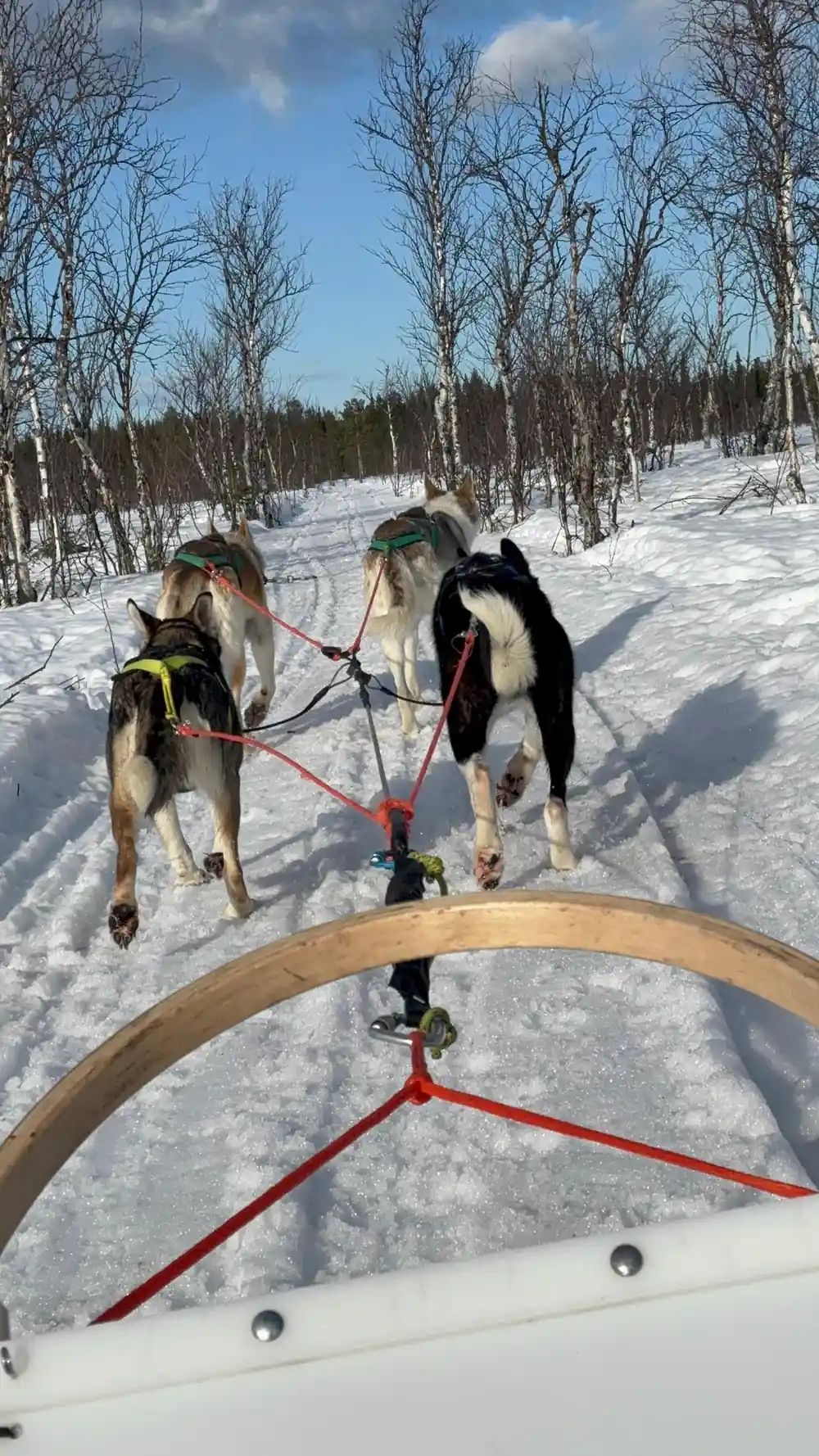
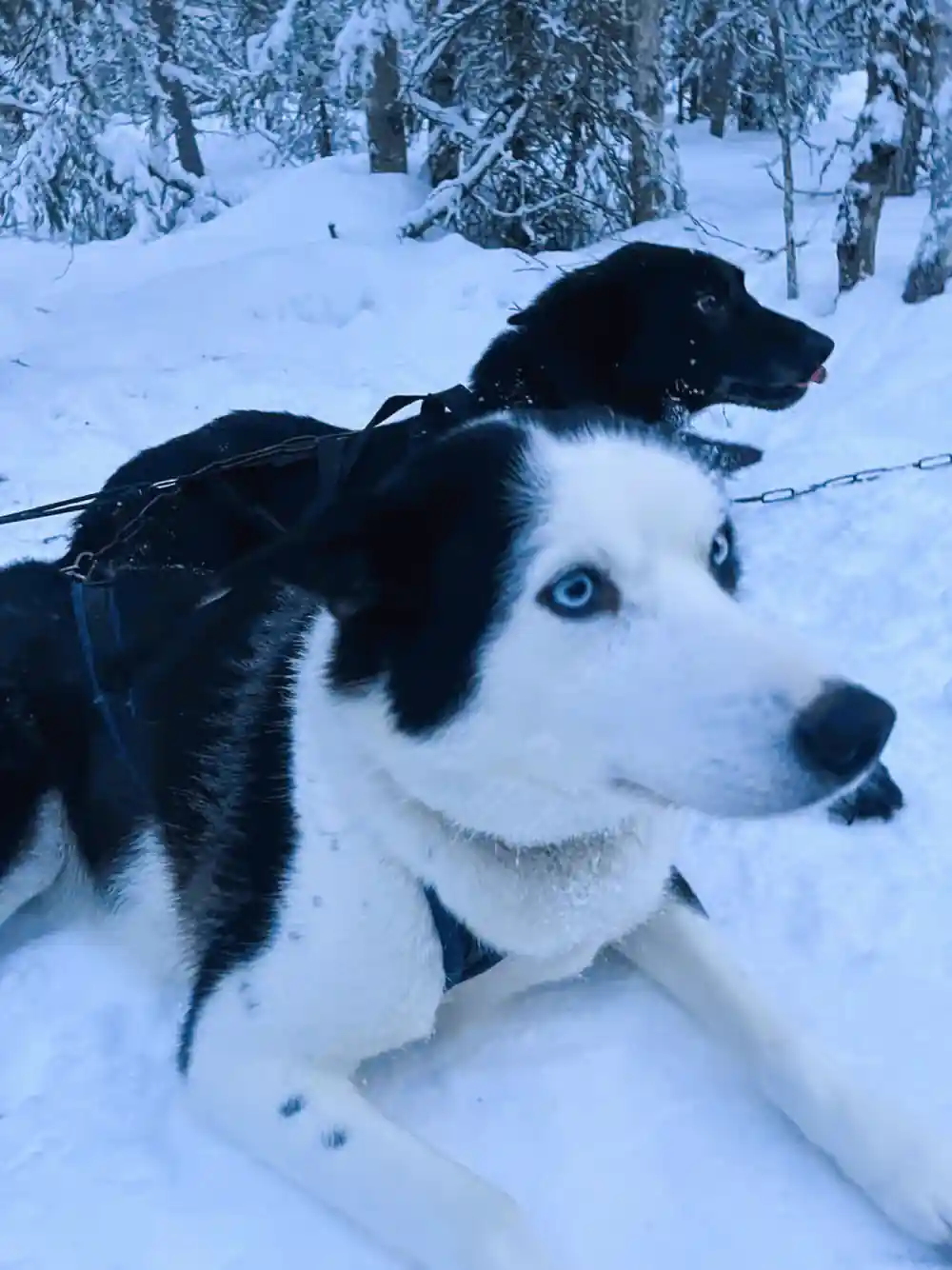
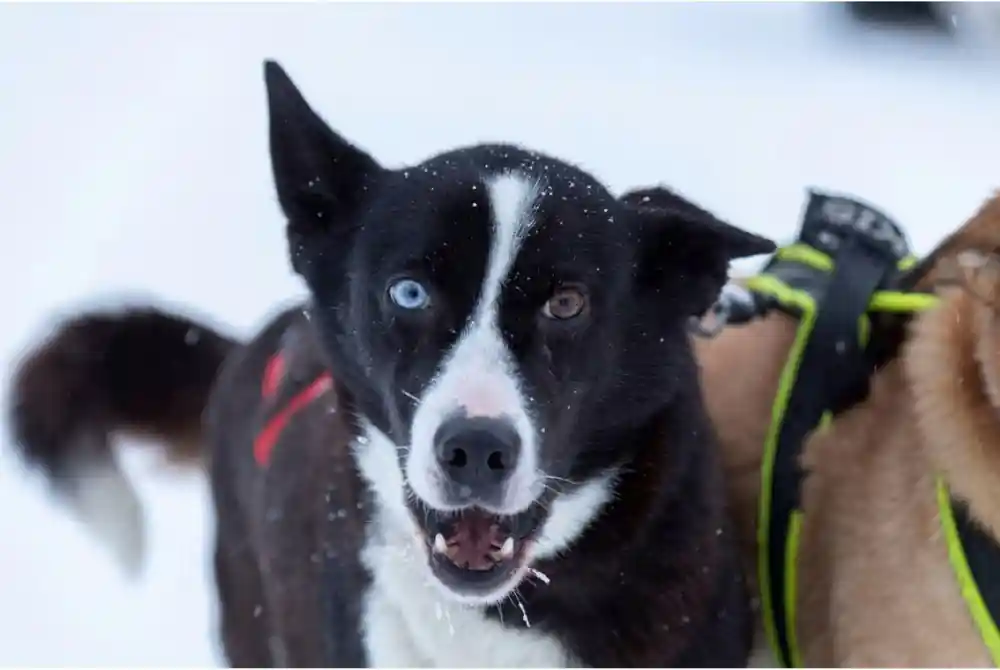
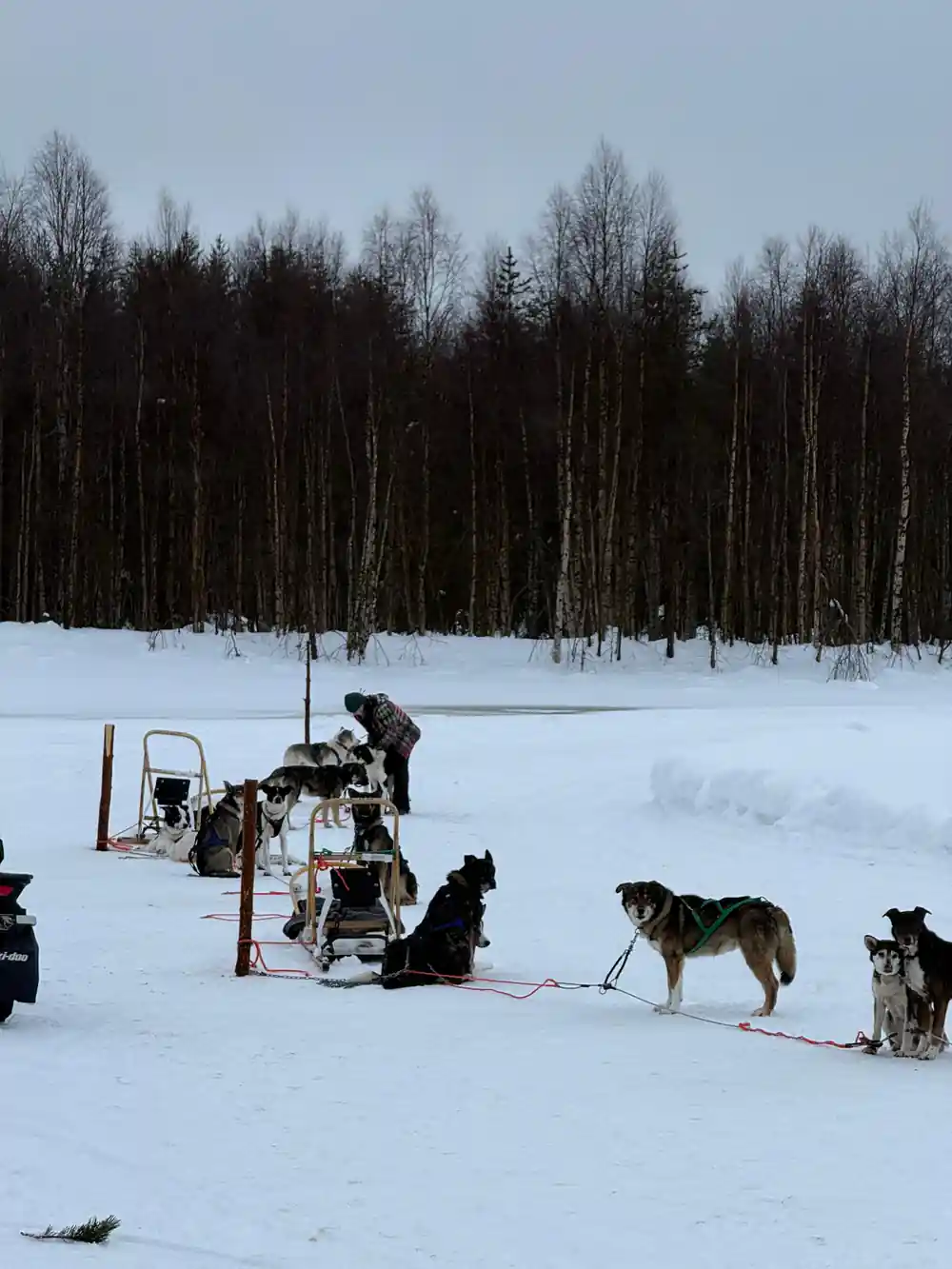
At Levi the reindeer area sits beside the husky base, and time to see and feed the animals is included in the two-hour booking. That gives a short tour two quite different animal encounters, which is unusual value for the length of it.
The dogs and the herd are kept well apart from one another, for reasons that will be immediately obvious to anyone who has ever watched a husky notice something moving in the distance.
Wild, or not
This is the question visitors ask first and it has a clearer answer than most people expect. Almost every reindeer in Finland is owned. They are semi-domesticated, they range freely for much of the year across enormous areas, and they are gathered periodically for counting, marking and separation.
Ownership is recorded by earmark: a pattern of cuts in the ear, unique to a herder, applied to calves. A reindeer standing in open forest a hundred kilometres from anywhere still belongs to somebody, and that somebody can prove it.
The genuinely wild animal is the forest reindeer, a separate and much rarer thing found further south and east. What you will see at Levi is a herded animal, and being herded is not the same as being tame.
A reindeer in deep snow beside the fence line at the husky base
How herding actually works
Finland is divided into herding cooperatives, each covering a defined area, and within them individual herders own animals that graze in common. For most of the year the animals look after themselves, moving between summer and winter ground and feeding on what they can find.
The gatherings are the fixed points of the year: the autumn round-up for separation and counting, and the spring calving. Modern herding uses snowmobiles, quad bikes and increasingly GPS collars, which sits oddly alongside the postcard image and is a great deal more practical.
It is a livelihood with legal protection and very deep roots in the region, particularly among the Sami, and it is the whole reason these animals are in this landscape at all.
What they eat, and what you will be handing them
The natural winter diet is lichen, which reindeer dig for through snow with their hooves and which is one of very few foods available in an Arctic winter. Their ability to digest it is unusual and is a large part of why they can live here.
In a hard winter, or where snow has frozen into a crust the animals cannot break, herders supplement with hay and specially formulated pellet. That is generally what a visitor is handed: a scoop of feed, offered flat-palmed or tipped into a trough.
They will take it readily and without ceremony. A reindeer being fed is not an affectionate animal; it is a large herbivore with somewhere else to be, briefly interested in your hand.
Both sexes
Reindeer are the only deer in which both sexes grow antlers. Bulls drop theirs after the autumn rut, so an antlered animal in January is almost certainly female.
Reindeer, caribou and antlers
They are the same species. Rangifer tarandus is called reindeer in Europe and caribou in North America, and the practical difference is that European animals are largely herded while North American ones are largely wild.
Reindeer are the only deer in which both sexes grow antlers, which is a genuinely useful fact for identifying what you are looking at. The timing differs: bulls drop theirs in late autumn after the rut, while females keep theirs through the winter and into calving.
Which means the impressive antlered animal in the snow in January is almost certainly female. The reindeer pulling the sleigh in every Christmas illustration, likewise.
How close you can get, and photographing them
Closer than with a wild animal and not as close as with a dog. Herded reindeer are used to people and will approach for feed, and they will move away again if crowded. The animal decides, and the correct approach is to let it.
For photographs the light is the problem rather than the distance. A brown animal against snow confuses most automatic exposure, which will underexpose the scene trying to make the snow grey. If your camera has exposure compensation, push it up.
Do not chase one for a better angle. Standing still with feed in your hand produces far better photographs than walking after an animal that has already decided to leave.
Is a sighting guaranteed
No, and an operator that promised one would be overstating it. The reindeer area is beside the base and seeing the animals is likely, but they are animals and days differ.
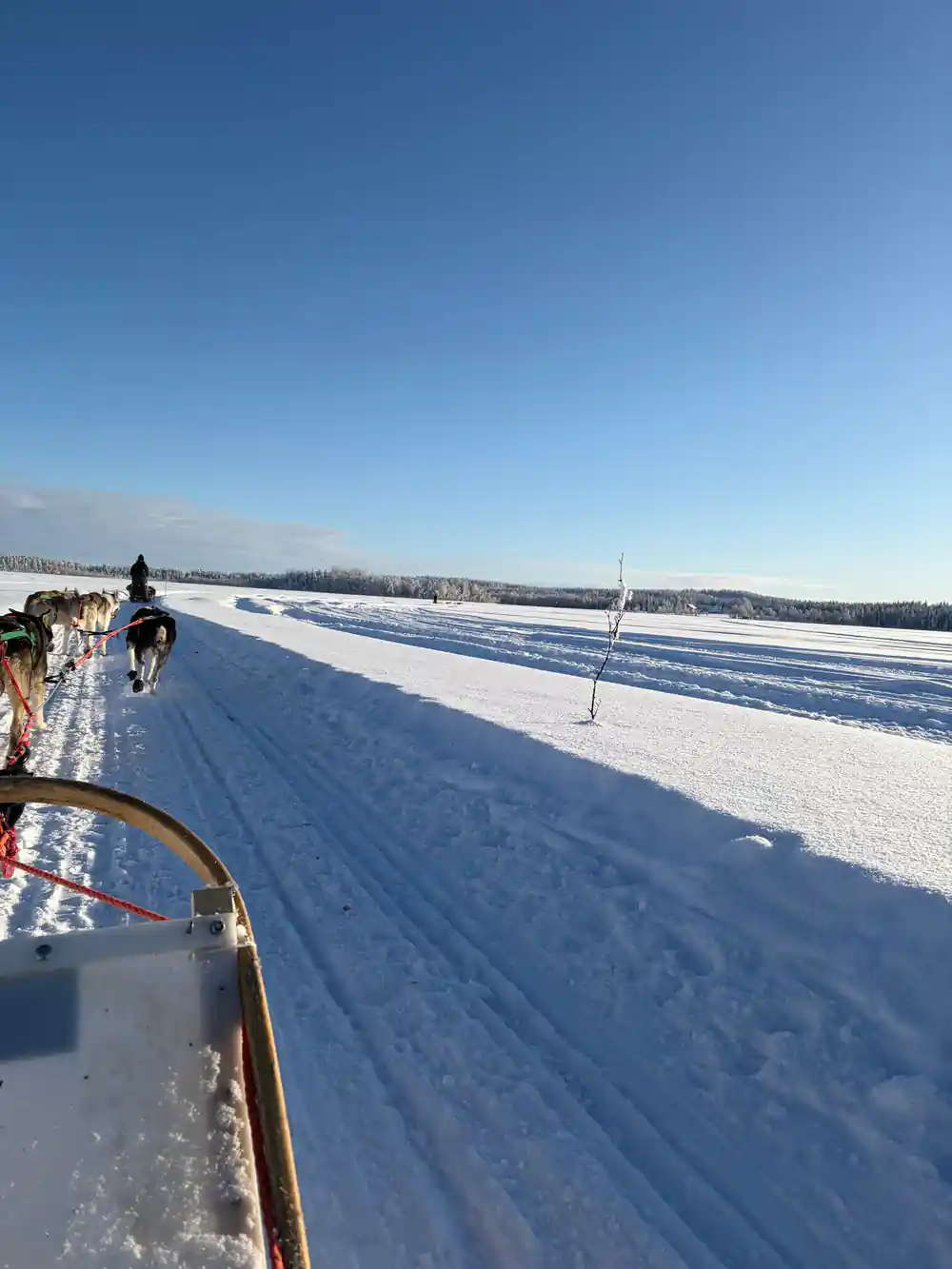
Treat it the way you would treat any wildlife element of any tour: as a strong probability that improves the booking rather than the reason for it. The five kilometres on the sled is the tour, and the reindeer are one of two very good reasons the two hours feel longer than they are.
If reindeer specifically are what you want, dedicated reindeer farm visits run in the same area and will give you an hour with the herd rather than a few minutes.
Huskies and reindeer, a fence apart, inside two hours
from US$173Reserve now & pay later