









What husky sledding in Levi actually involves
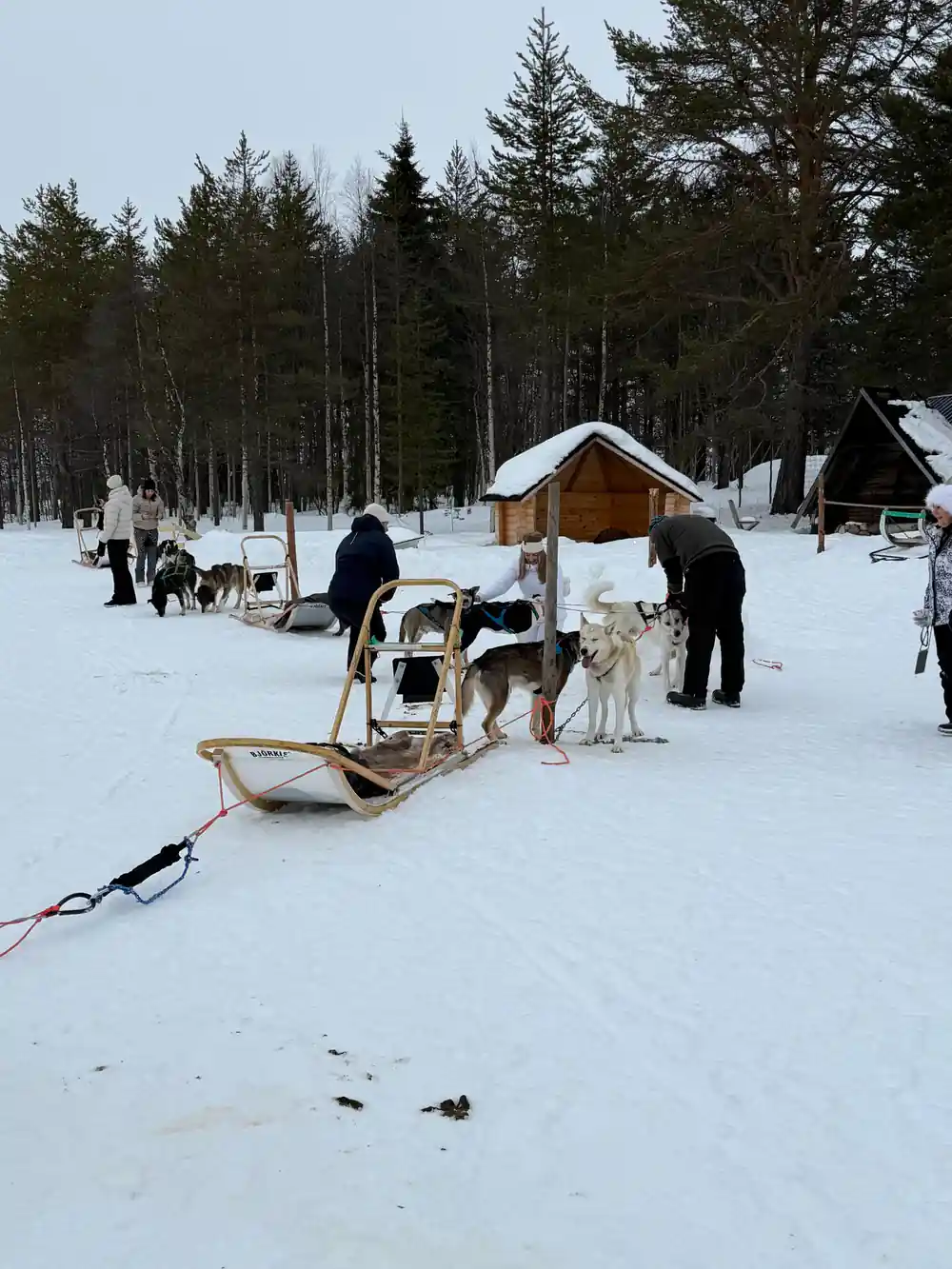
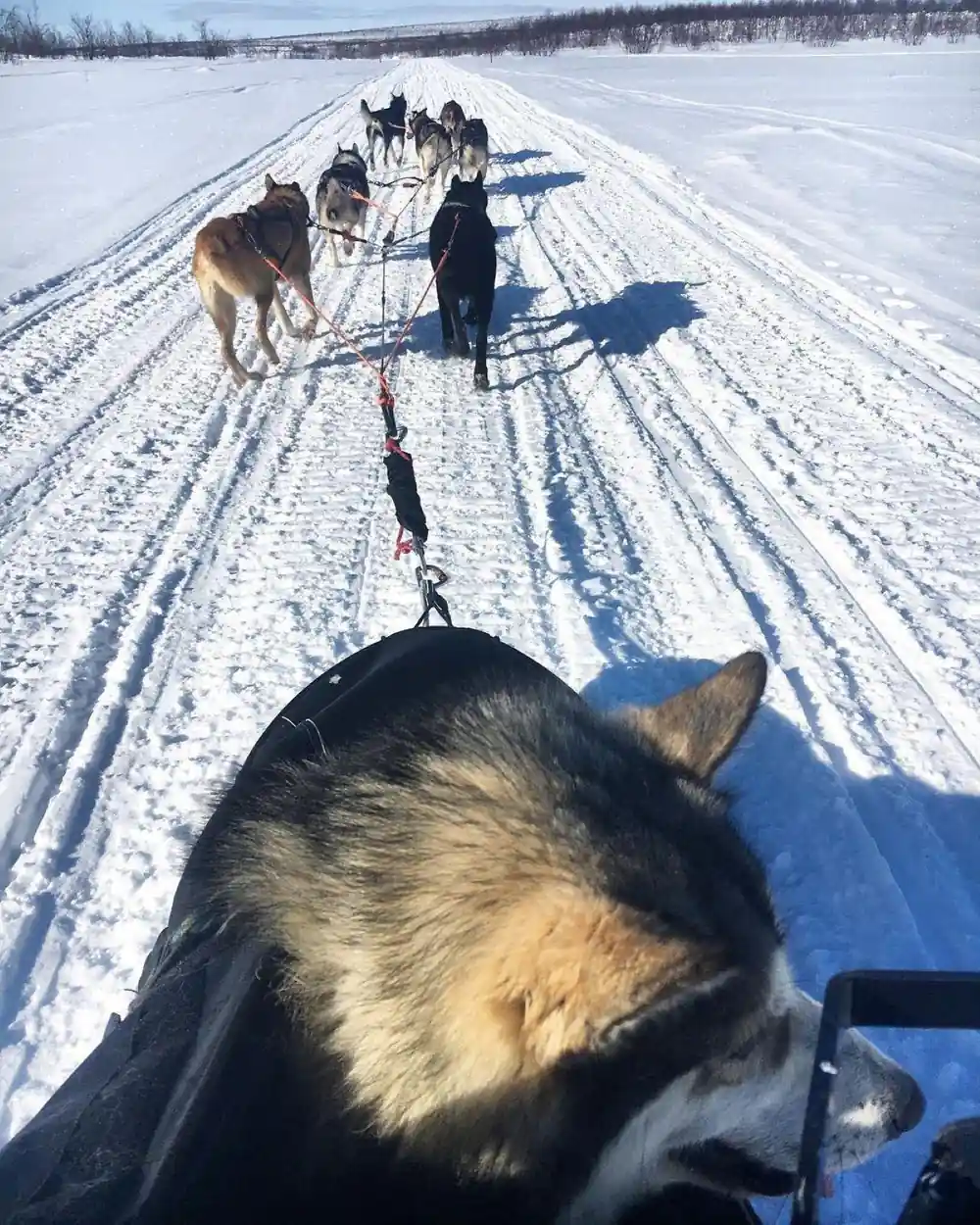
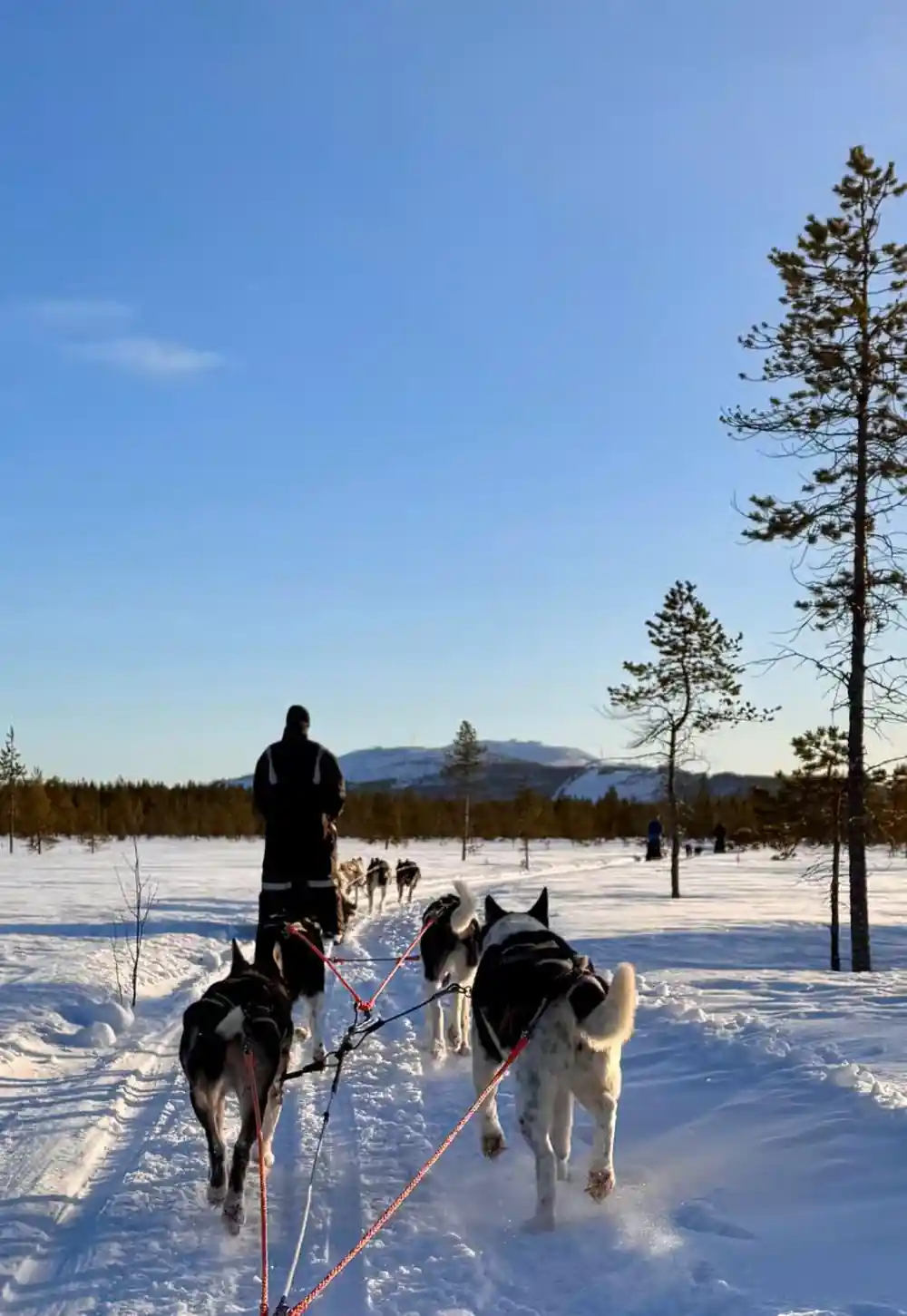
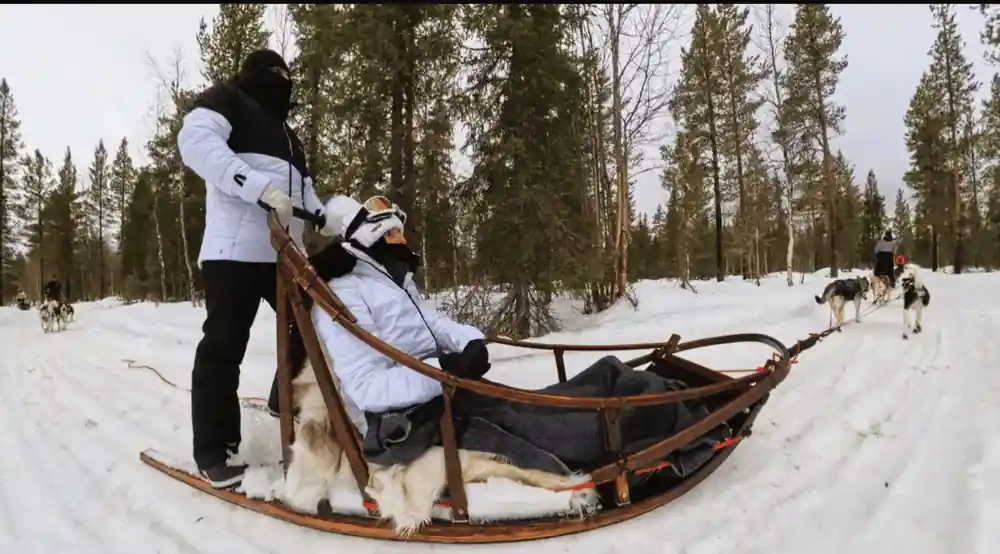
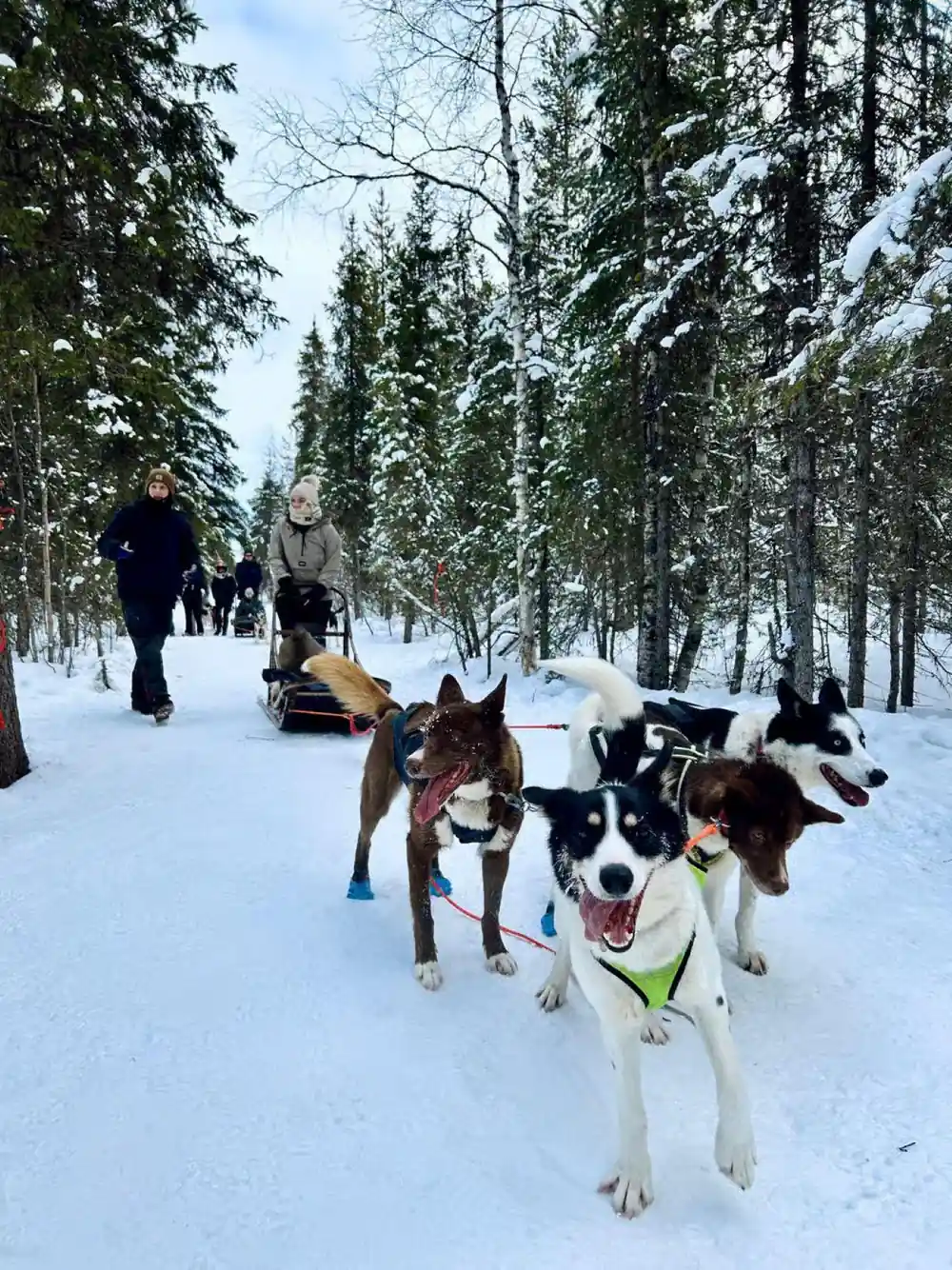
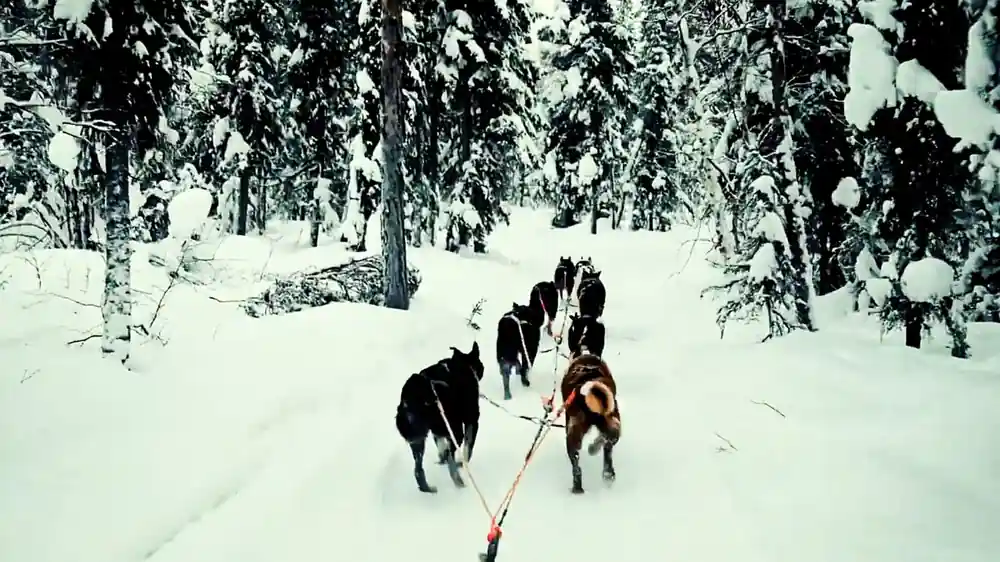
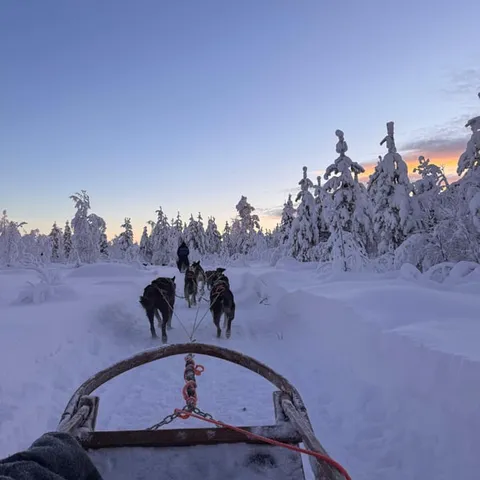
The booking is two hours from the moment you meet in the village to the moment you are dropped back there, and it is built around a five-kilometre run on a sled you drive yourself. That is the part worth being clear about before anything else, because a large share of Lapland husky tickets are rides rather than drives: you sit in the basket, wrapped in a blanket, while a musher stands behind you and works the brake.
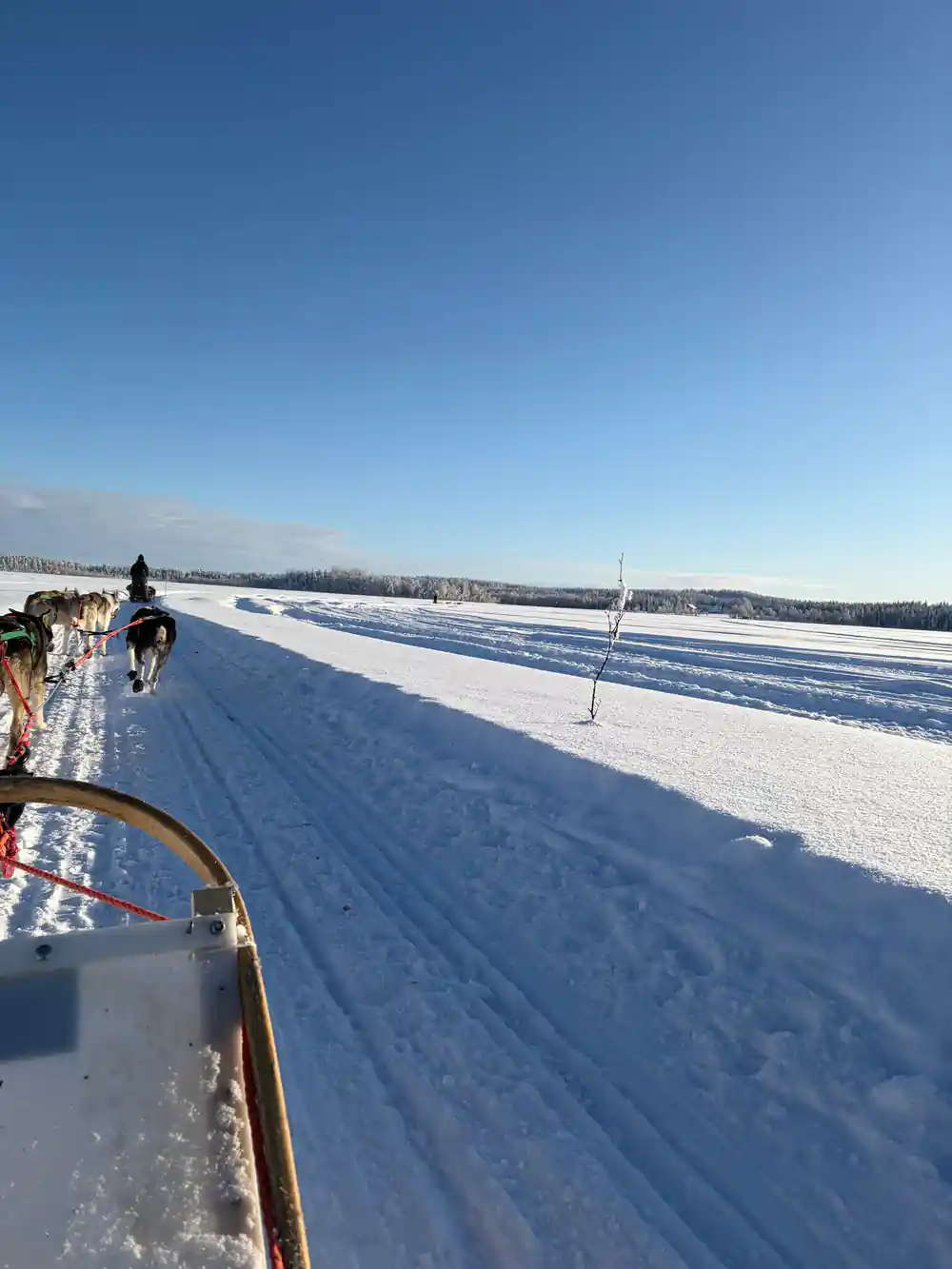
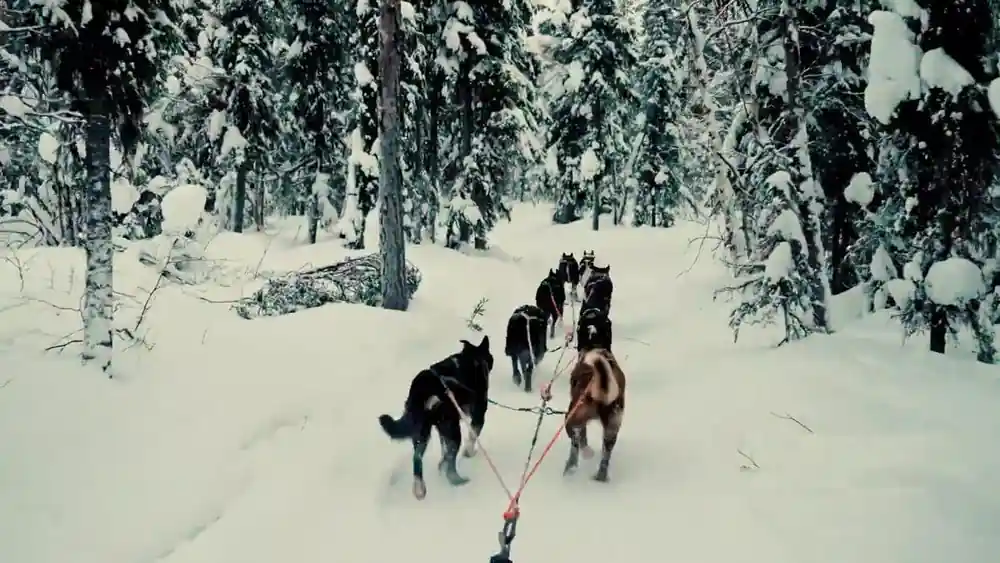
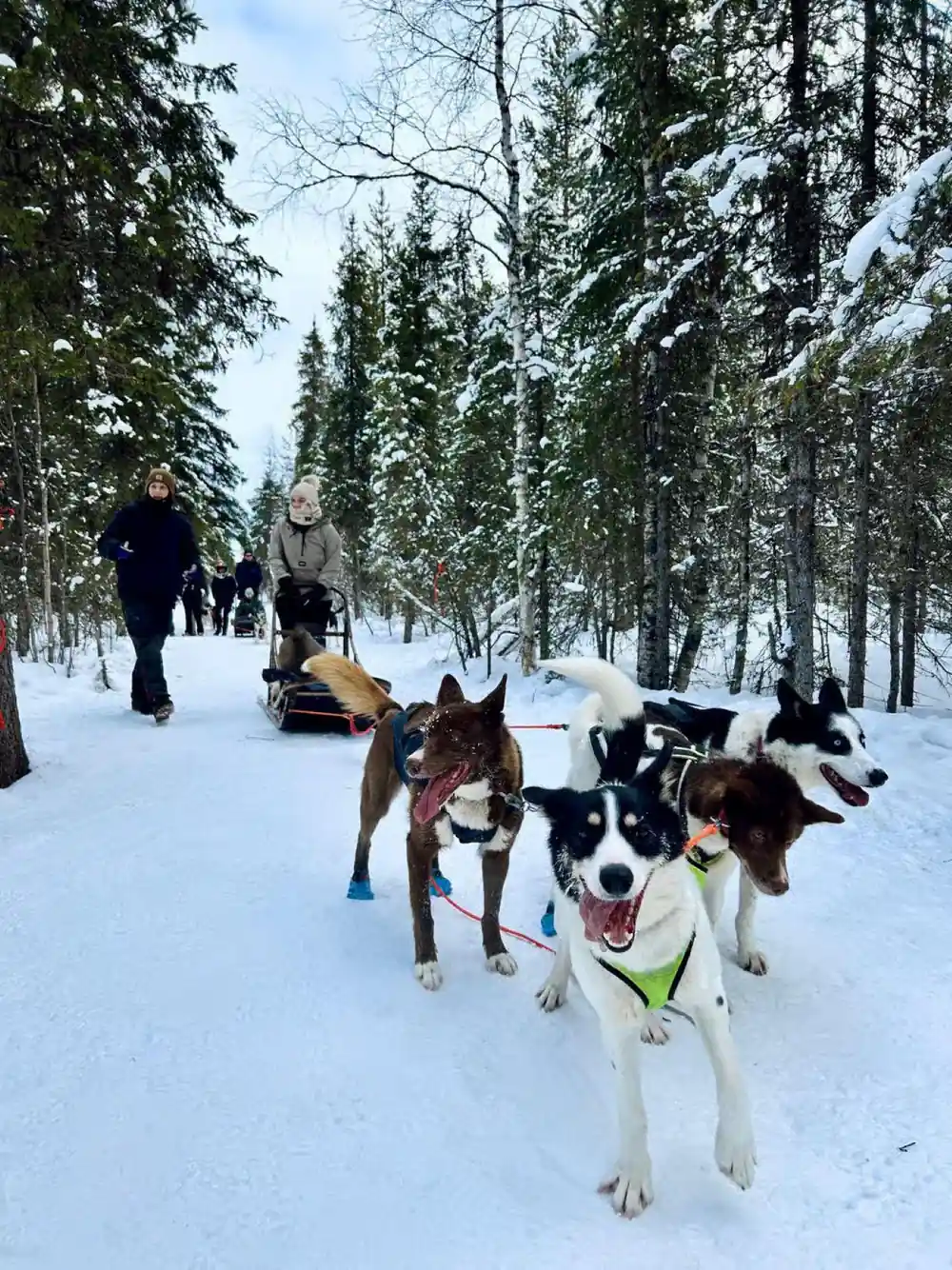
Here the sled is yours. A guide gives a briefing first, covering the brake, the snow hook, how to lean into a bend and what not to do if the team gets excited, and then rides alongside for the whole distance. Two people share a sled and swap over, so one drives while the other sits, and both get a turn on the runners.
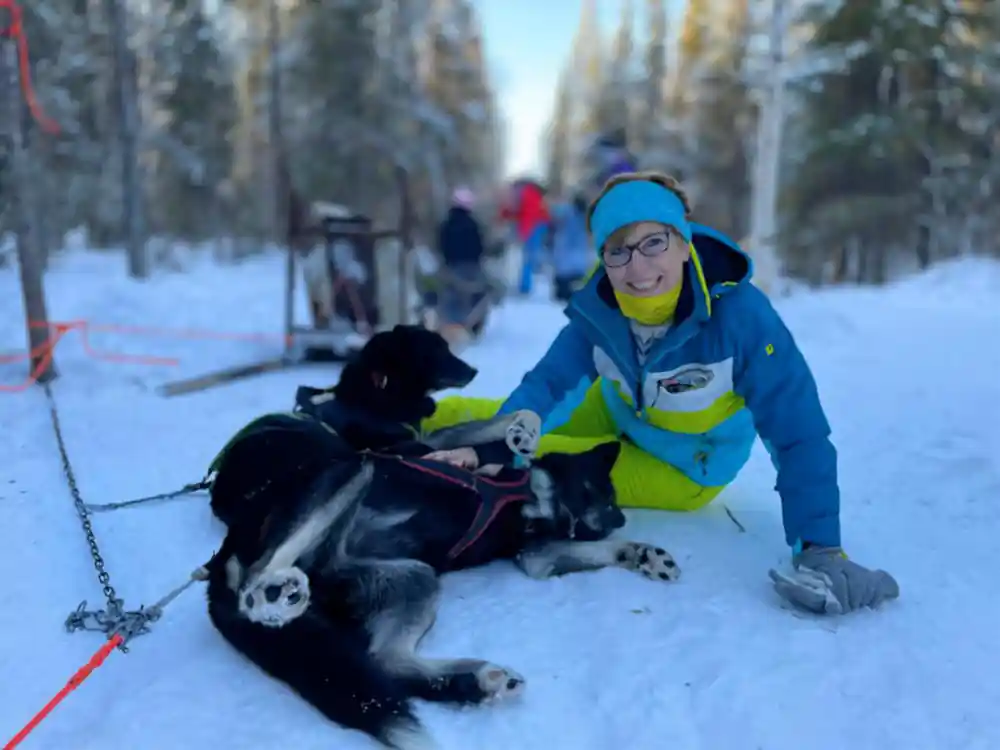
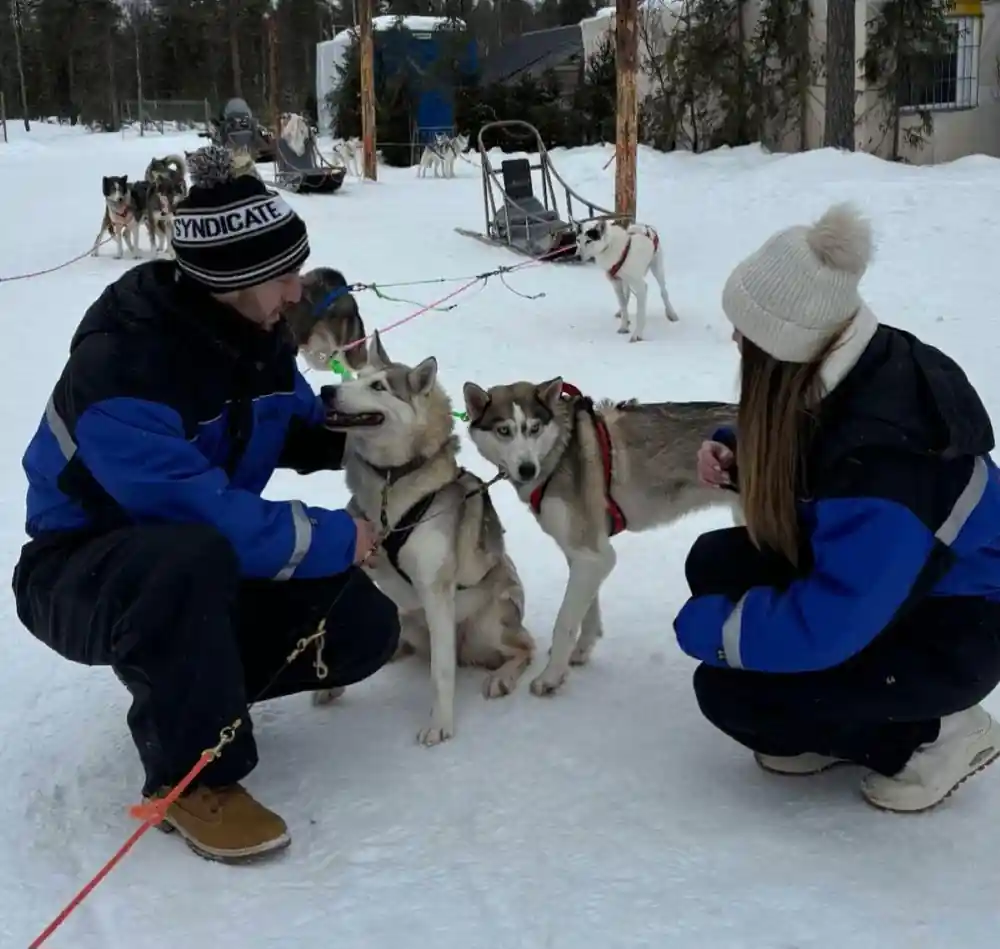
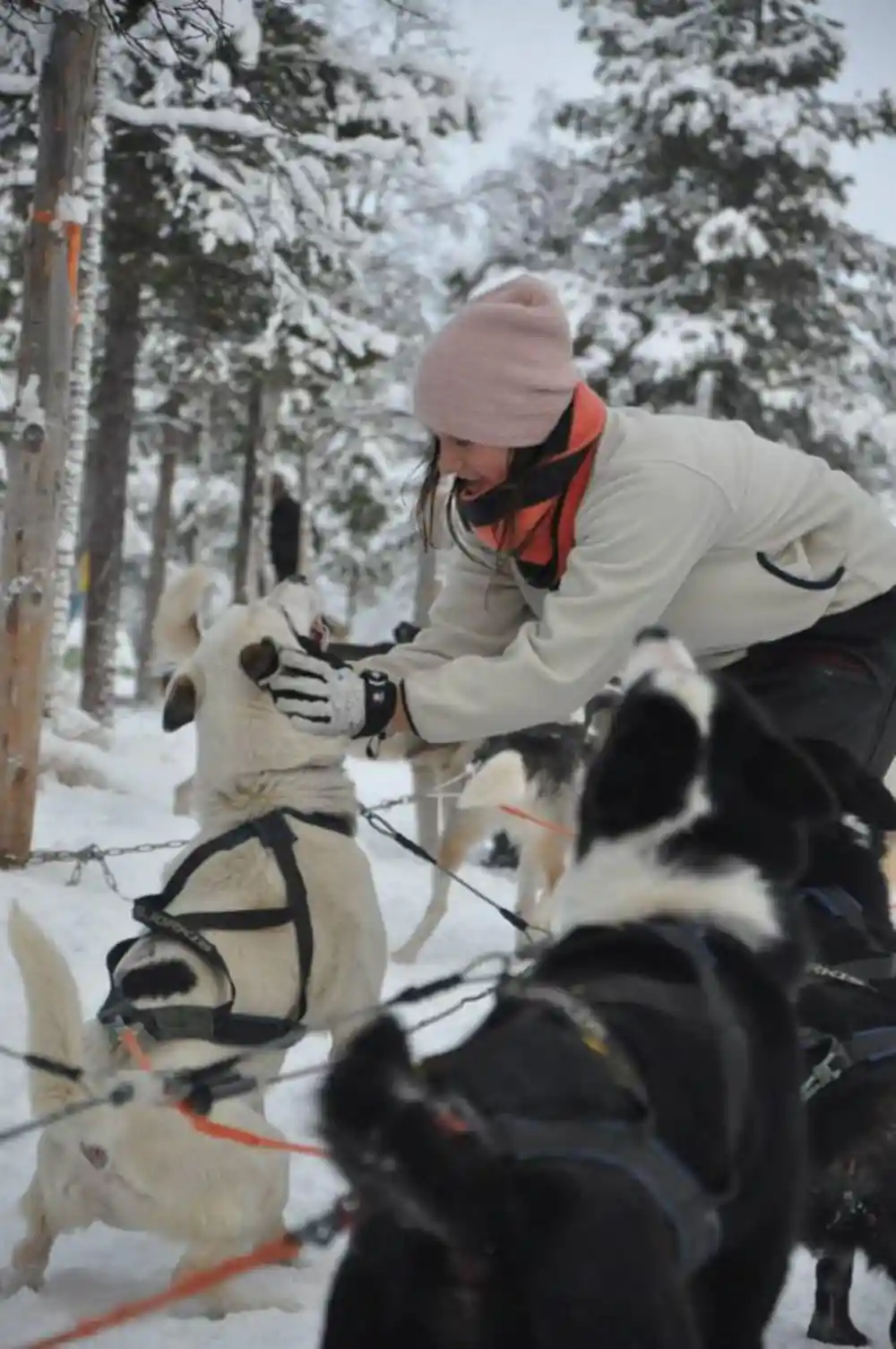
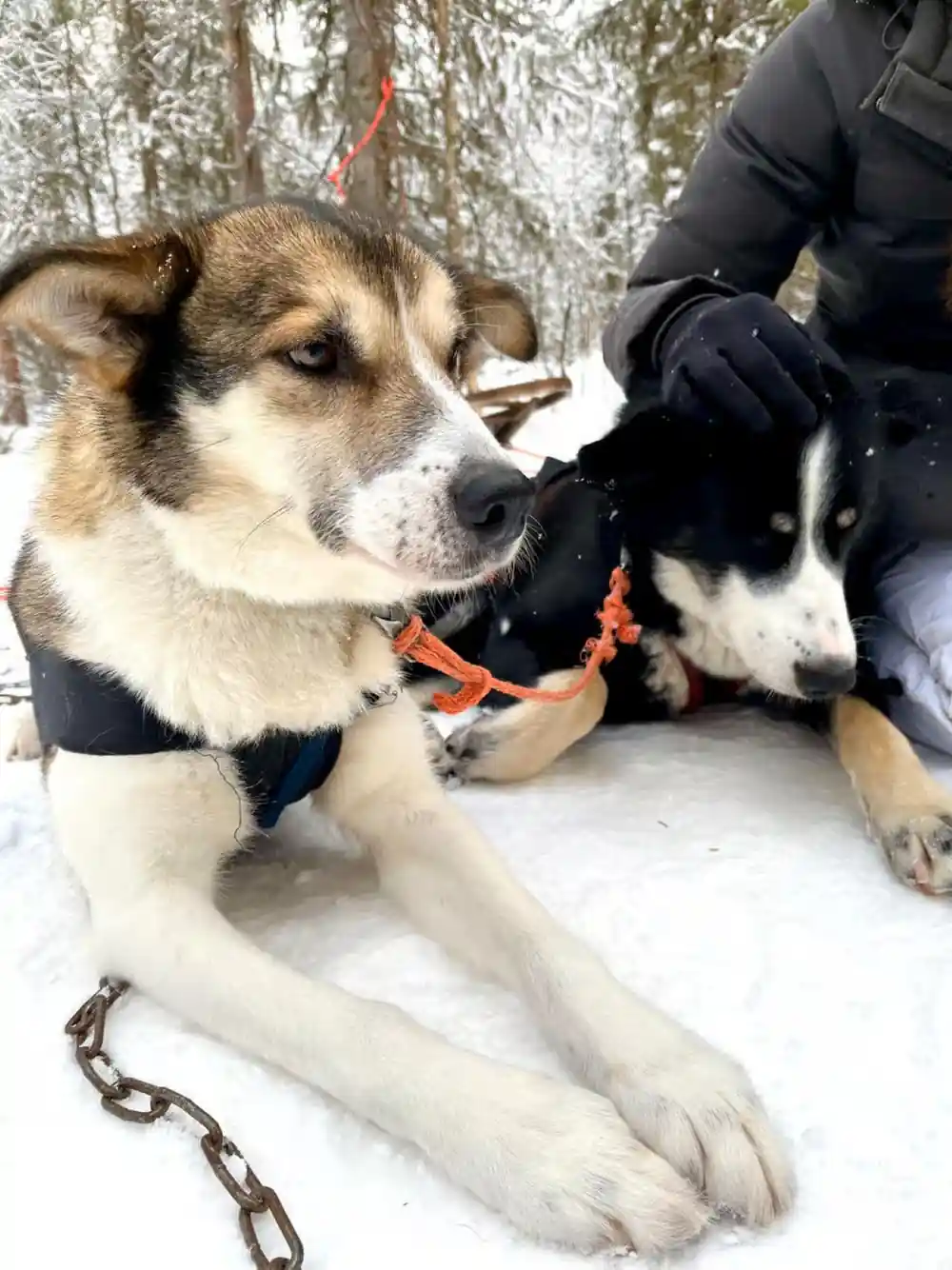
The rest of the two hours is transfer, harnessing and time with the animals. The drive out of Levi takes about ten minutes each way, the briefing and getting the team hooked up takes longer than most people expect, and the last stretch is spent with the dogs, the puppies and a hot drink in a heated shelter.
The five kilometres, and where they go
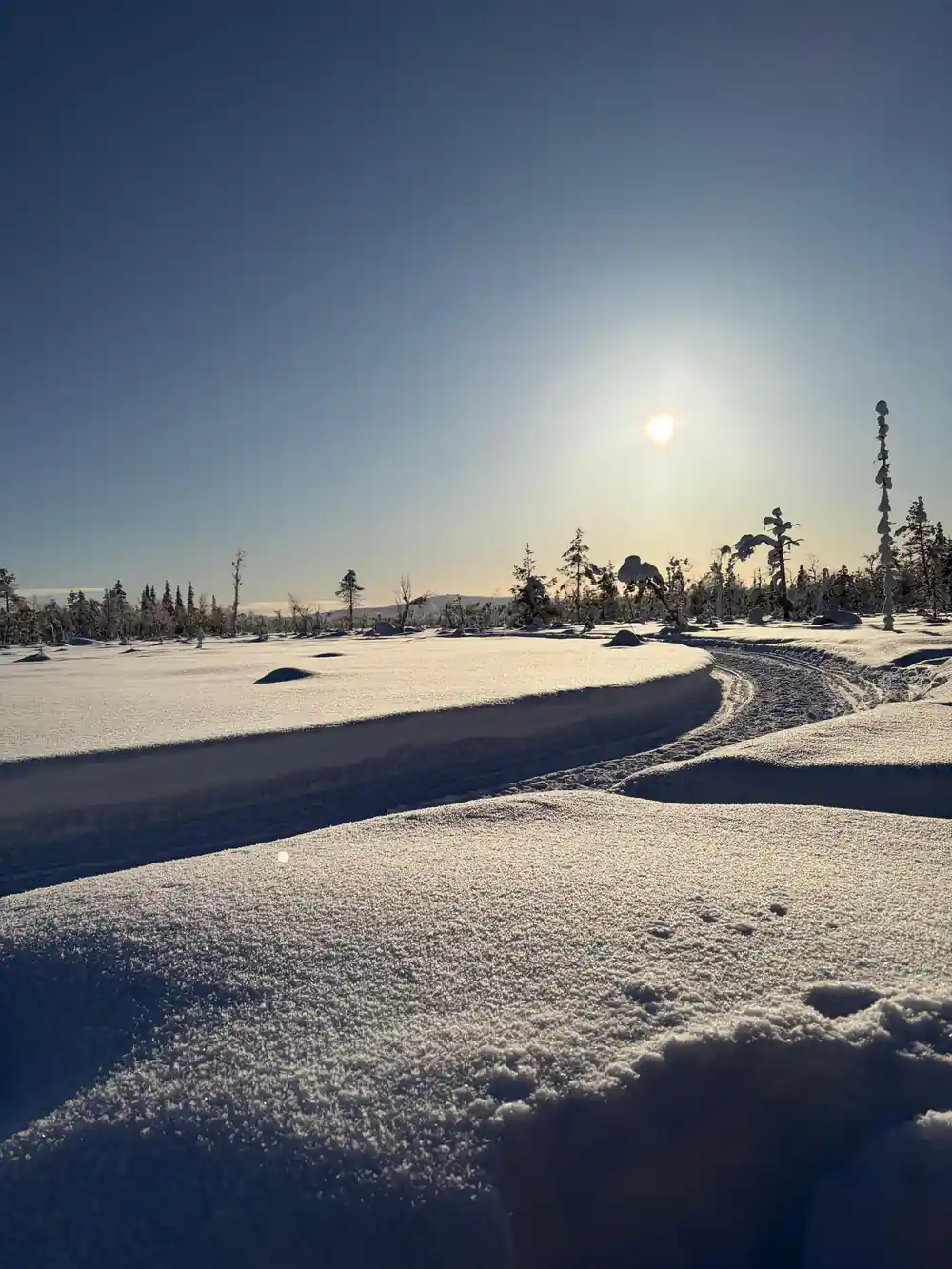
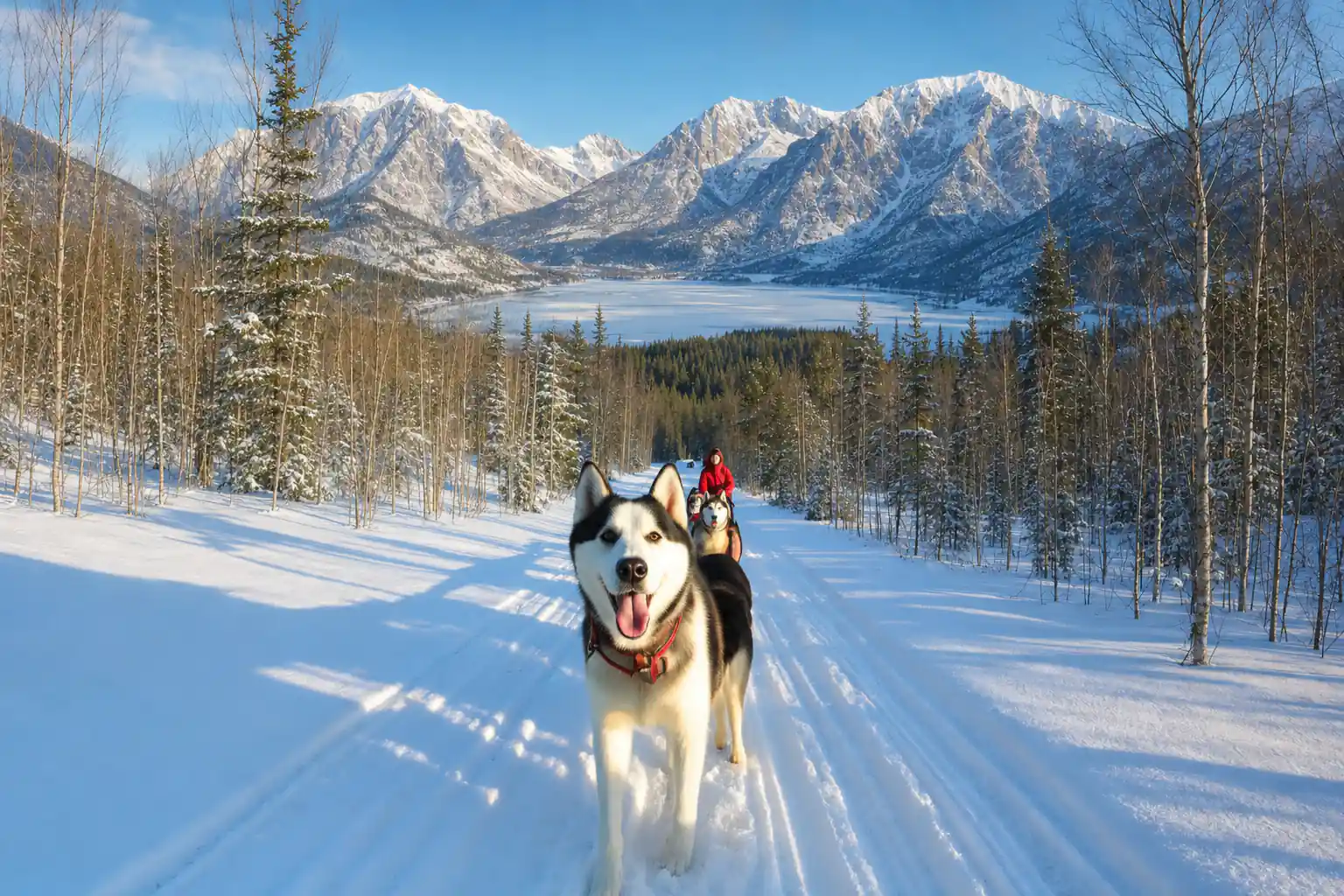
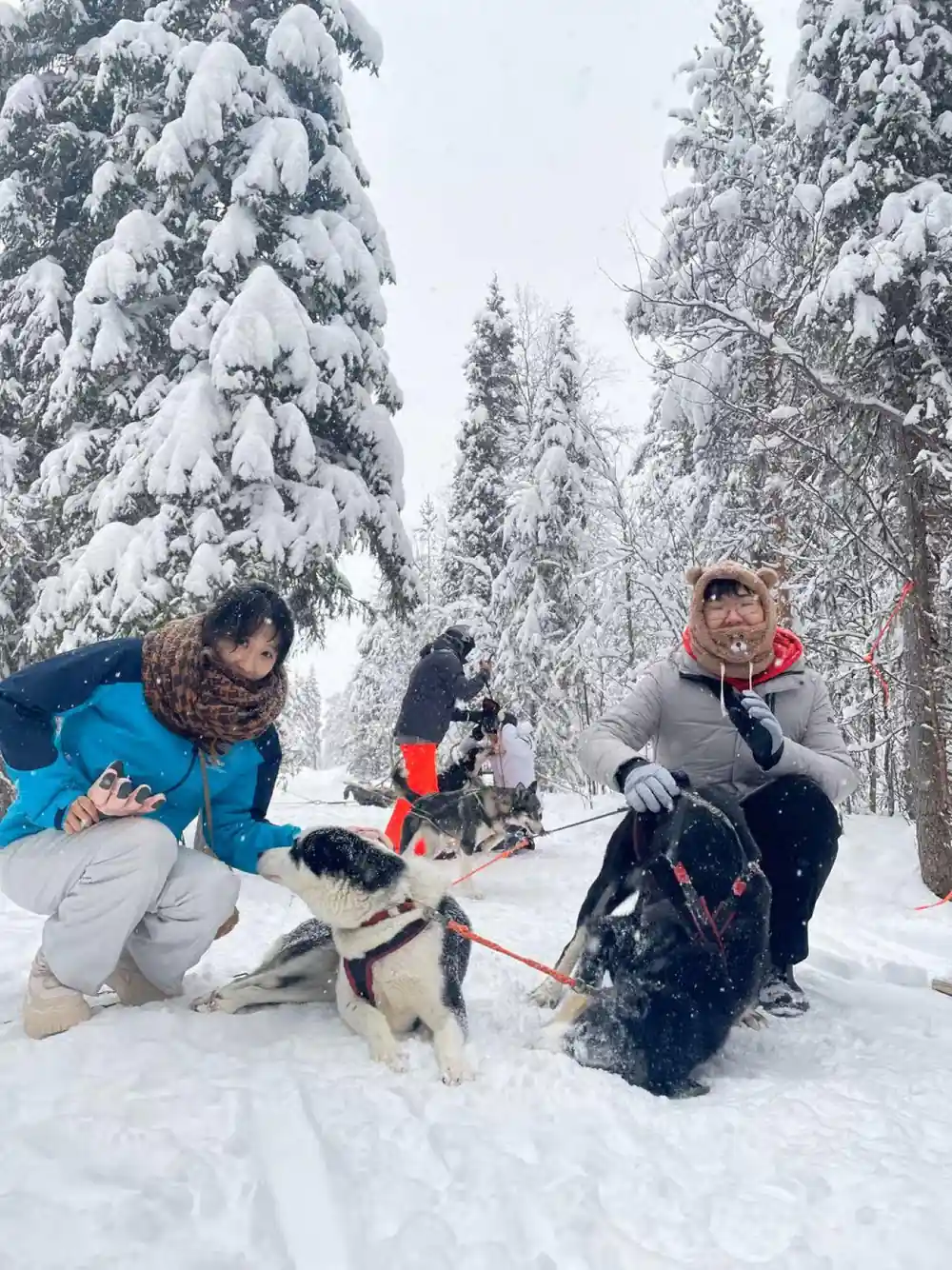
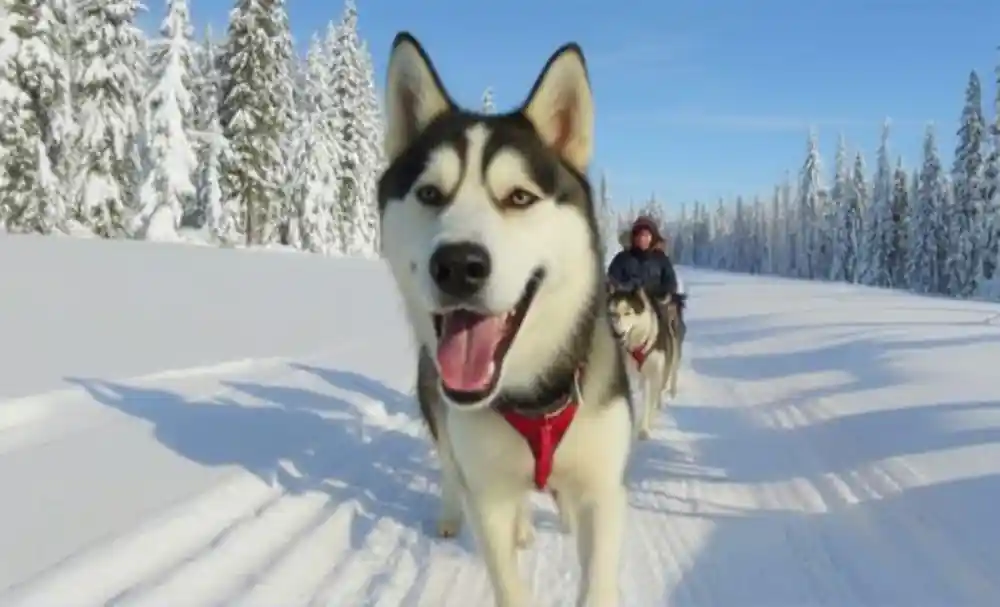
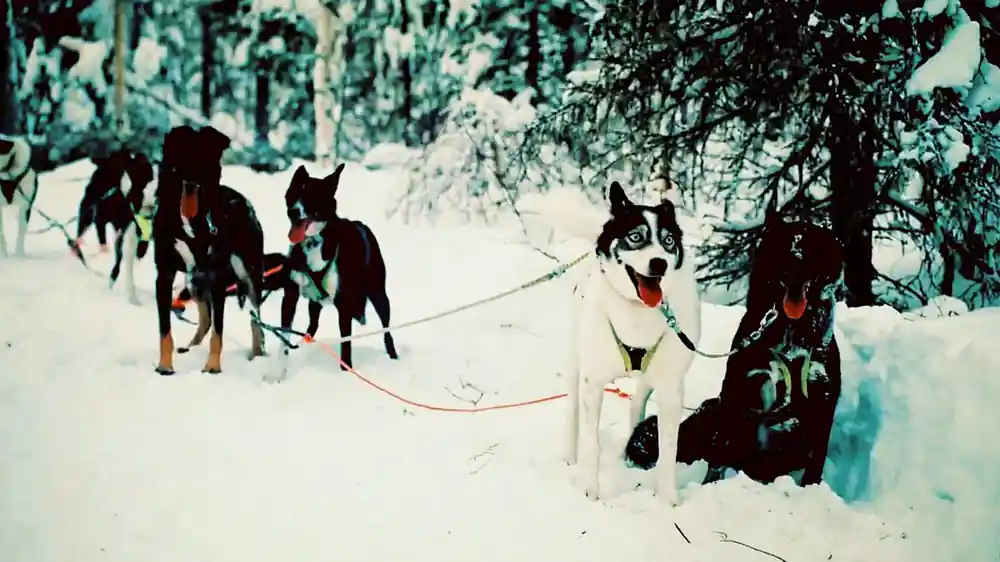
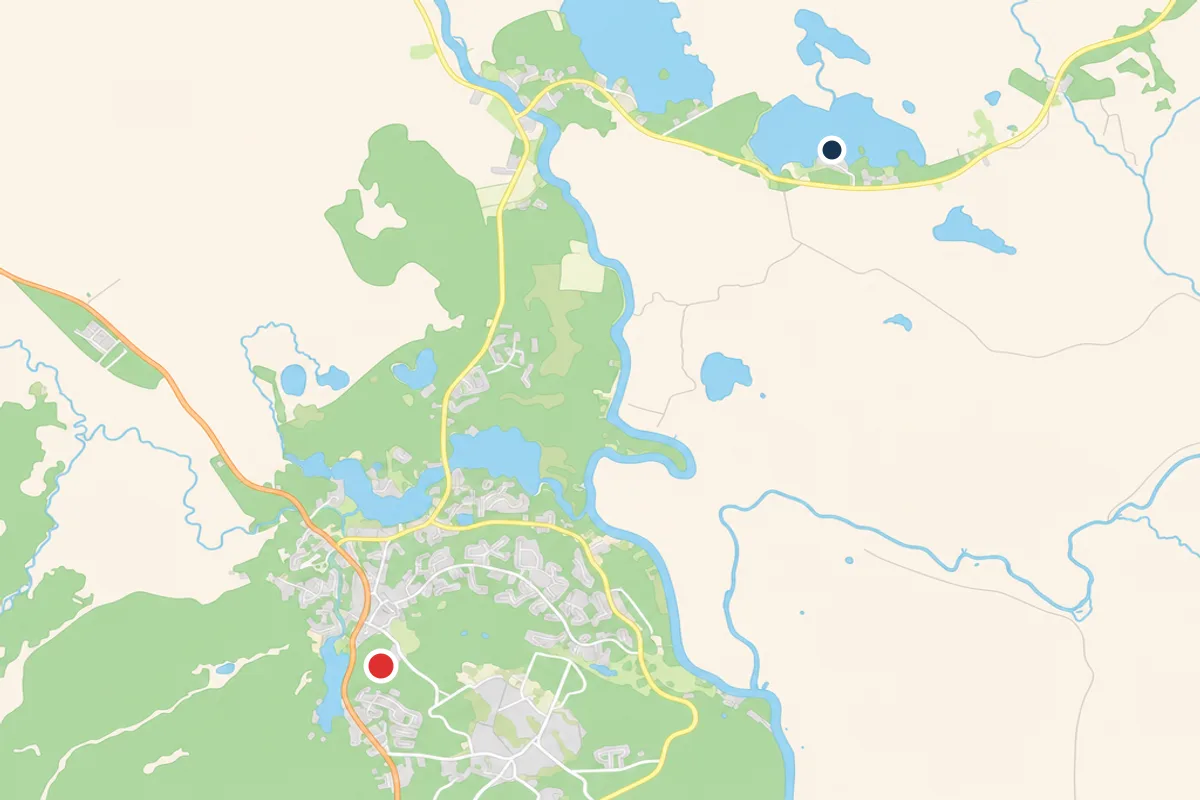
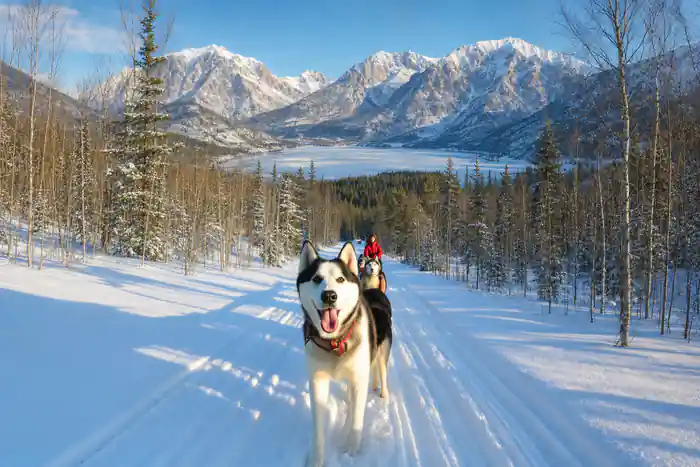
The trail runs at Rautusjarvi, a lake in the municipality of Kittila a short way out of the village. Part of the route is through pine forest carrying a full winter of snow load, and part of it opens out onto the frozen lake itself, which is the moment most riders remember: the trees stop, the horizon arrives all at once, and the light on open ice is completely different from the light under trees.
Five kilometres behind a team is not a long way in distance and it is a strange length in time. The dogs settle into a working pace within the first few hundred metres, and after that the loudest thing is the runners on packed snow. People arrive expecting noise and speed, and what they describe afterwards is the quiet.
The trail is flat. Kittila is fell country rather than mountain country, and nothing on this route requires any technique beyond standing up, holding on and using the brake when told to. It is the terrain, not the training, that makes a five-kilometre self-drive run something a first-timer can do.
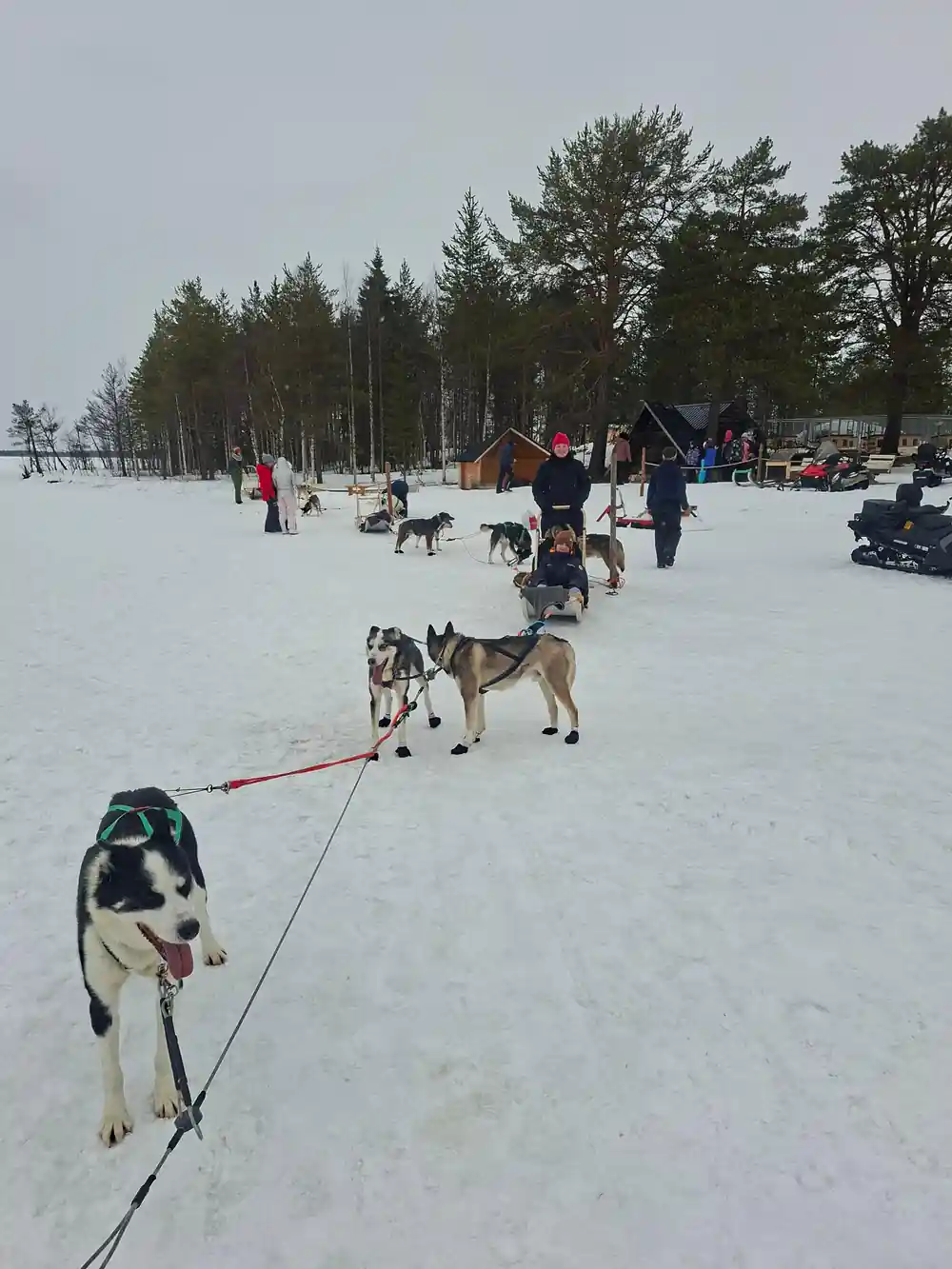
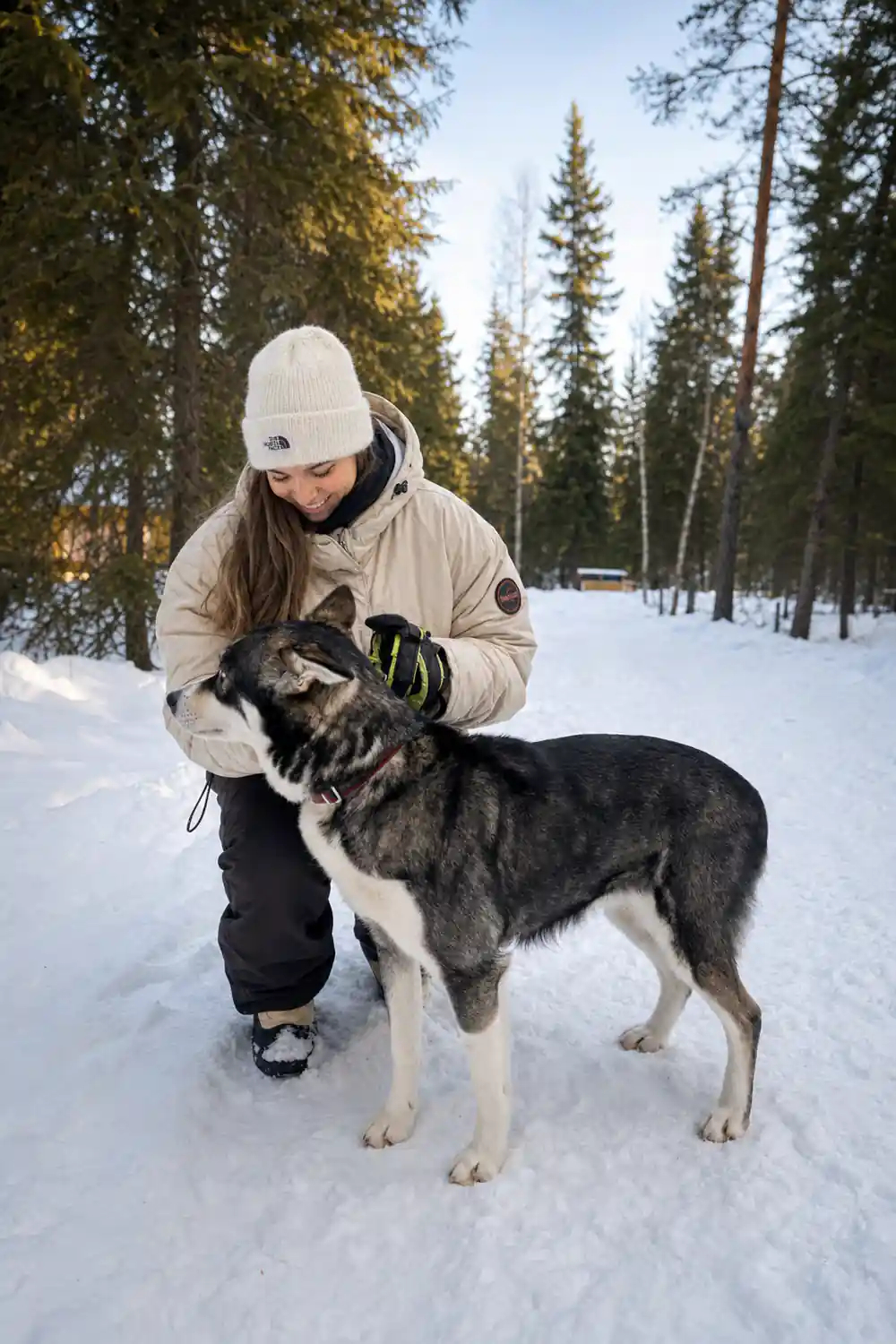
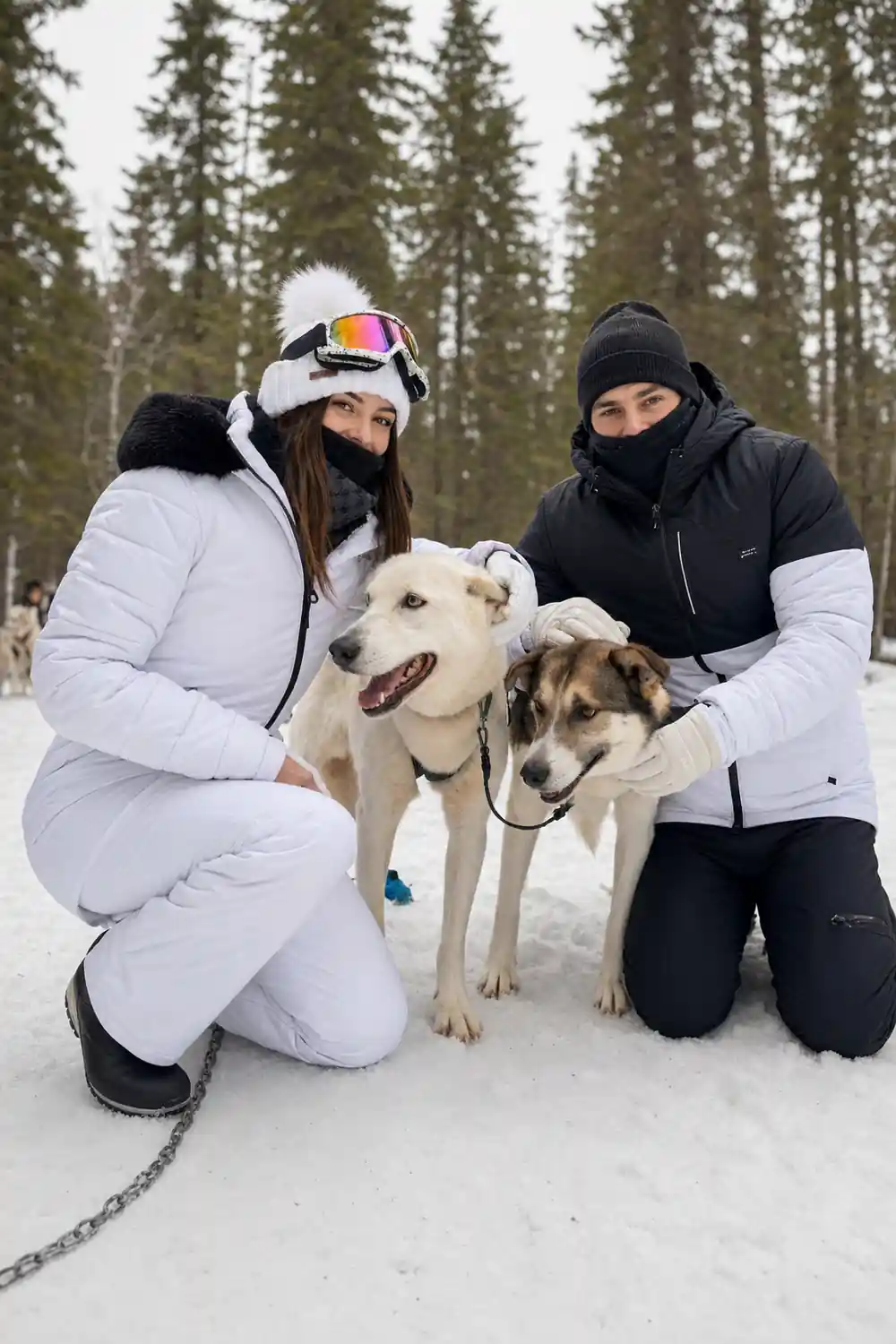
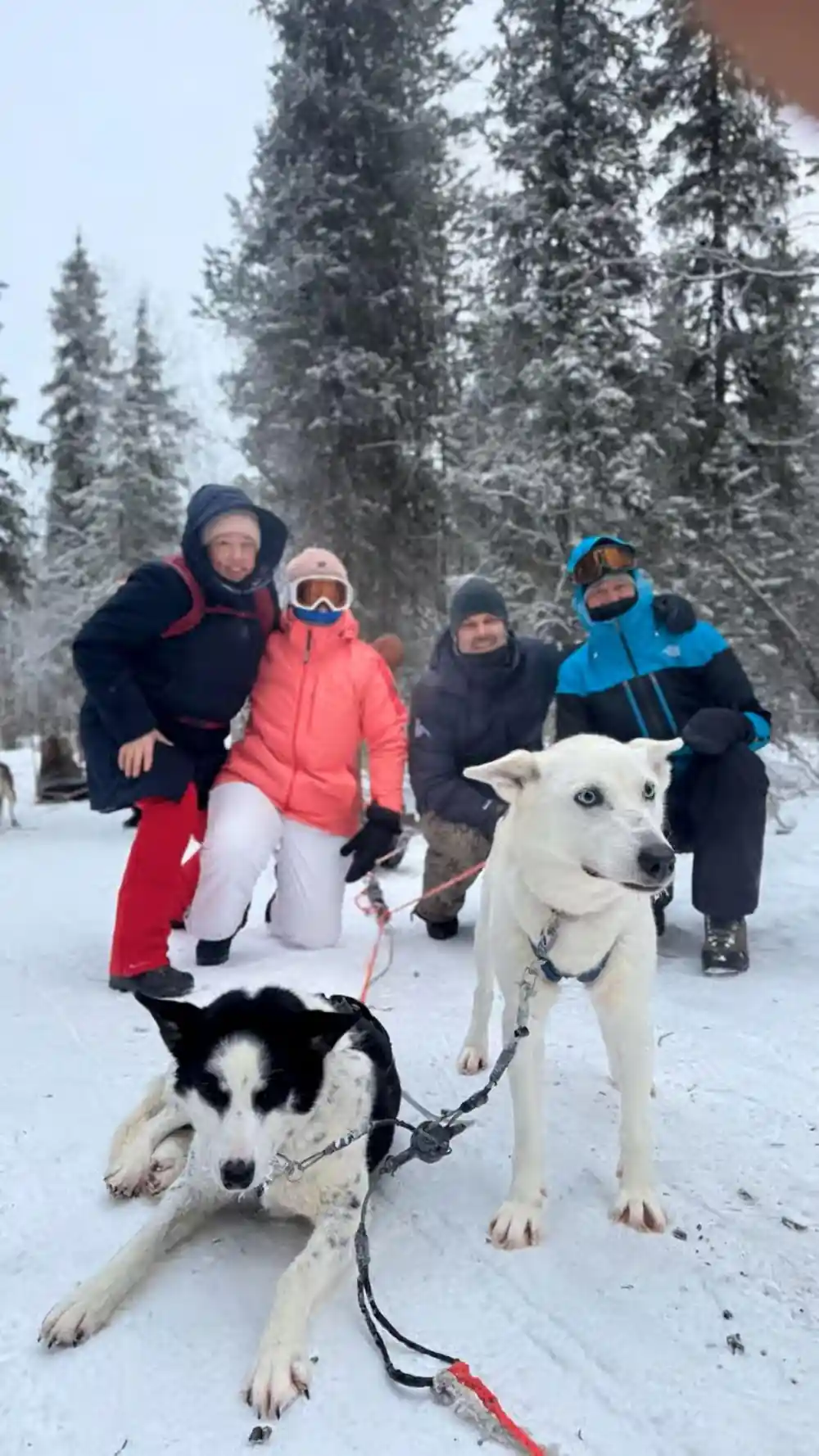
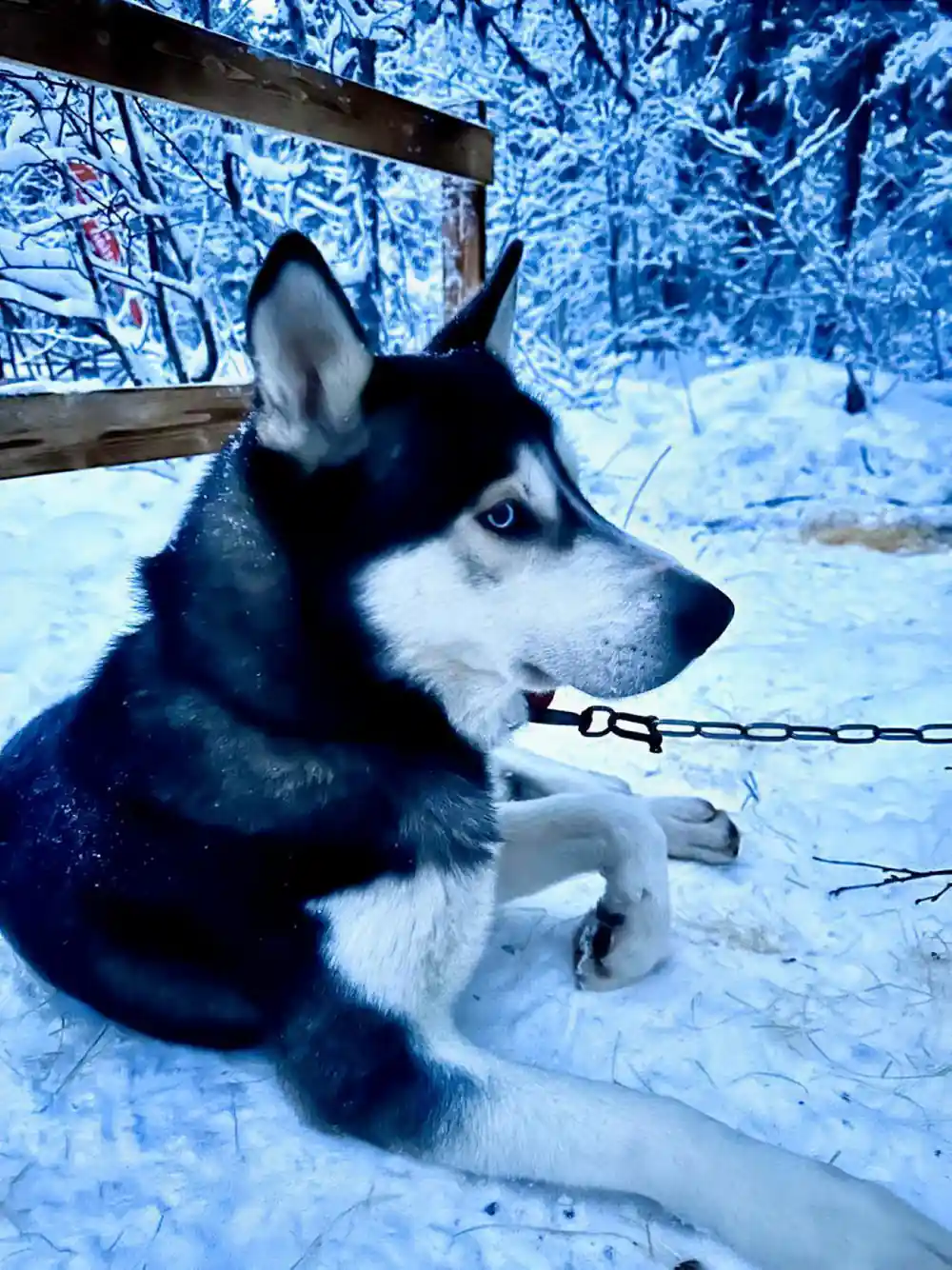
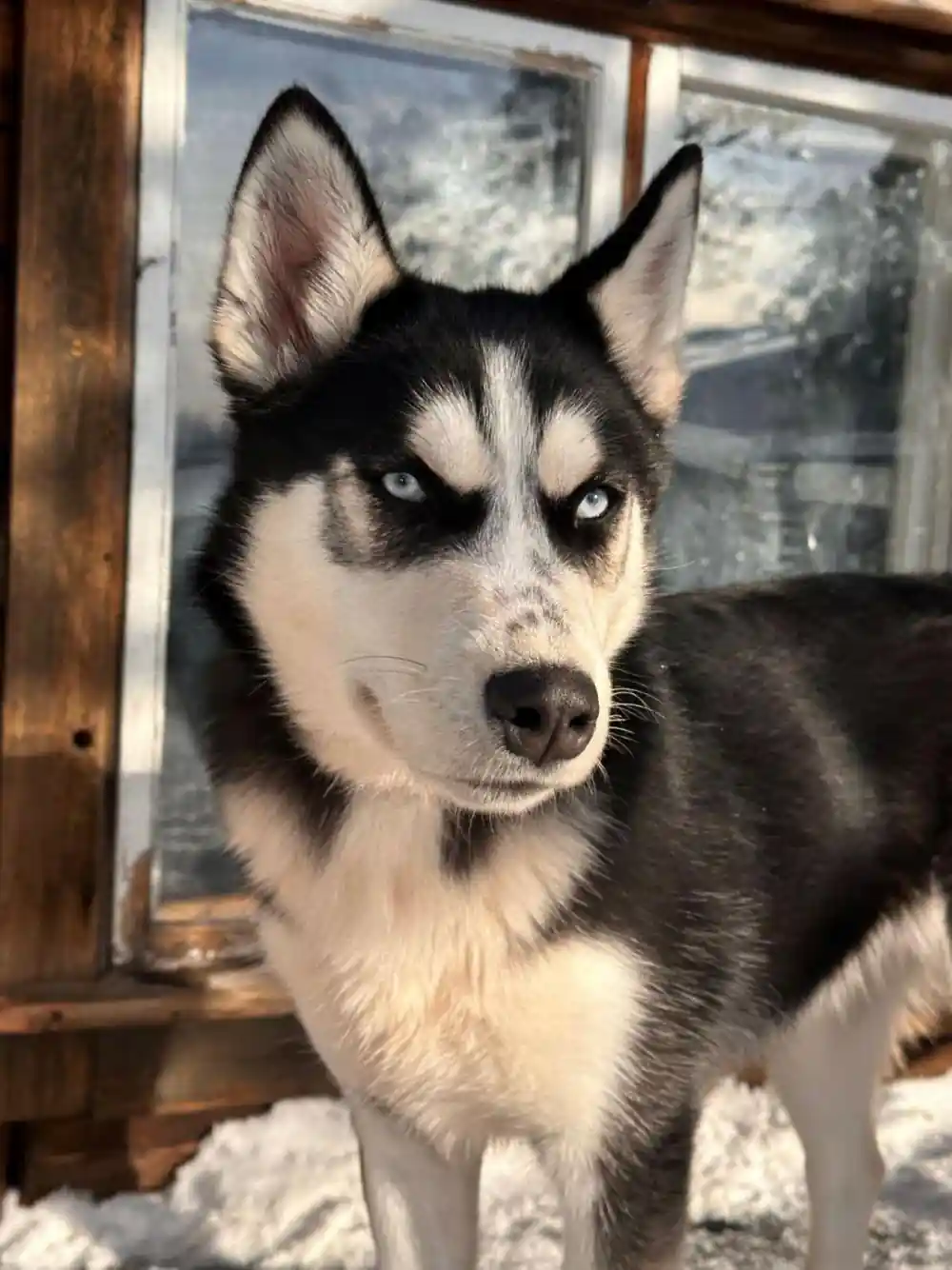
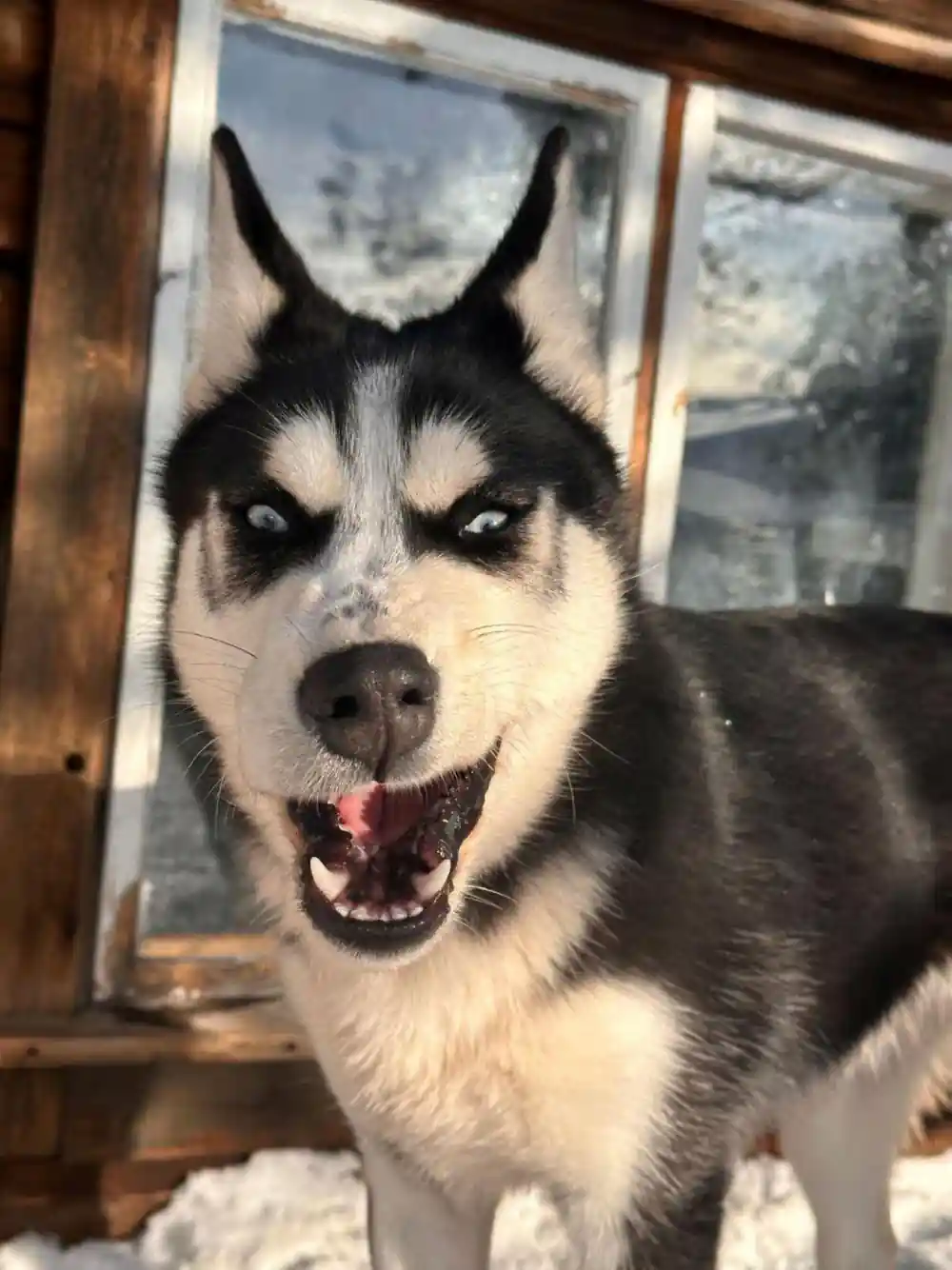
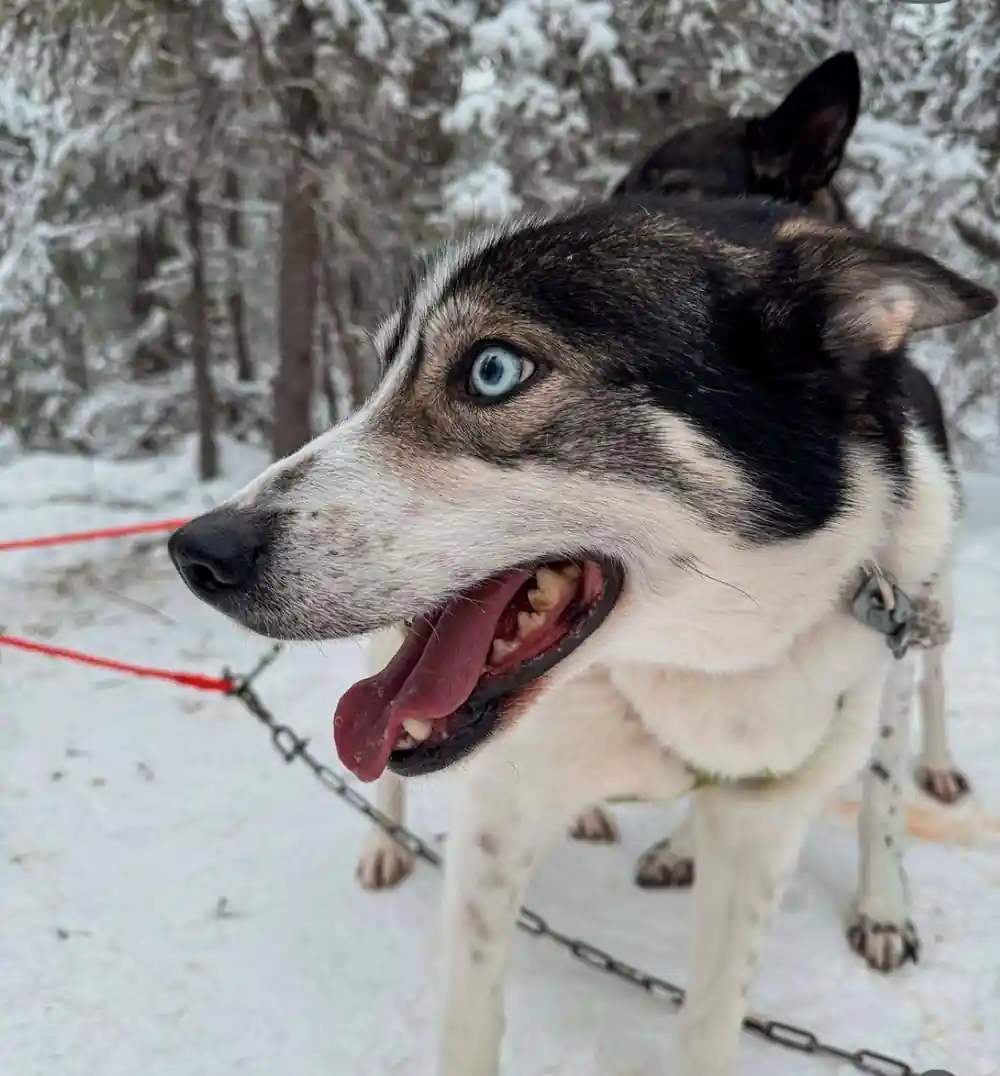
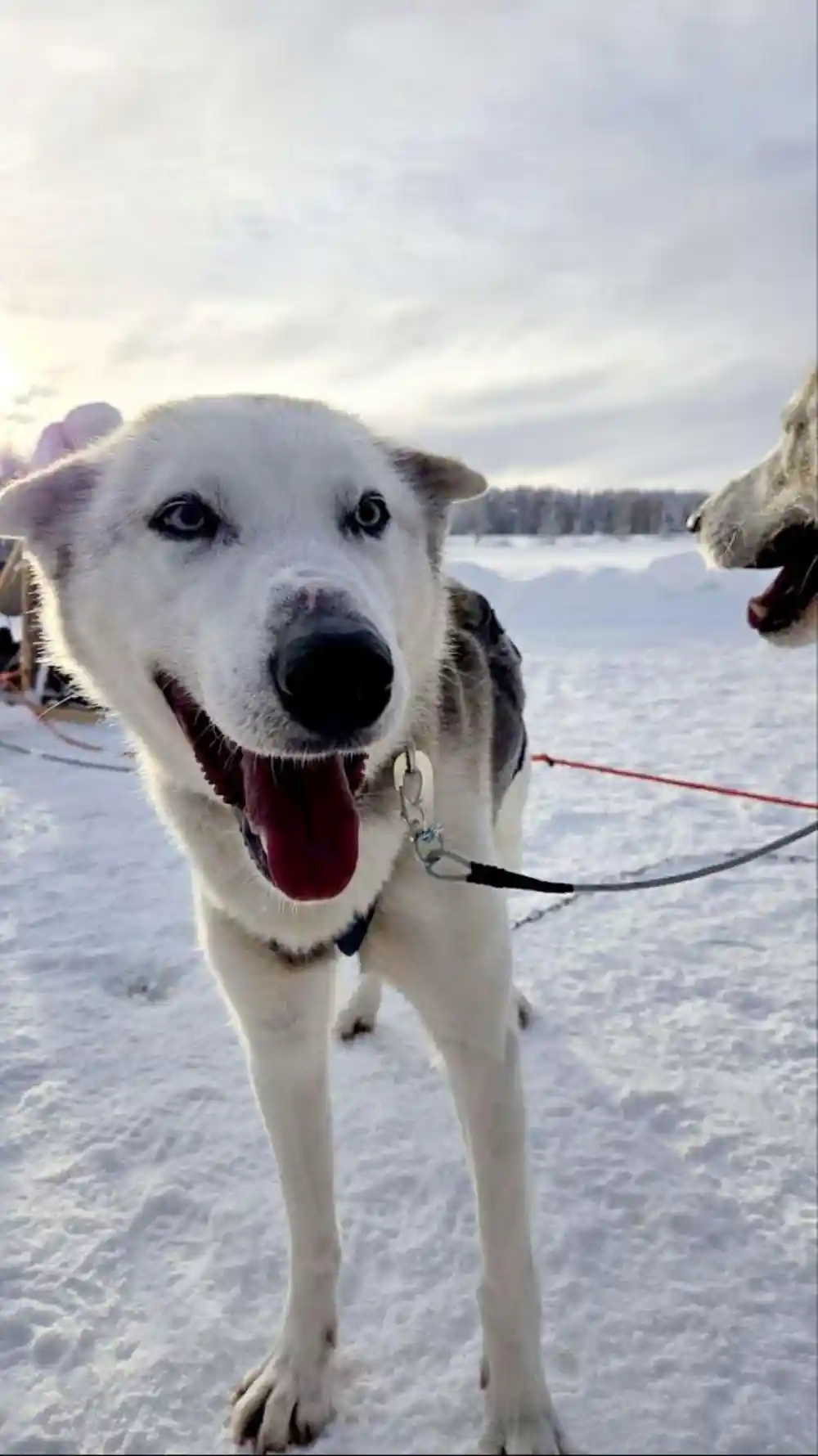
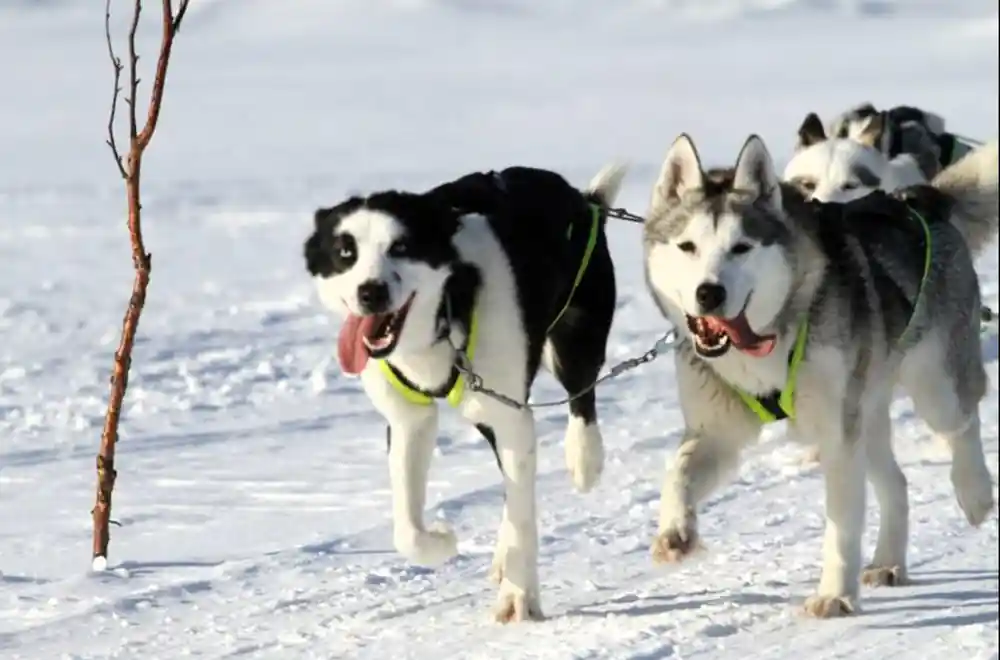
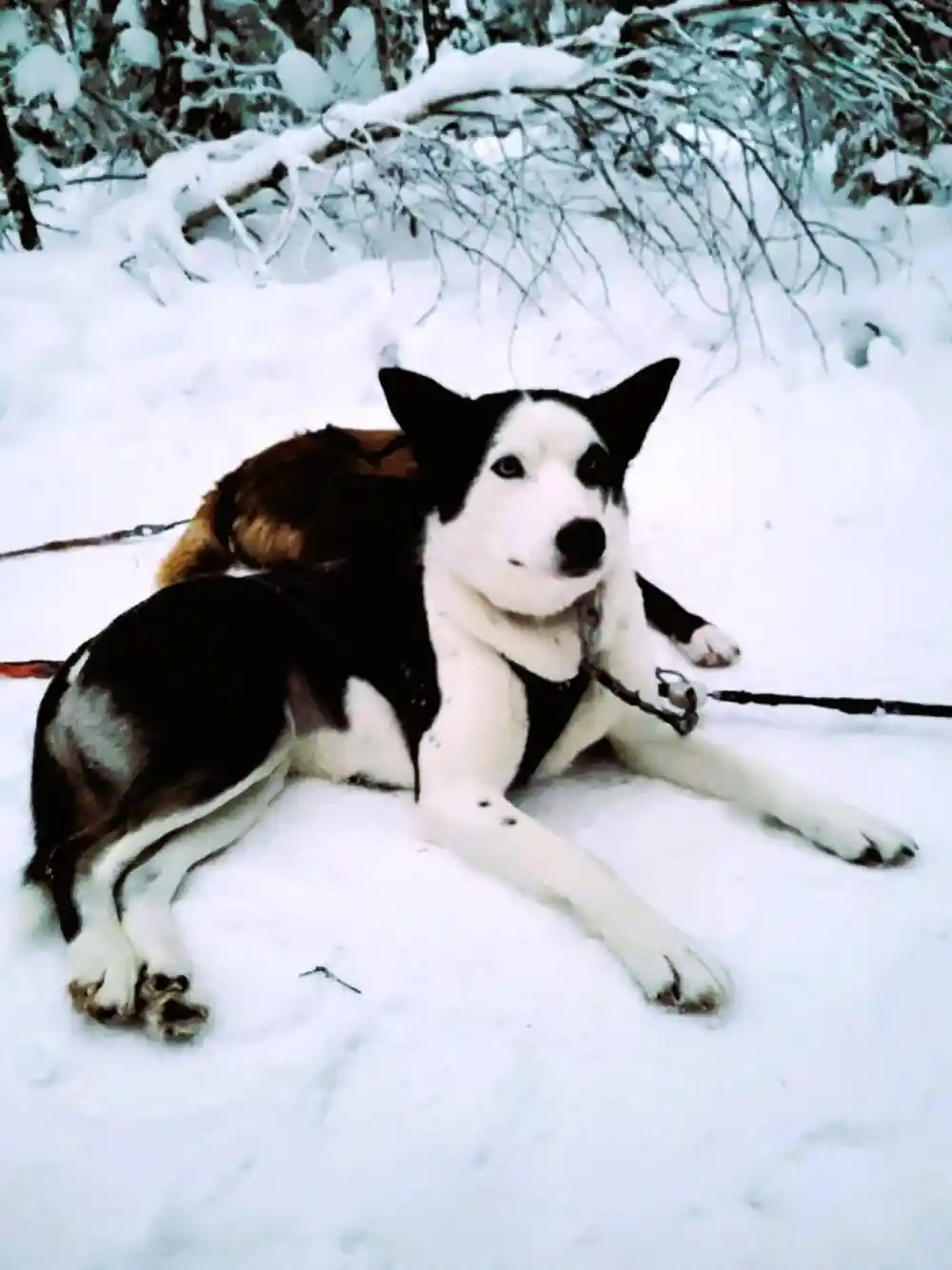
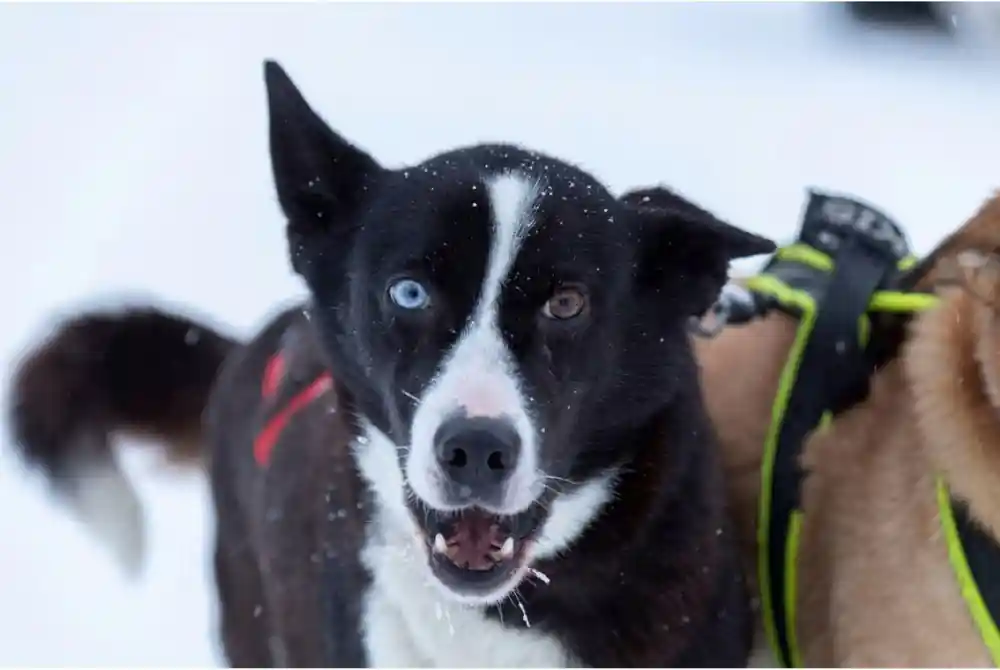
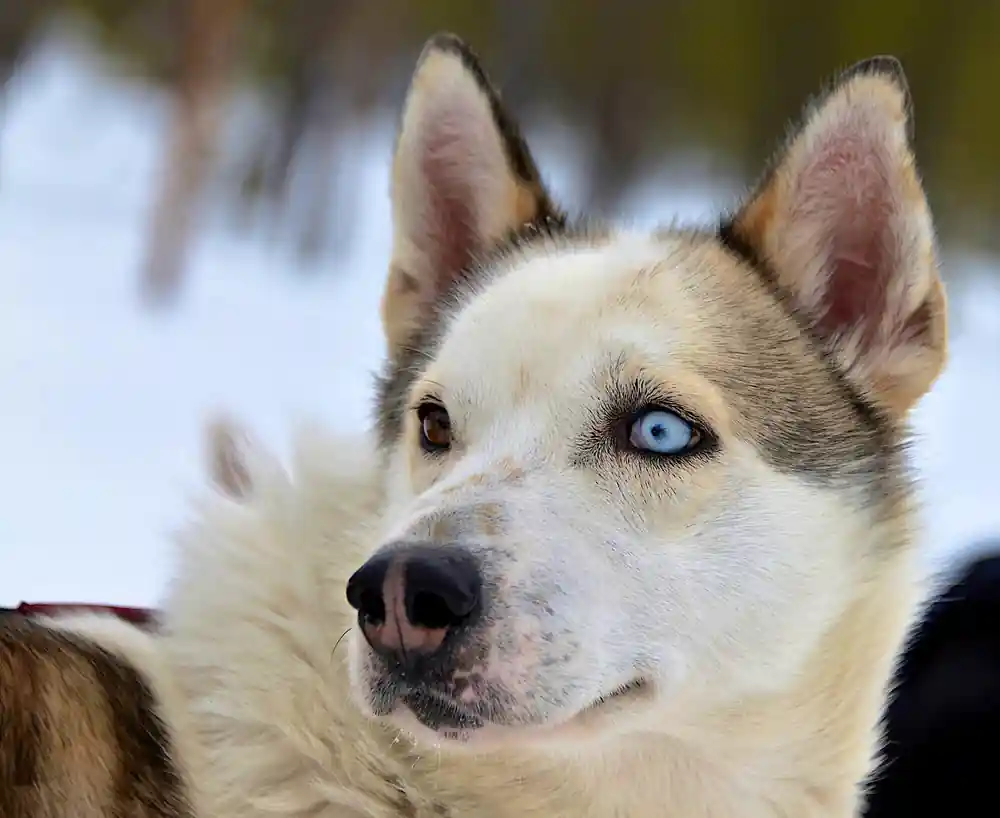
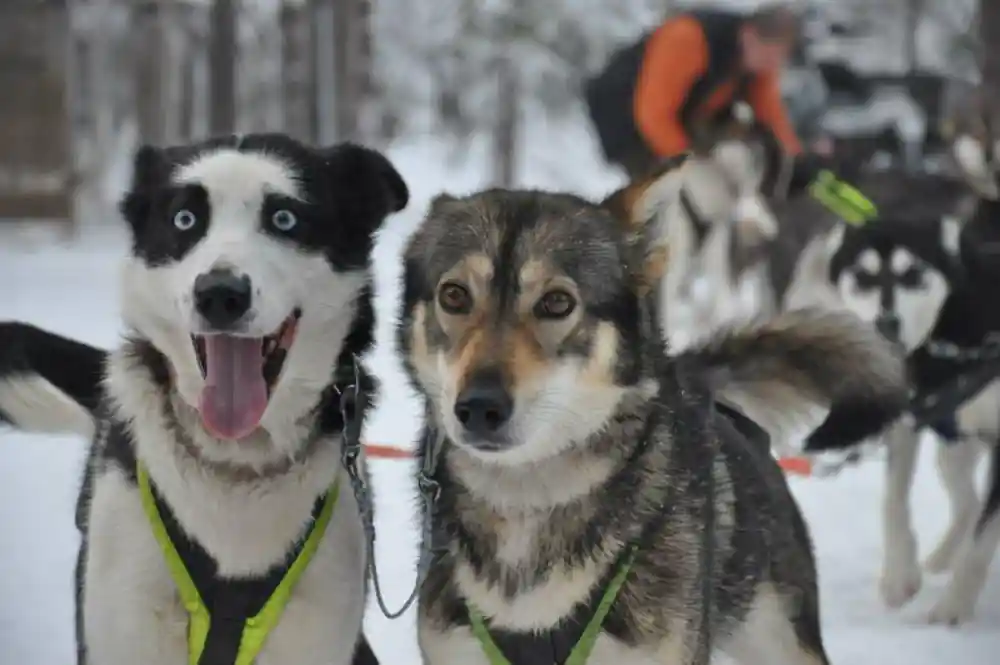
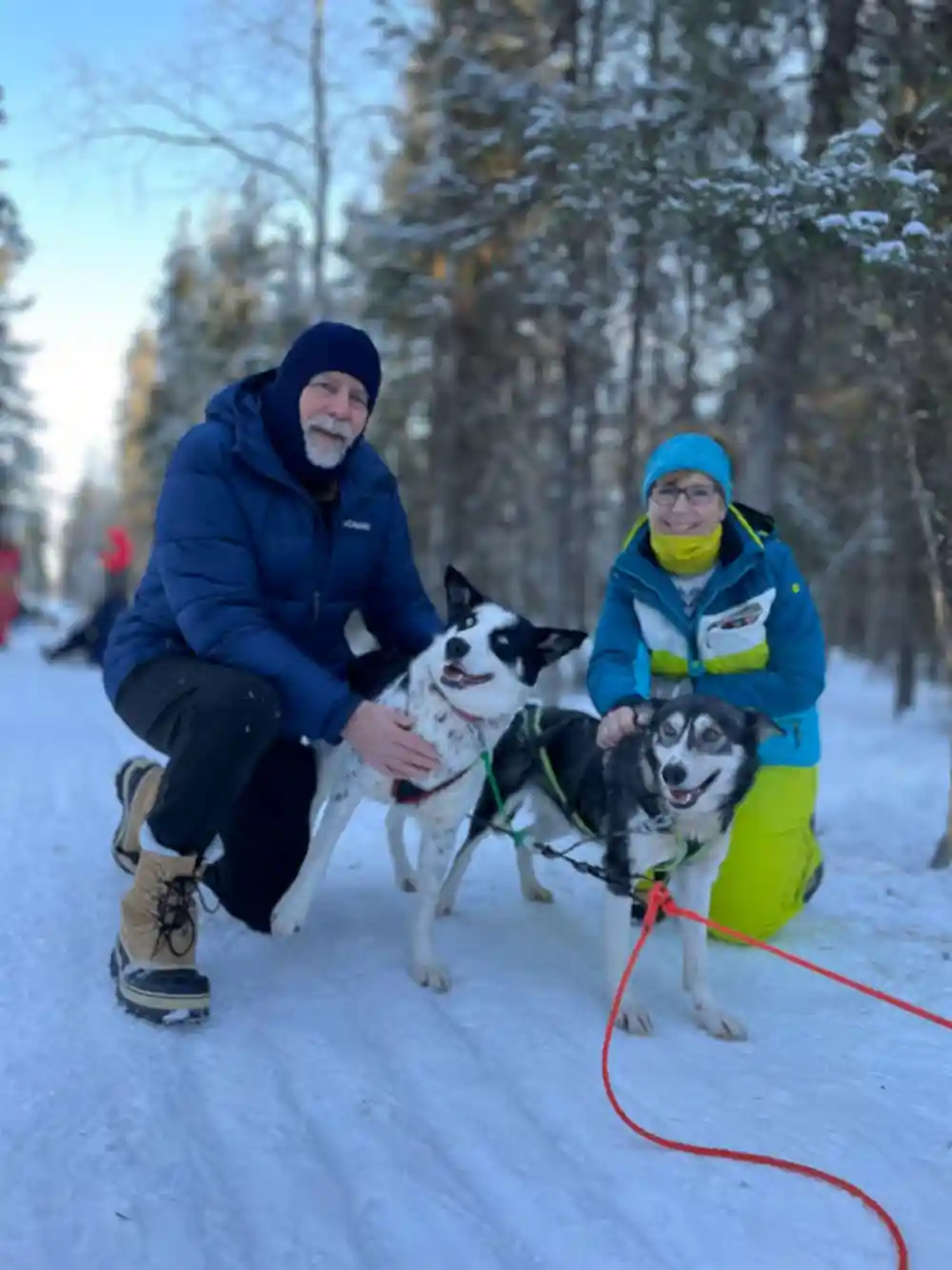
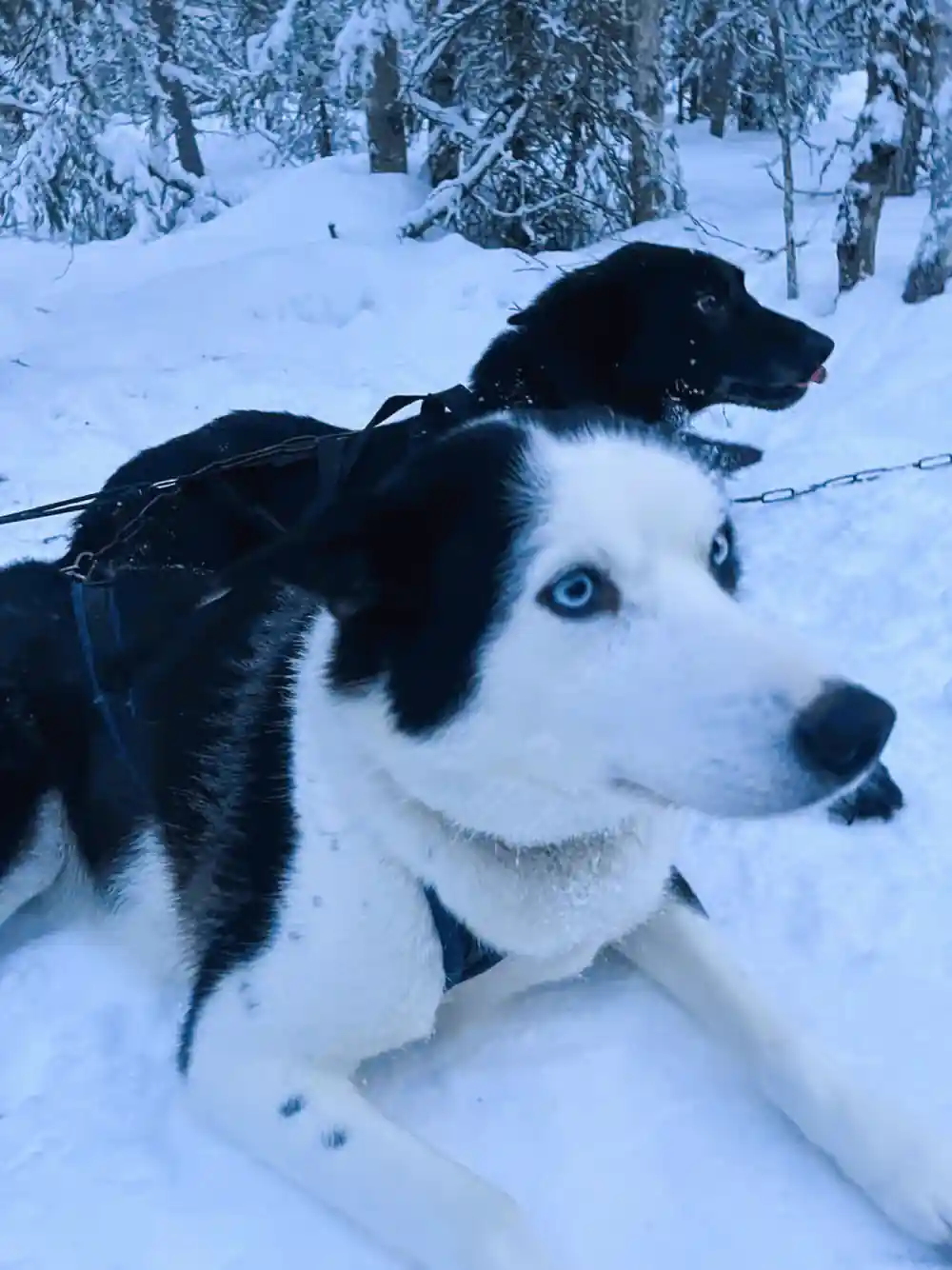
Alaskan and Siberian huskies, running together
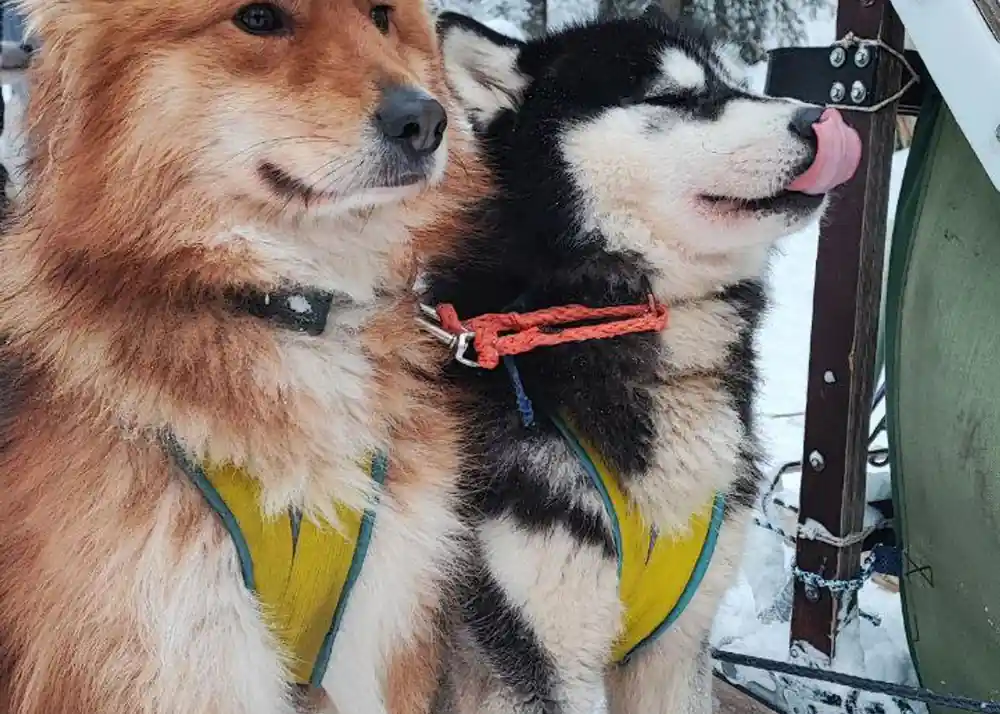
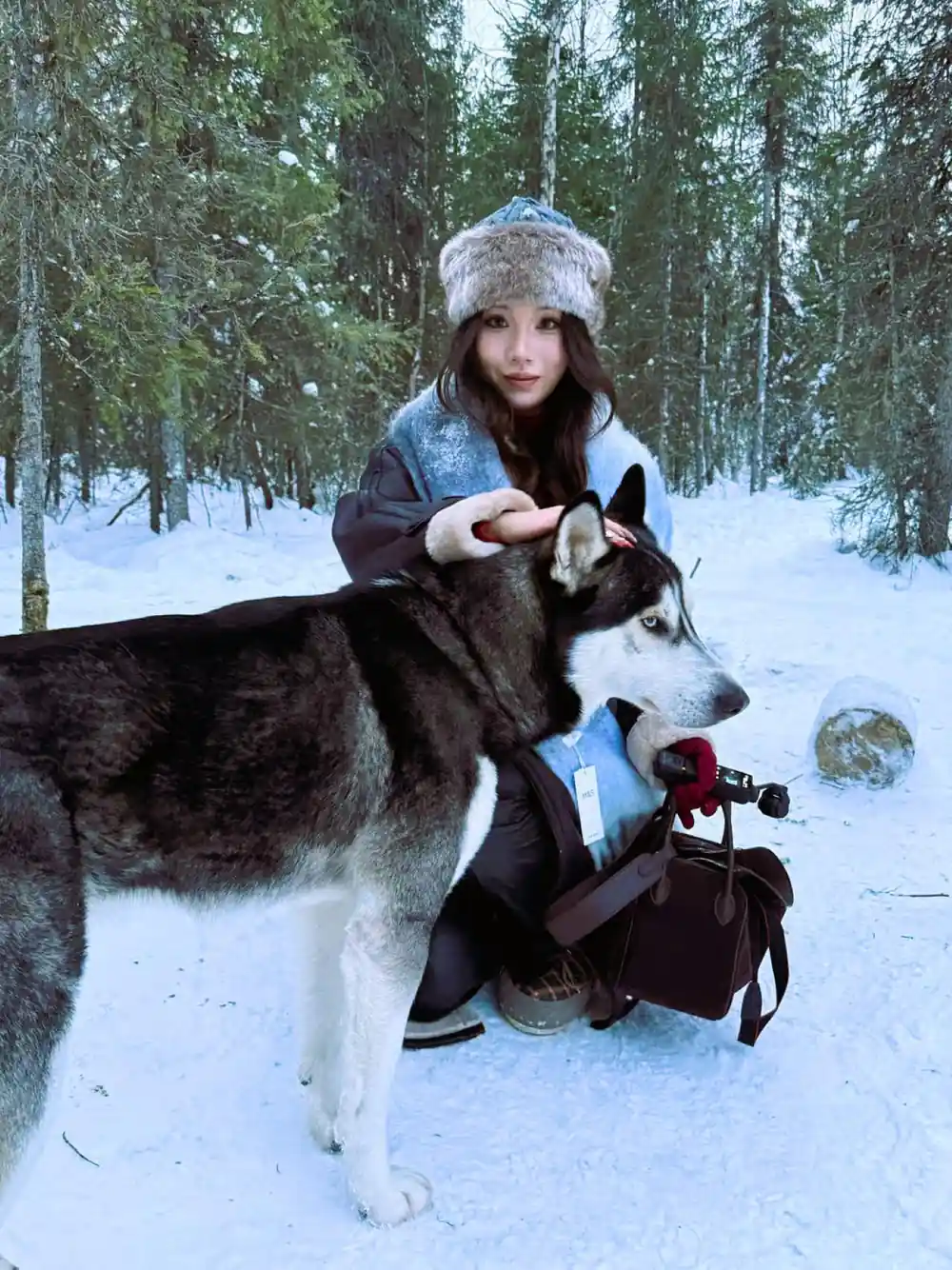
This kennel runs both, and the two are not variations of one animal. The Siberian husky is a registered breed with a written standard: a fixed size range, a described coat, a recognised outline. The Alaskan husky is not a breed at all in that sense and has no standard, because it was never bred to look like anything. It is a working crossbreed selected on one criterion, which is whether it pulls well.
The practical result is that an Alaskan is usually the faster and more driven of the two while a Siberian is heavier-coated and steadier, and a kennel that runs both can build a team from whichever combination suits the day, the distance and the load. On the gangline in front of you there may well be both.
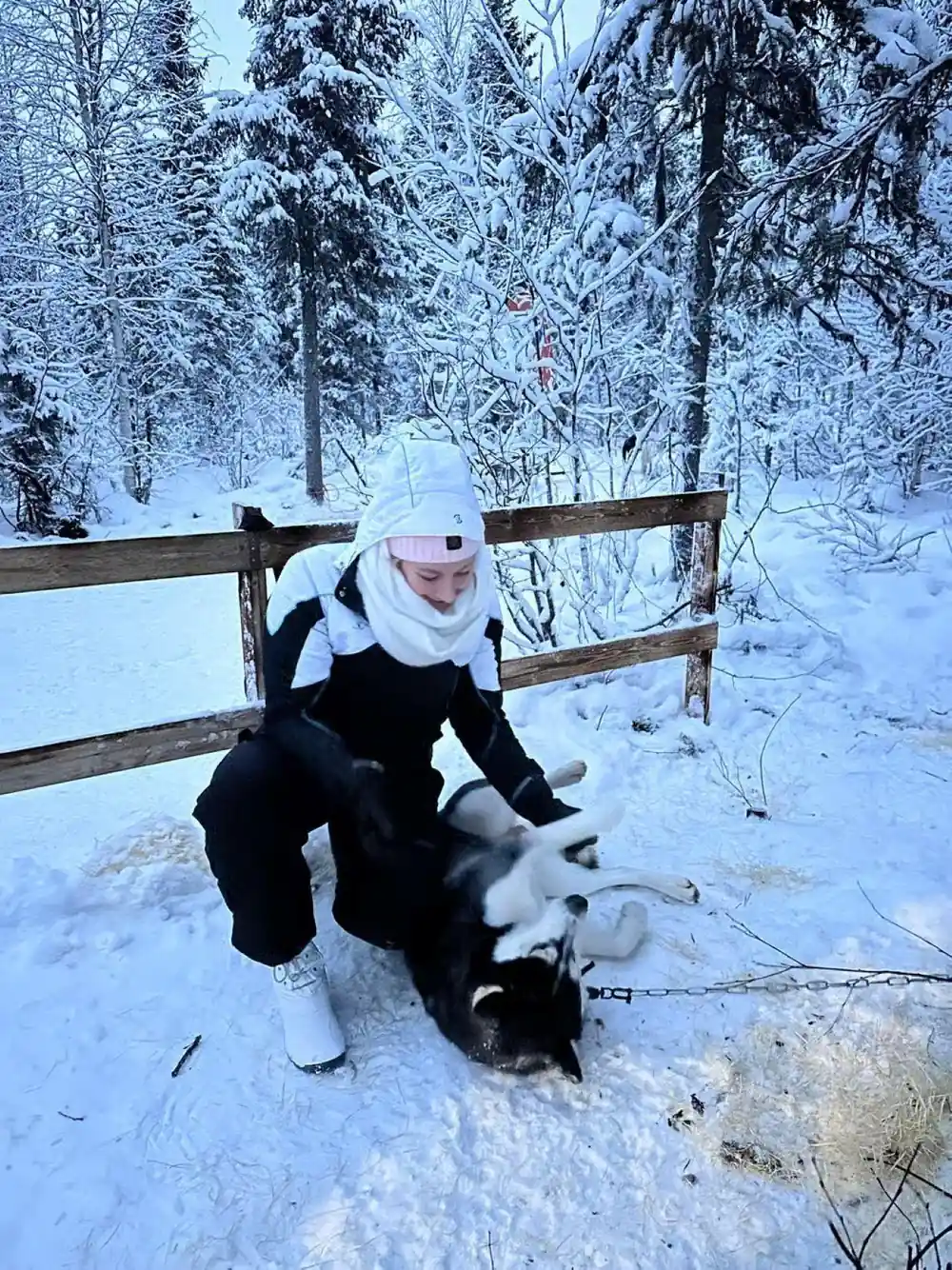
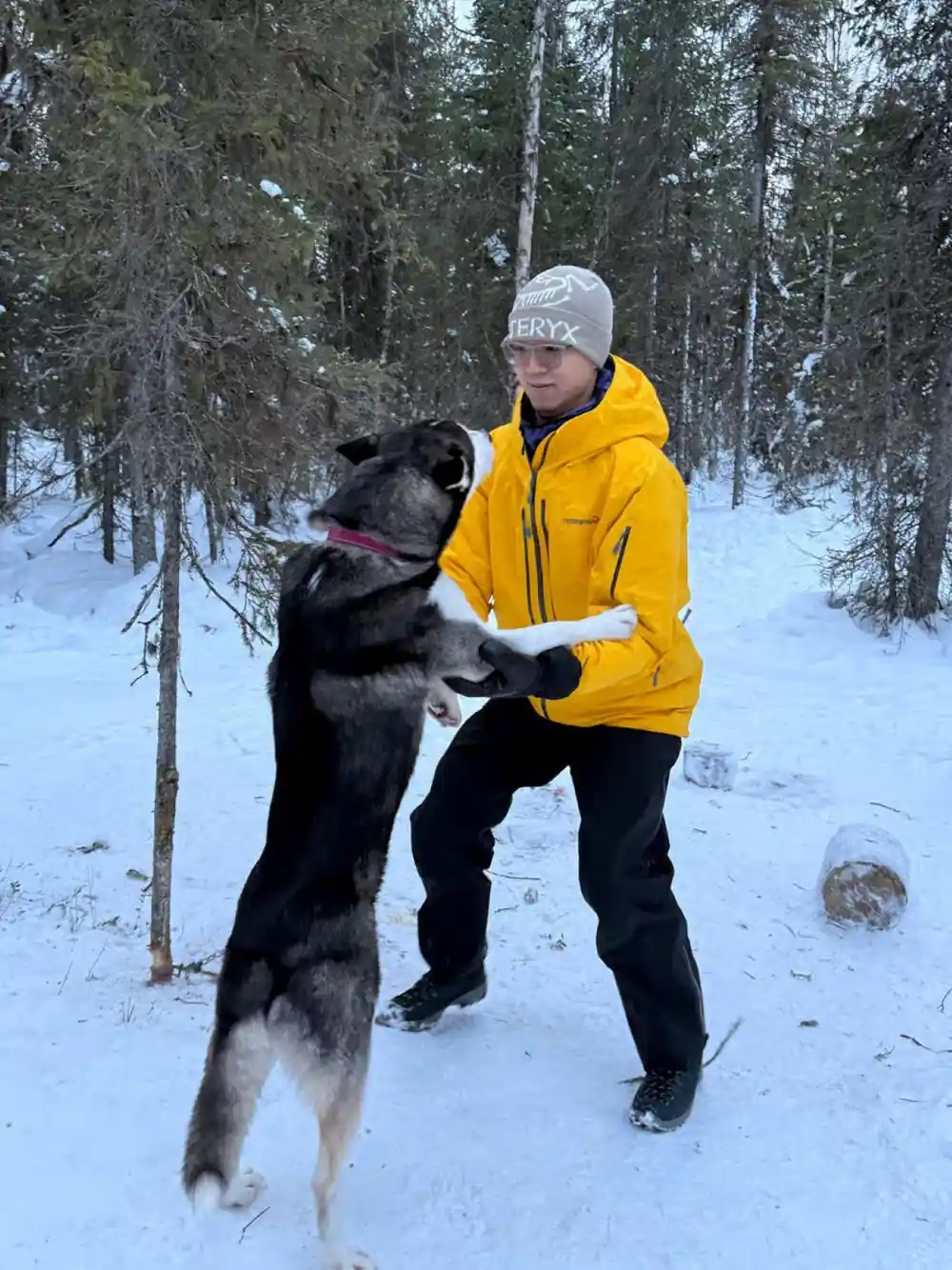
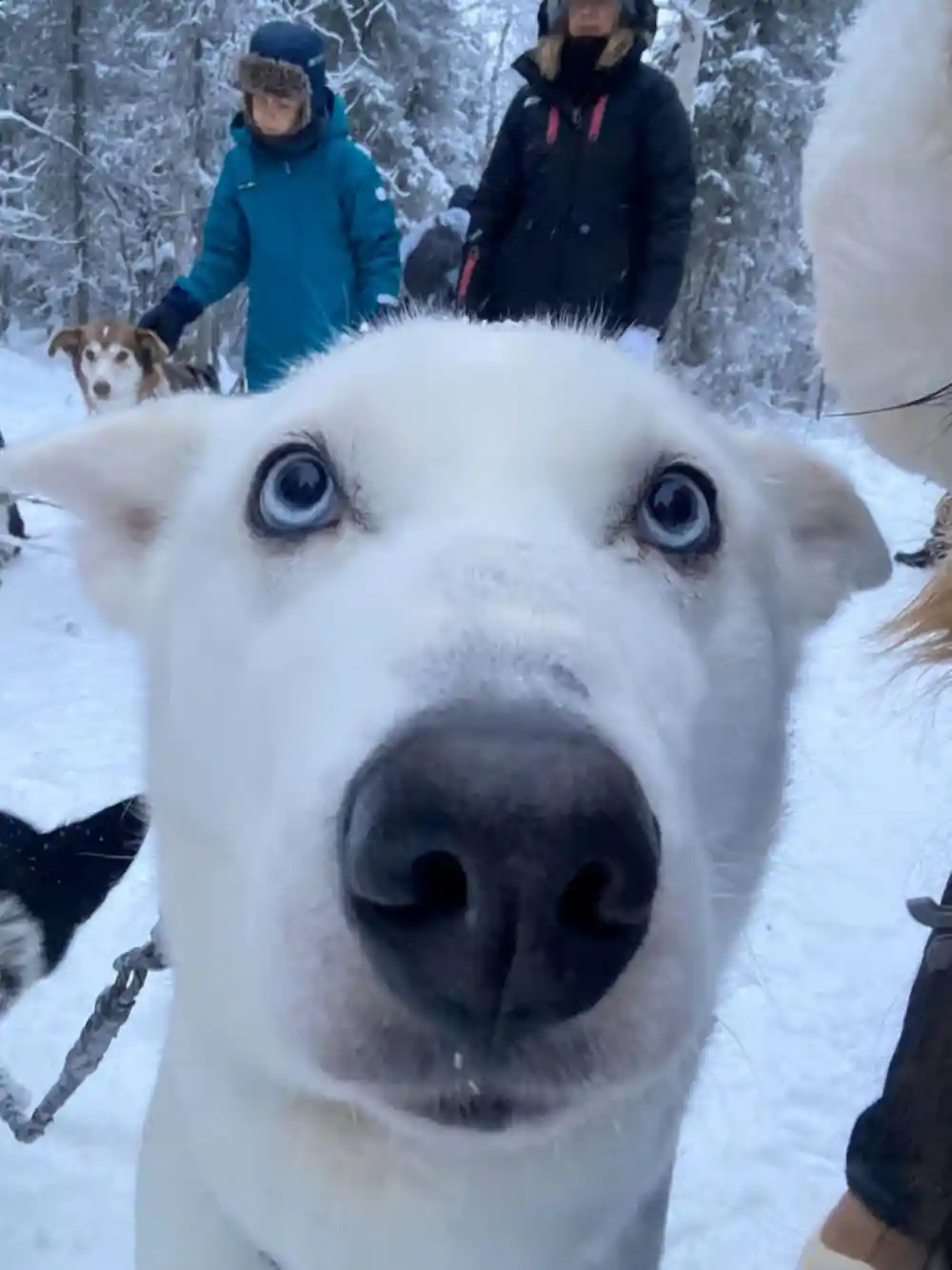
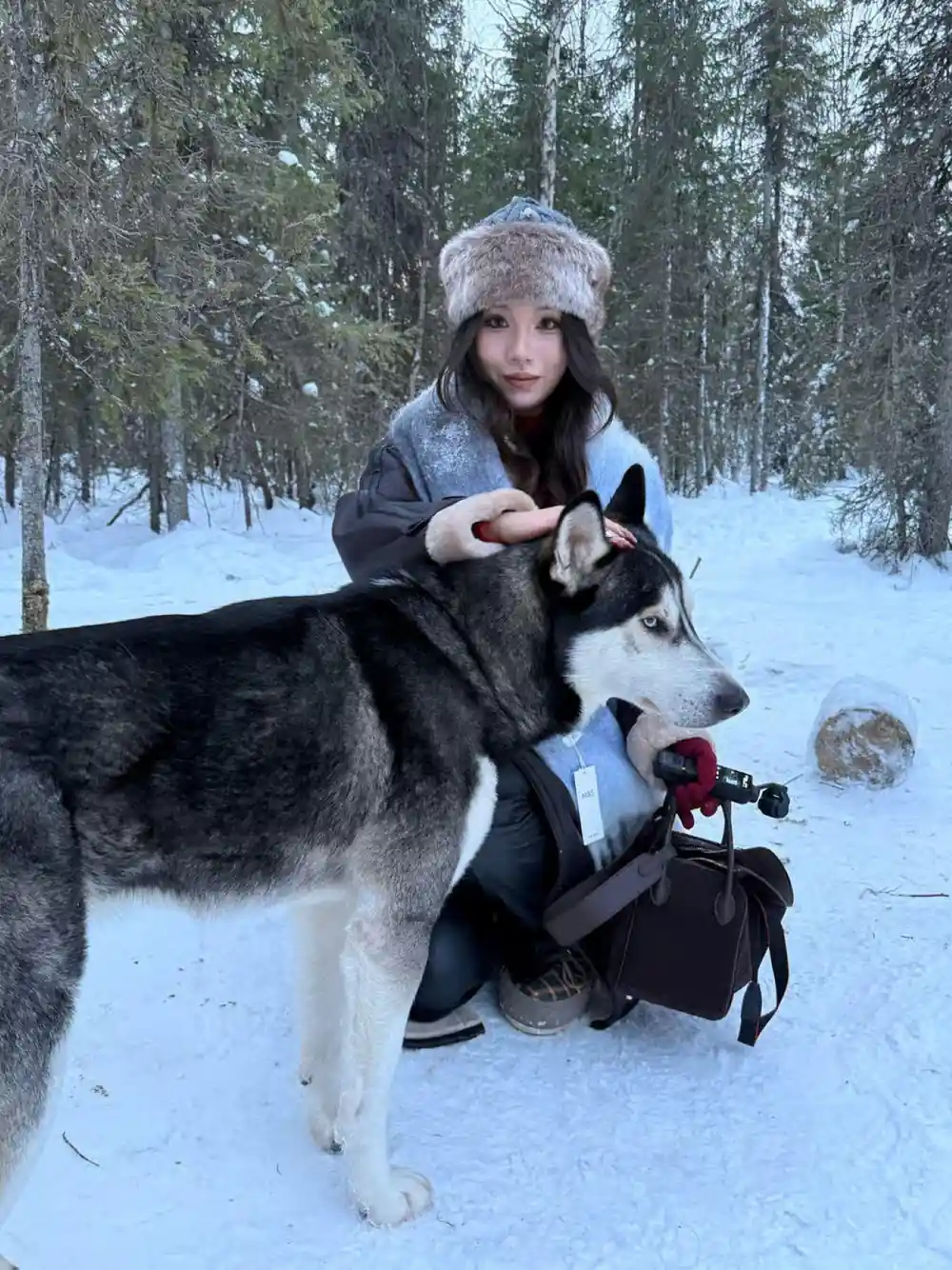
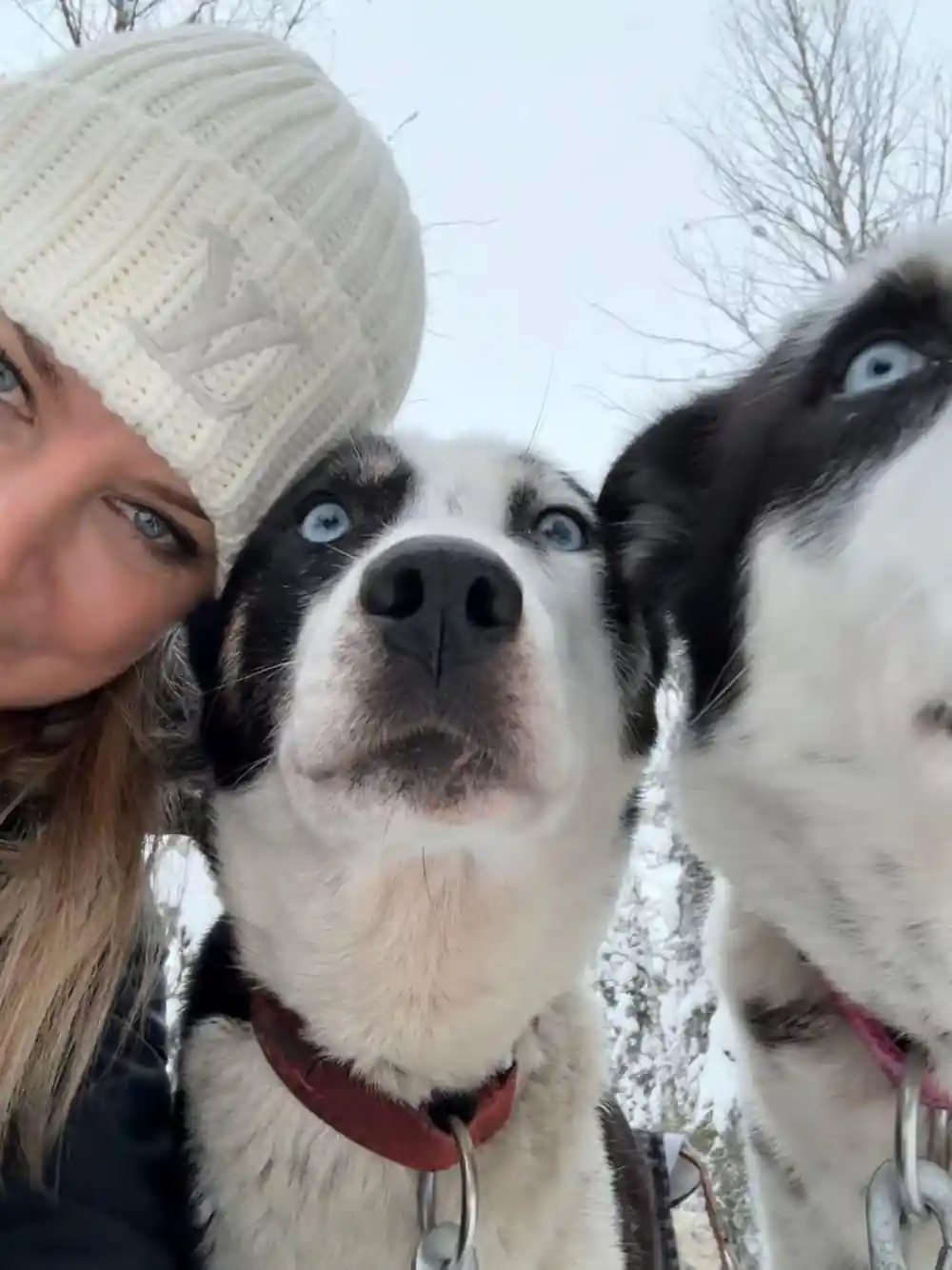
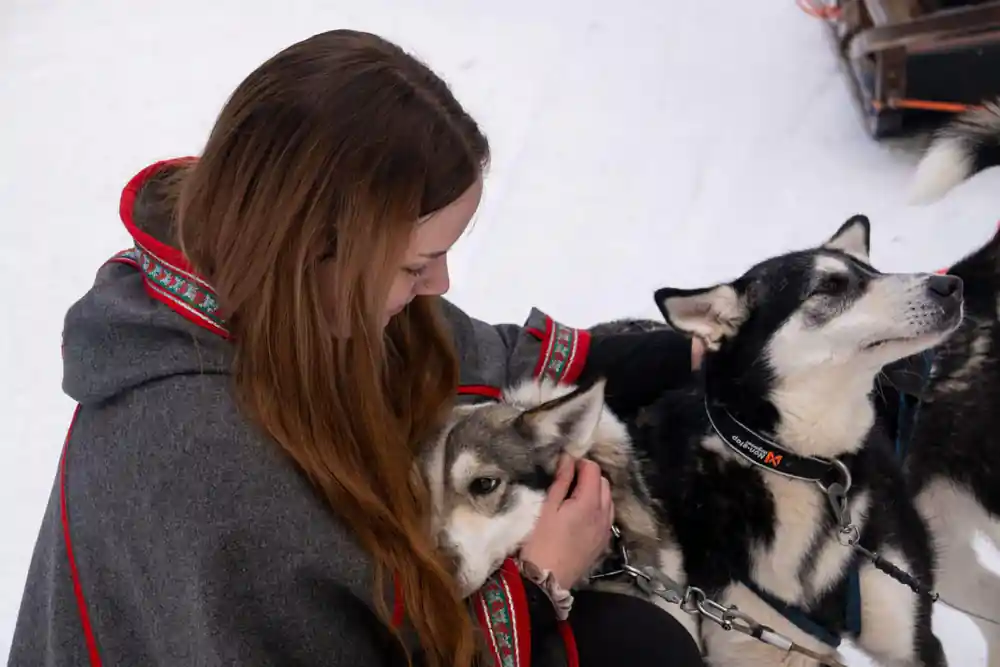
You are given time with them at the end rather than being moved straight back to the van, and the guides will answer questions about individual dogs, which is worth using. Every one of them has a name, a position it prefers and a personality the handlers will describe at length if asked.
The puppies and the reindeer
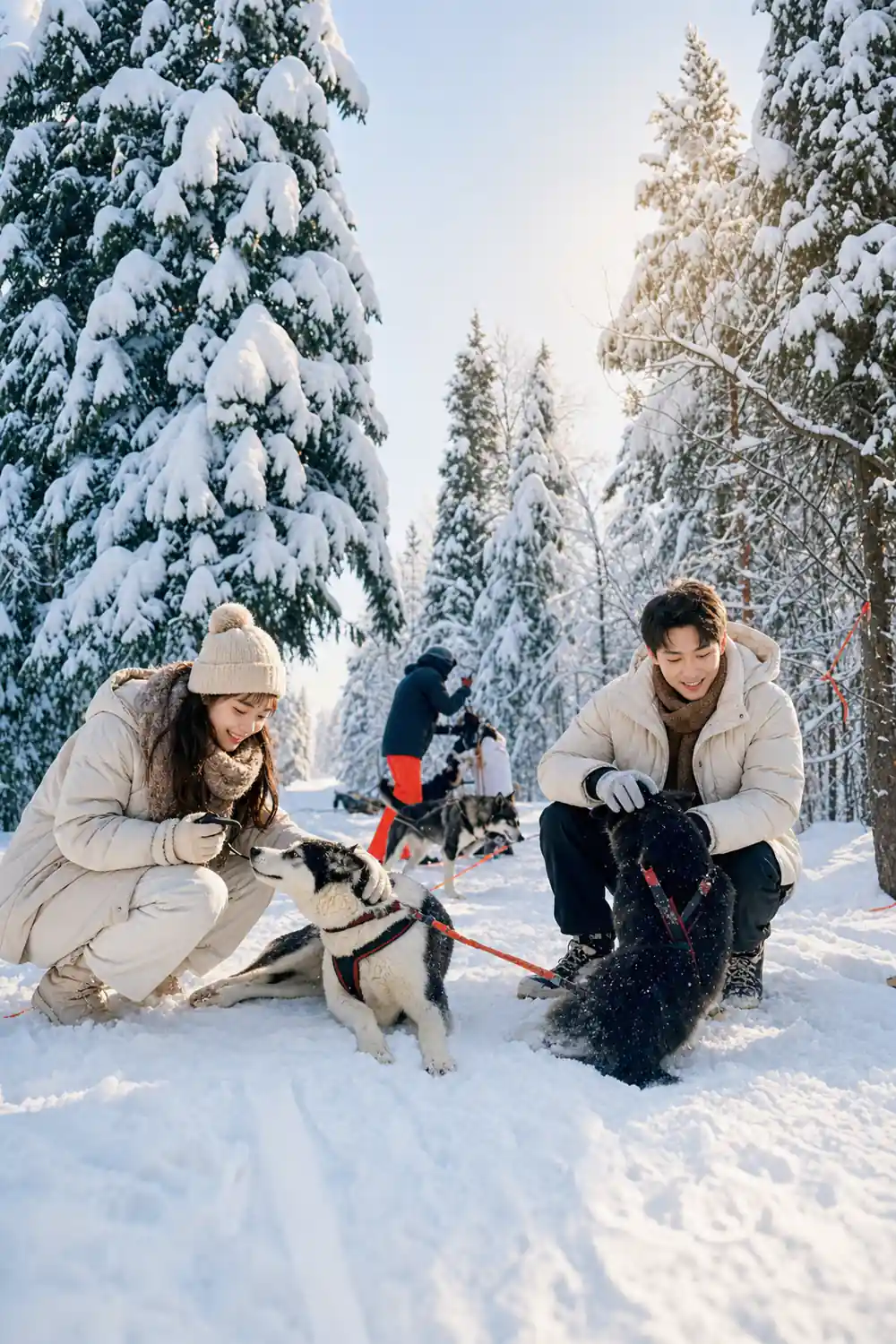
Two things are included that most descriptions of the tour underplay. The first is the puppies: a four-month-old litter you are given time with after the ride. Four months is old enough to be robust and young enough to be entirely uninterested in dignity, and for families it frequently ends up being the part children talk about afterwards rather than the sledding.
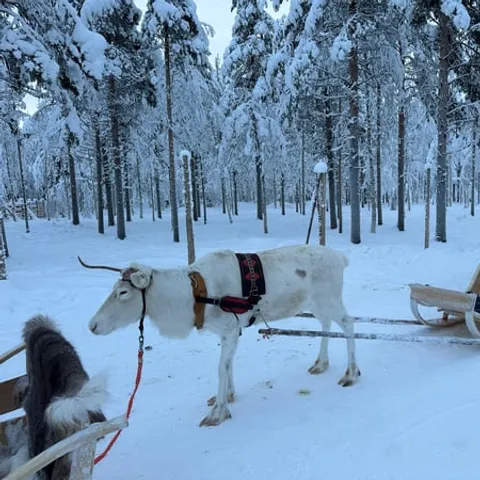
The second is a reindeer area beside the husky base, with the chance to see and feed the animals. Reindeer and sled dogs living a fence apart is normal in Lapland and startling to everyone else, and it means a two-hour booking contains two quite different animal encounters rather than one.
Neither is a guaranteed performance. Puppies are not always the same age and reindeer are animals rather than exhibits, so what you get depends on the day. What is fixed is that both are part of the tour rather than an upsell.
The cold, and what it does to a person standing still
February is the coldest month at Levitunturi, averaging minus eight and a half by day and minus thirteen and a half at night, with January barely behind it. Those are averages rather than extremes, and a still, clear morning can sit well below them.
The thing first-time visitors get wrong is not the number but the activity. Walking around a village at minus fifteen is comfortable in ordinary winter clothing. Standing on the back of a moving sled at the same temperature is not, because you are not generating heat and you have wind on you. Extremities go first: fingers, toes, the tip of the nose.
Dress in layers with nothing tight, keep a spare pair of gloves accessible, and treat the heated shelter at the end as part of the tour rather than an afterthought. The hot drink is there for a reason.
Getting there, and the meeting point
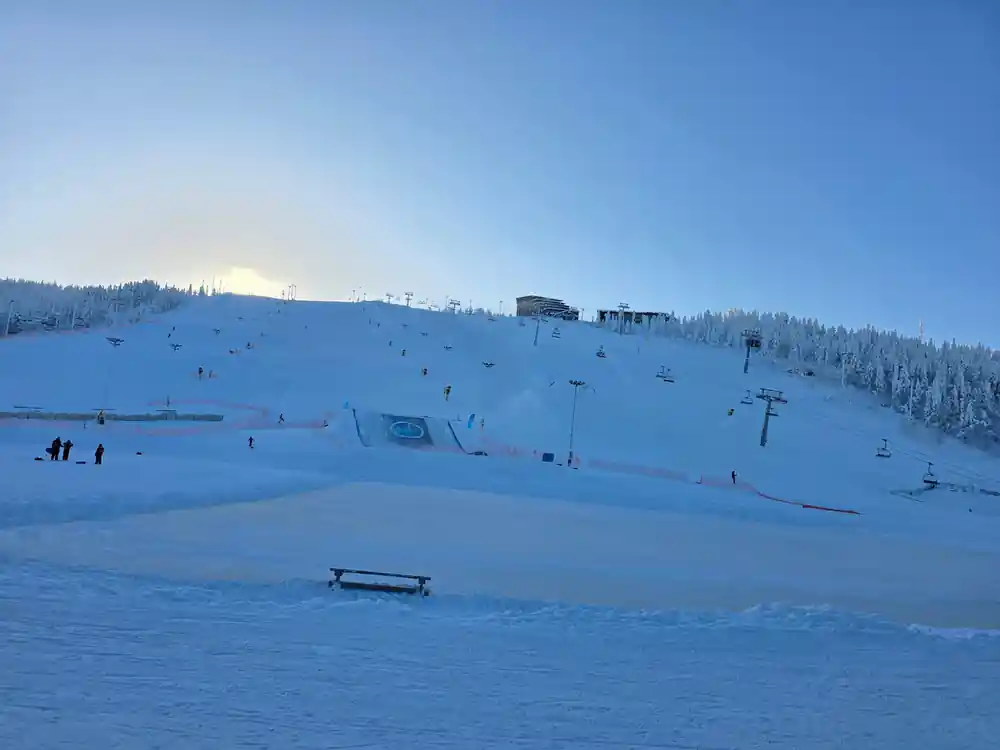
Levi is reached through Kittila airport, about fifteen kilometres away, which is closer to its resort than any other airport in Lapland. From Rovaniemi the drive is roughly two and a half hours north. The village at the foot of the fell is called Sirkka, and the two names are used almost interchangeably, which causes a certain amount of confusion on maps and in addresses.
The tour meets in the car park in front of the Burger King in Levi, where a black minivan waits. It is an unglamorous starting point for a day in the Arctic and it has the advantage of being impossible to miss. From there it is about ten minutes to the base.
You do not need a car for this. The village is small and walkable, the meeting point sits inside it, and anyone staying in Levi can reach the start of the tour on foot in a few minutes.
Who this suits, and who it does not
It suits anyone who wants to drive rather than be driven, and who would rather have two good hours than a half-day that includes a lot of standing about. It suits families, on the strength of the puppies alone. It suits people staying in Levi without a car, because the meeting point is in the village.
It suits it less well if you want a long wilderness expedition. Five kilometres is a taste, deliberately, and the operator is not pretending otherwise. If you want to spend a full day mushing or an overnight on the trail, this is not that tour and a longer safari elsewhere in Lapland will serve you better.
And it is a winter activity in a place with real winter. The season depends on snow, the daylight in December is measured in minutes rather than hours, and both of those are facts to plan around rather than problems to be solved.