Quick summary
- The Siberian husky has a written standard and a registry. The Alaskan husky has neither, by design.
- The Alaskan is bred for whether it pulls well, not for how it looks. That is why no two look alike.
- Heavier coat, more uniform build, and the endurance the breed was originally kept for.
- A kennel running both can build a team from whichever combination suits the distance and the load.
Why the distinction exists at all
Almost every visitor arrives with one word, husky, and one mental picture, which is a grey and white dog with blue eyes. That picture is a Siberian husky, and on a working gangline in Lapland it is frequently in the minority.
The kennel at Levi runs Alaskan and Siberian huskies together, and the two are not variants of one animal. They are the products of two completely different processes: one a formal breed with a standard, a registry and a show ring, the other a working population with no standard at all.
Understanding which is which turns a line of dogs from decoration into something you can actually read.
The Siberian husky, and what a breed standard is
The Siberian husky is a registered breed. That means a written standard exists describing what one should look like: a size range, a build, a coat, an outline, a set of acceptable colours. A dog is a Siberian husky because its parents were and because it conforms.
The breed came from working dogs kept by the Chukchi people of north-eastern Siberia and reached Alaska in the early twentieth century, where it was taken up for racing. Formal recognition and the show ring followed, and from that point the population divided between dogs bred to a standard and dogs bred to work.
The practical characteristics are a dense double coat, a moderate size, and endurance rather than raw speed. They are built to move a modest load a very long way in extreme cold.
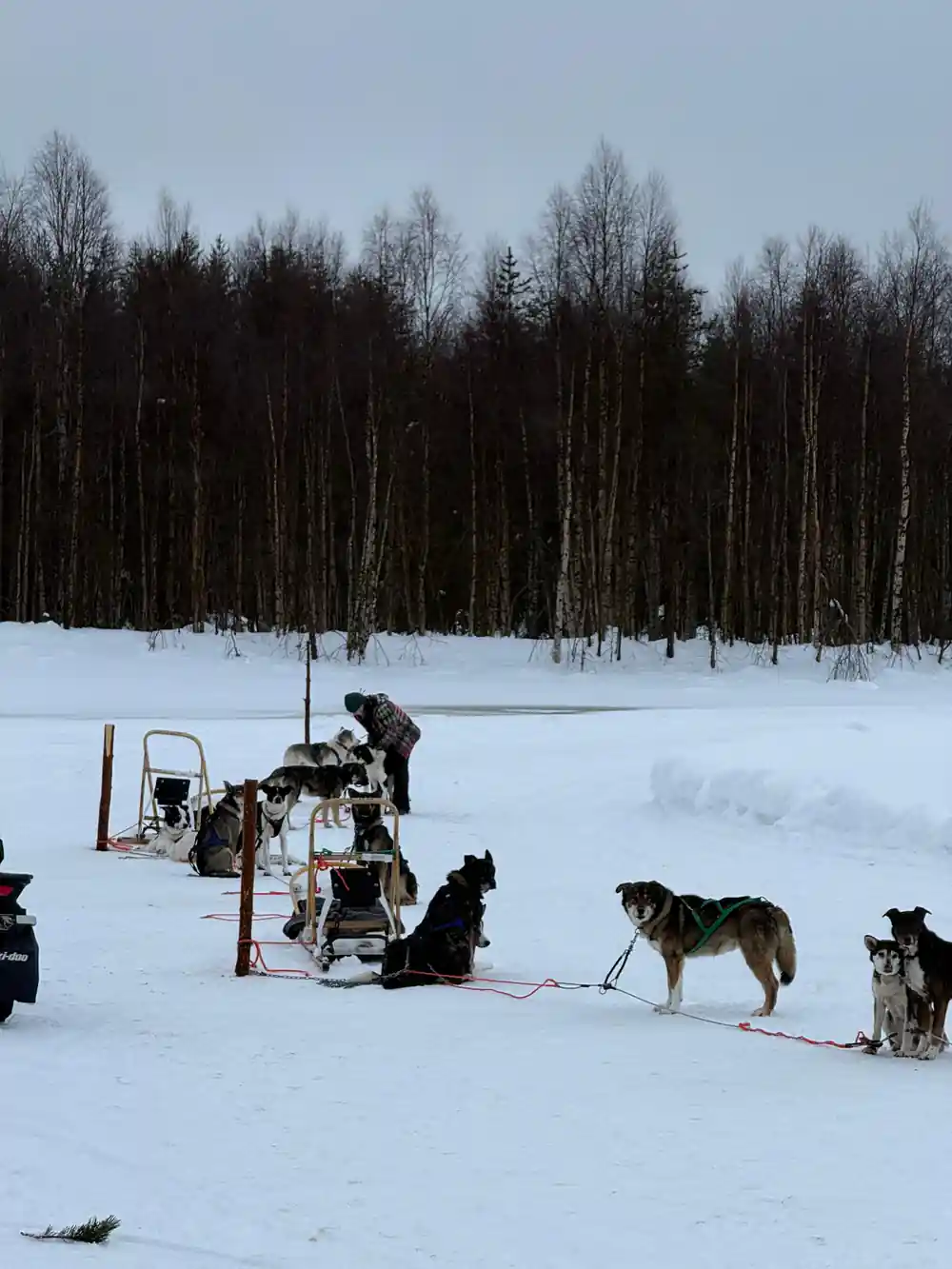
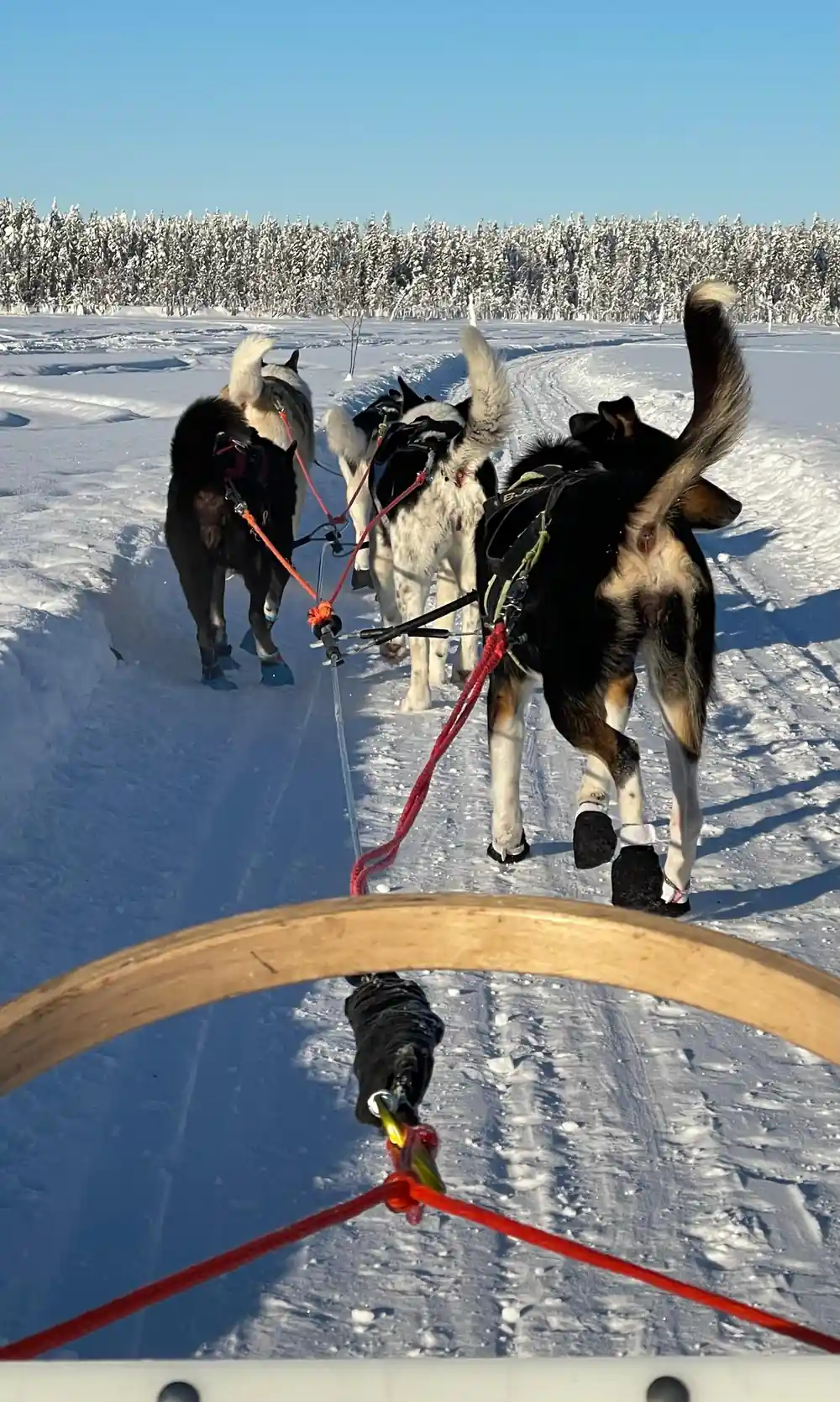
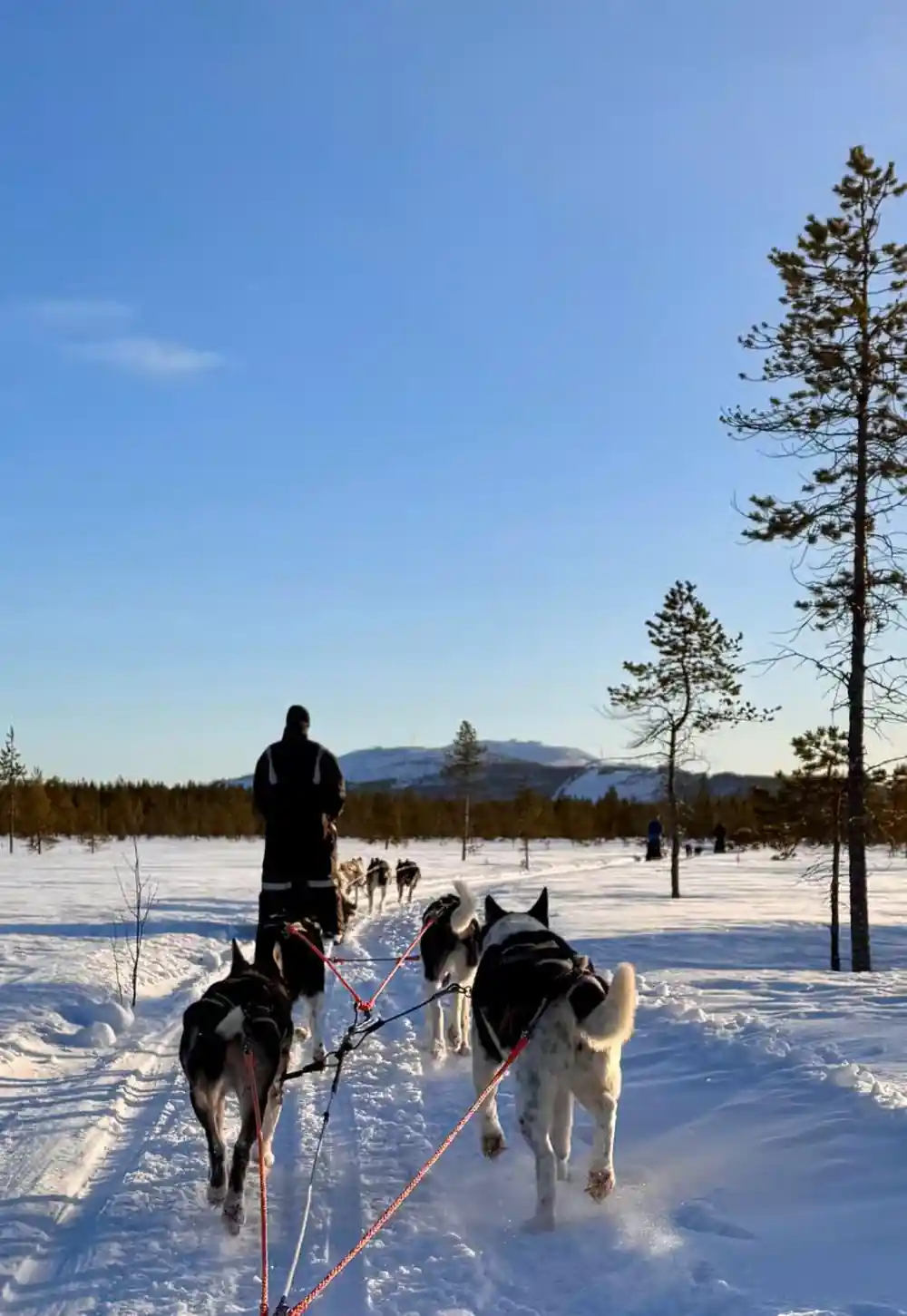
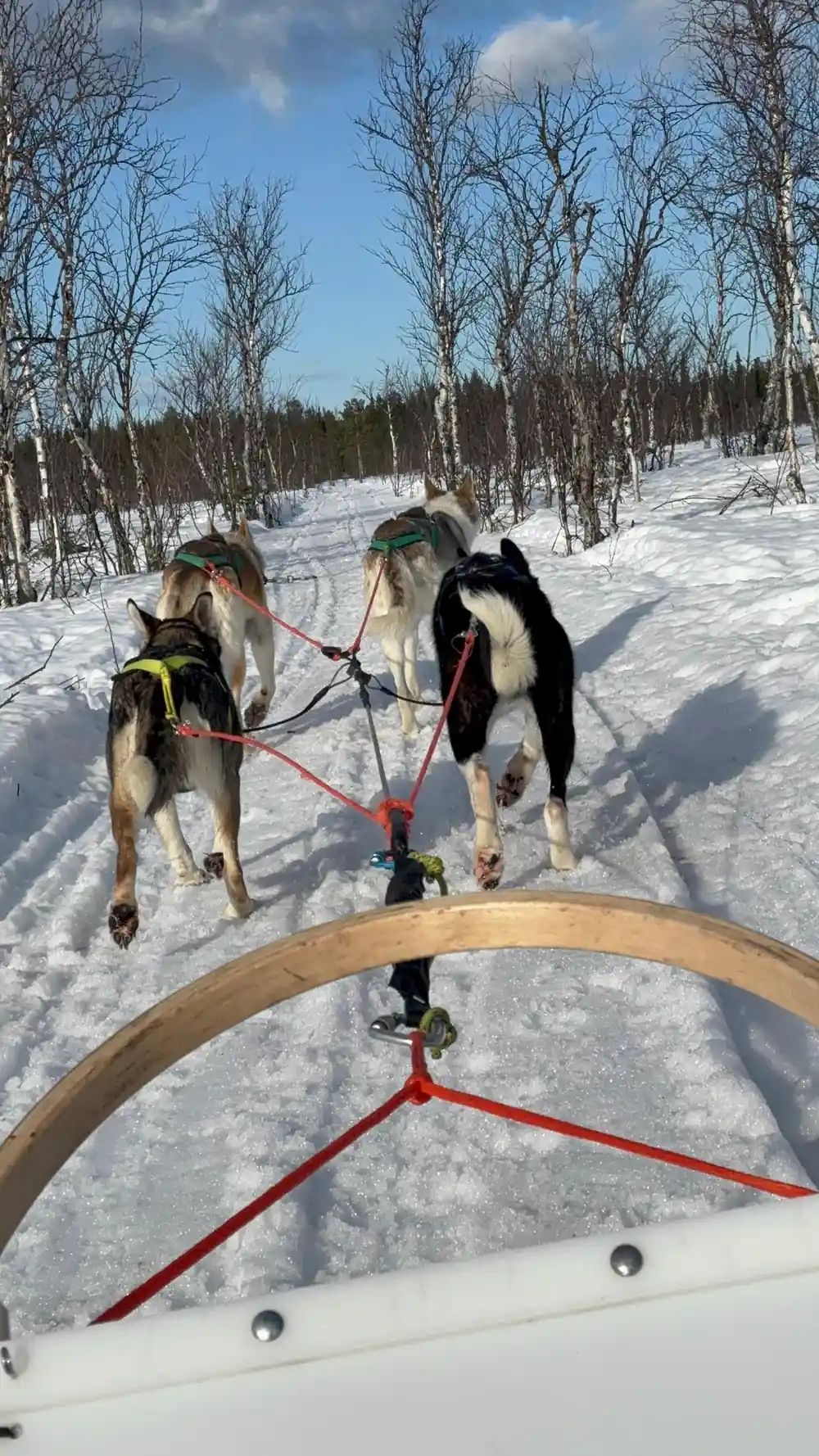
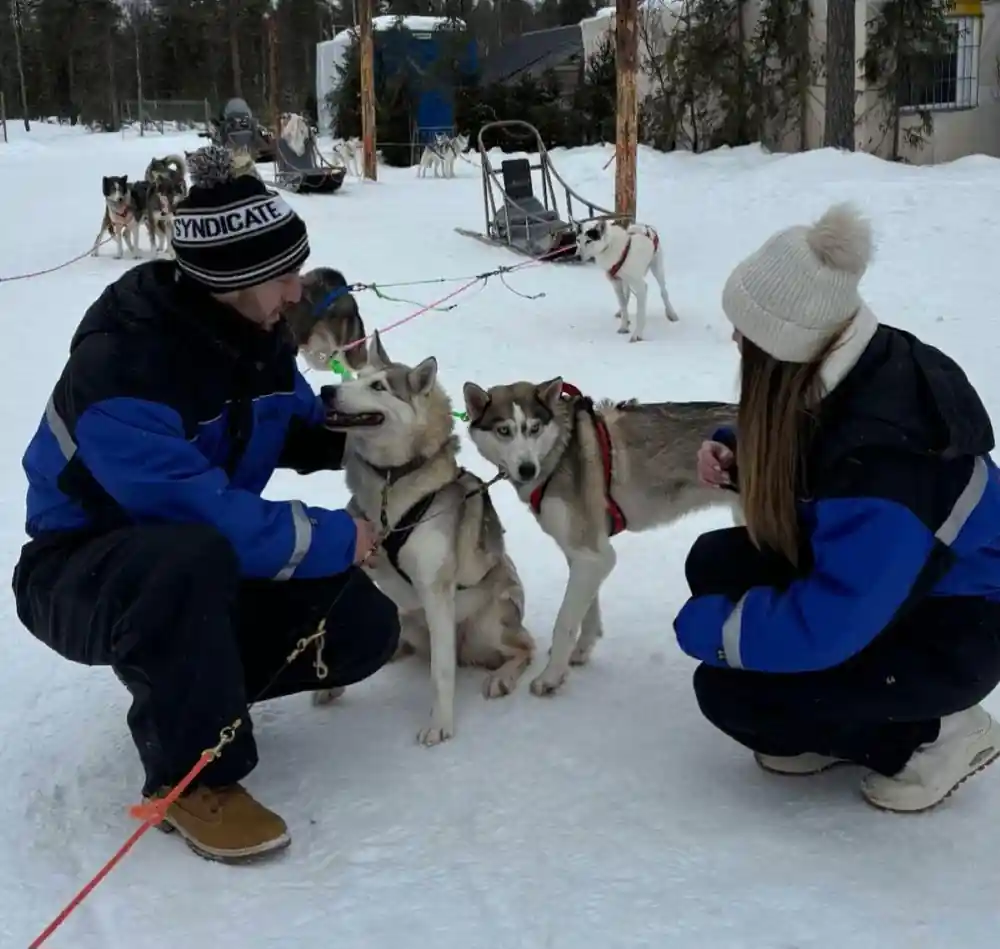
A team in harness, close enough to see that no two of the dogs match
The Alaskan husky, and why it is not a breed
The Alaskan husky has no standard, no registry and no show class, and none of that is an oversight. It is a working crossbreed, selected across generations on a single criterion: does this dog pull well, in a team, for a long time, without breaking down.
Anything that served that end went into the population. Village sled dogs, Siberian huskies, pointers, hounds, and whatever else a musher found useful. The result is a group of dogs that vary enormously in appearance and very little in what they are for.
So an Alaskan husky is defined by function rather than by form. Two of them standing side by side may look nothing alike, and both are exactly what they are supposed to be.
Which is faster, and which is stronger
In general the Alaskan is the faster and the more driven, because that is what it has been selected for, and it dominates competitive distance racing for the same reason. The Siberian carries more coat and tends to be steadier, and where a specific job needs a dog that will keep going in severe cold rather than move quickly, it has the advantage.
Both are far stronger than their size suggests. Neither is a large dog by the standards of working breeds, and a team of them will move a loaded sled and two adults without apparent effort, which is the thing that most surprises first-time drivers.
None of this is a ranking. They are different tools, and a kennel with both has more options than a kennel with one.
How a team is arranged
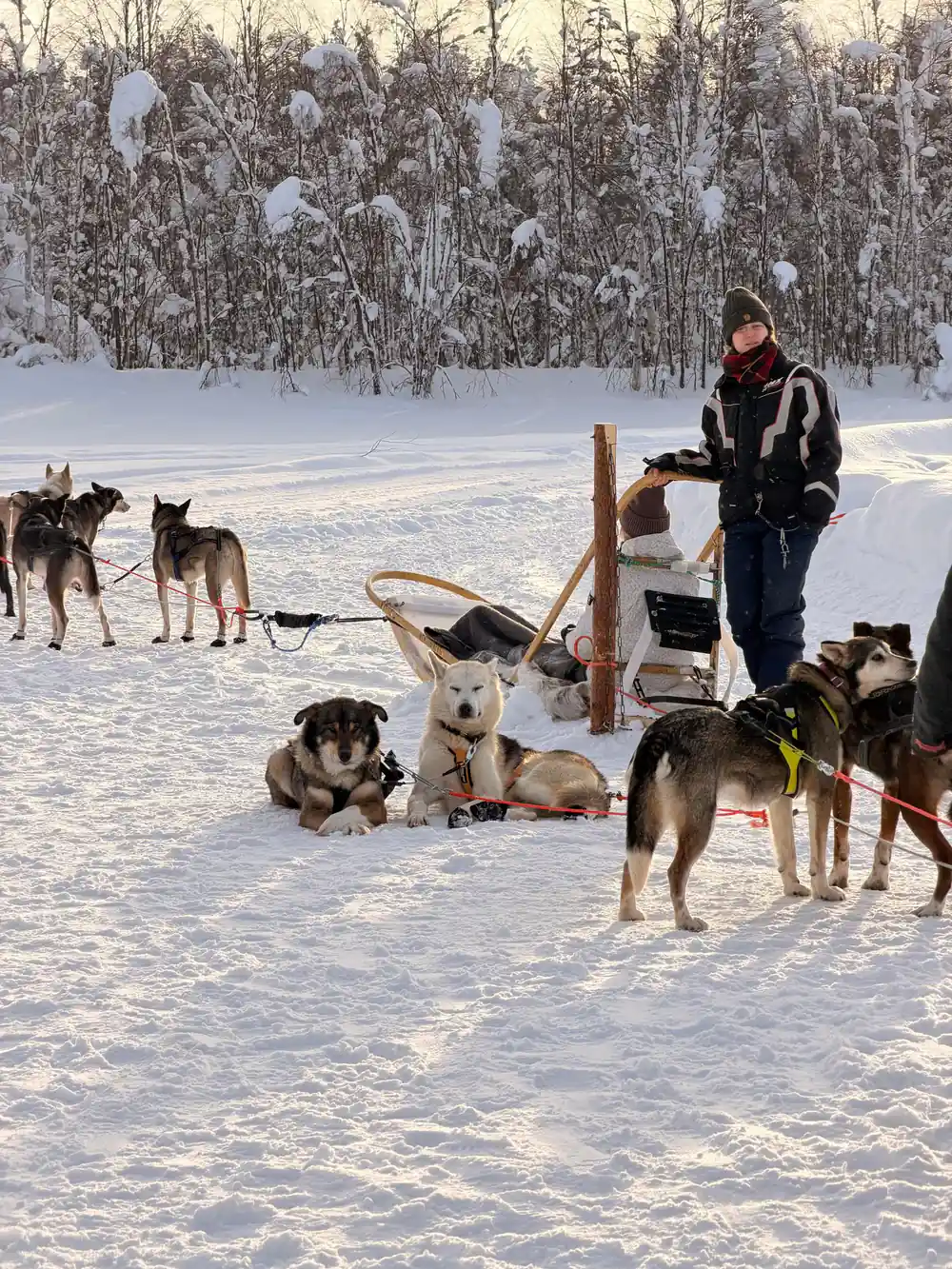
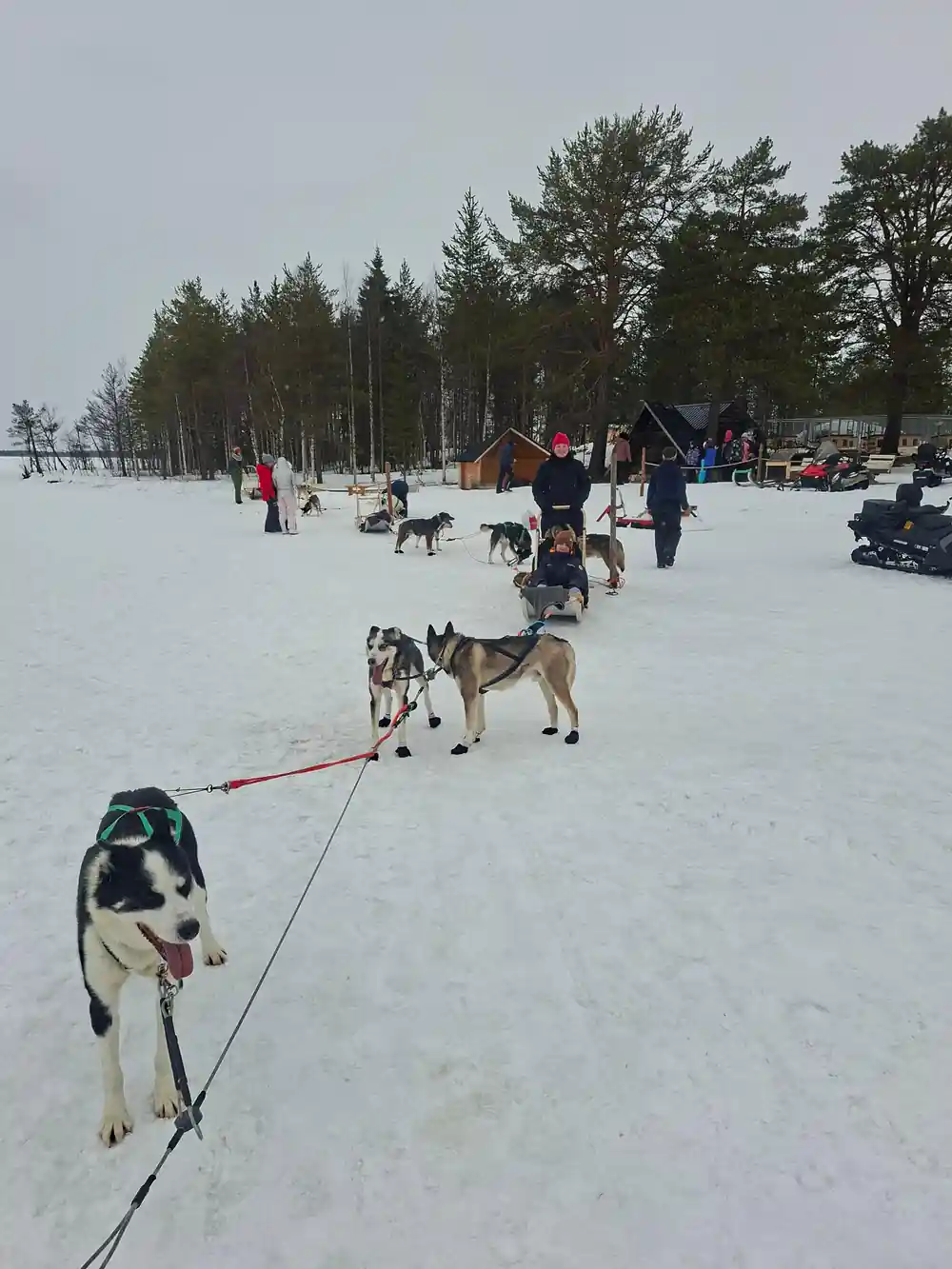
Dogs run in pairs along a central gangline, and the positions have names and jobs. At the front are the lead dogs, which take direction and set the pace. Behind them are the swing dogs, which carry the turn through the rest of the team. At the back, closest to the sled, are the wheel dogs, which take the most direct load and are usually the strongest.
Lead is not a reward and it is not about dominance. It goes to dogs that listen, that hold a line, and that keep their heads when something unexpected happens on the trail. Some dogs never lead and are outstanding in wheel.
The number of dogs depends on the load and the distance. A short tour sled with two people needs fewer than a long-distance run.
The eyes, the coat and the other questions
Blue eyes are a Siberian trait and unusually common in that breed, where in most dogs they are rare. Alaskans can have them too, because so much has gone into the population, and one dog with one blue and one brown eye is not a defect.
The double coat is the same story in both: a dense insulating undercoat with a longer, coarser layer over it. It is why a sled dog can sleep outside in temperatures that would be dangerous for most breeds, and why they shed spectacularly in spring.
The dogs at a kennel are individuals with names, positions they prefer and personalities the handlers will describe at length. The end of the tour is the moment to ask, and the guides are almost always pleased to be asked.
What it means for your run
In front of your sled there may well be both kinds, and knowing the difference changes what you see. The uniform grey and white dog with the heavy coat and the pale eyes is doing one job; the lean, mismatched, unphotogenic one beside it is doing the same job and is probably the faster of the two.
It also explains something about the kennel. Running both means the operation is not built around a look. It is built around a team that works, which is the correct priority for animals that do this several times a day through a season.
Ask which is which when you get there. It takes thirty seconds and it makes the line of dogs legible.
Two kinds of dog, one gangline, five kilometres
from US$173Reserve now & pay later