Quick summary
- Rautusjarvi is a lake in the municipality of Kittila, a short drive out of Levi, and the trail runs beside and across it.
- The route alternates between pine under snow load and open frozen lake, and the two look and feel completely different.
- This is fell country, not mountain country. Nothing on the route needs technique beyond standing and braking.
- People book expecting speed and describe silence afterwards. Once the team settles, the loudest thing is the runners.
Where the trail is
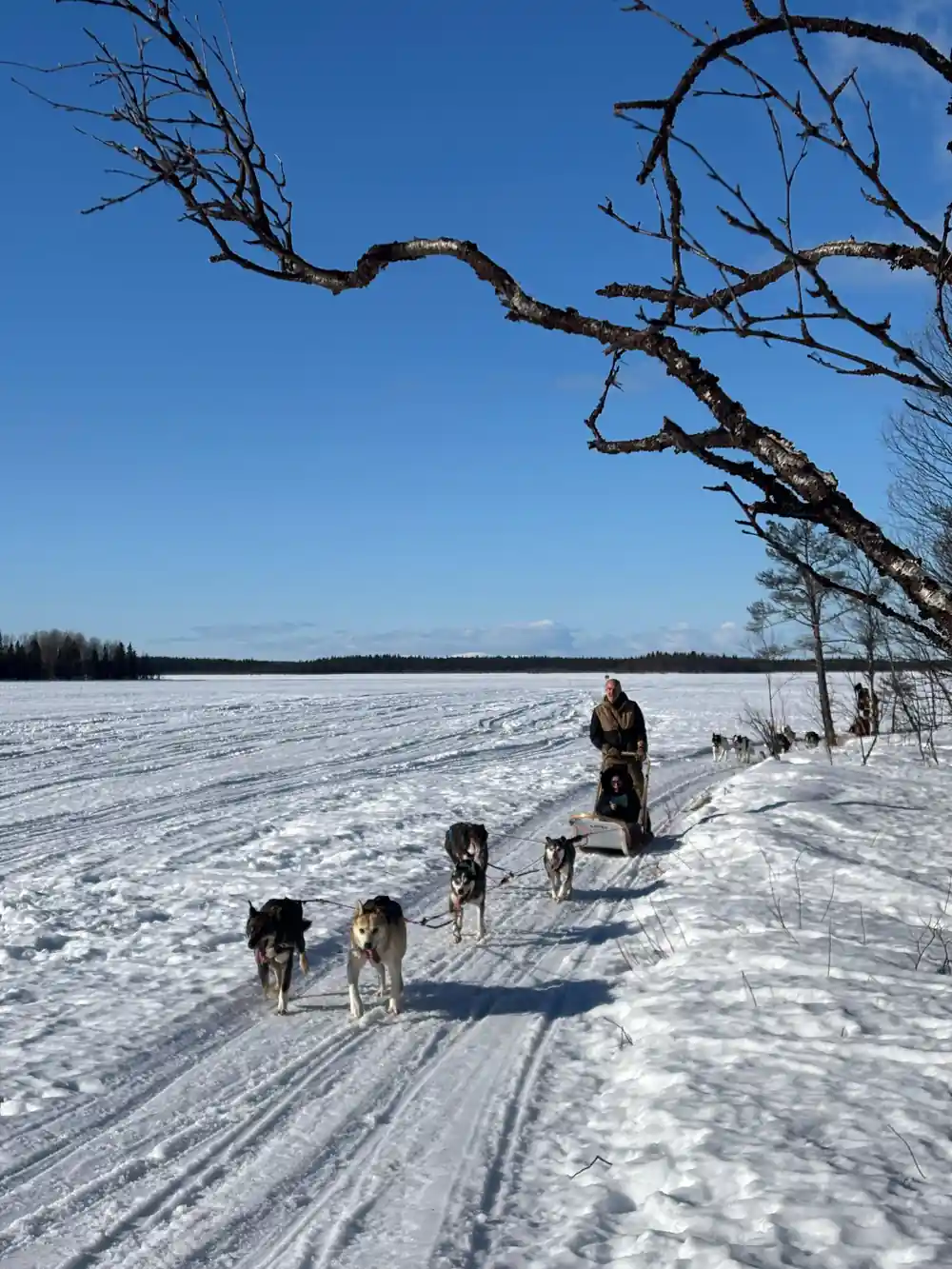
Rautusjarvi is a lake in the municipality of Kittila, about ten minutes from Levi by road. The husky base sits beside it and the five-kilometre trail runs from there, partly through the forest around the shore and partly out onto the lake itself.
That is worth saying because it is unusually specific. A great many Lapland husky descriptions place a tour in a generic snowy forest, and this one has a name and a location and a body of water you can find on a map. The route is the same one the dogs run through the season, and the landscape belongs to a real place rather than to a category.
The name means roughly the lake of the rautu, an old regional word for the Arctic char that lives in these waters. Half of Finland is lakes, and the ones this far north spend six months of the year as ground.
What a frozen lake actually is
A lake this far north freezes from the surface down over several weeks in late autumn, and by midwinter it carries a load that would be unimaginable further south. The ice thickens through the season, and on top of it sits a layer of snow that is what the sled actually runs on.
The important part is that nobody guesses. Lake ice in Finland is measured, and safe thickness for different loads is a published, understood thing rather than a matter of local confidence. Trails are set on routes that have been checked, and operators who work a lake through a season know it intimately.
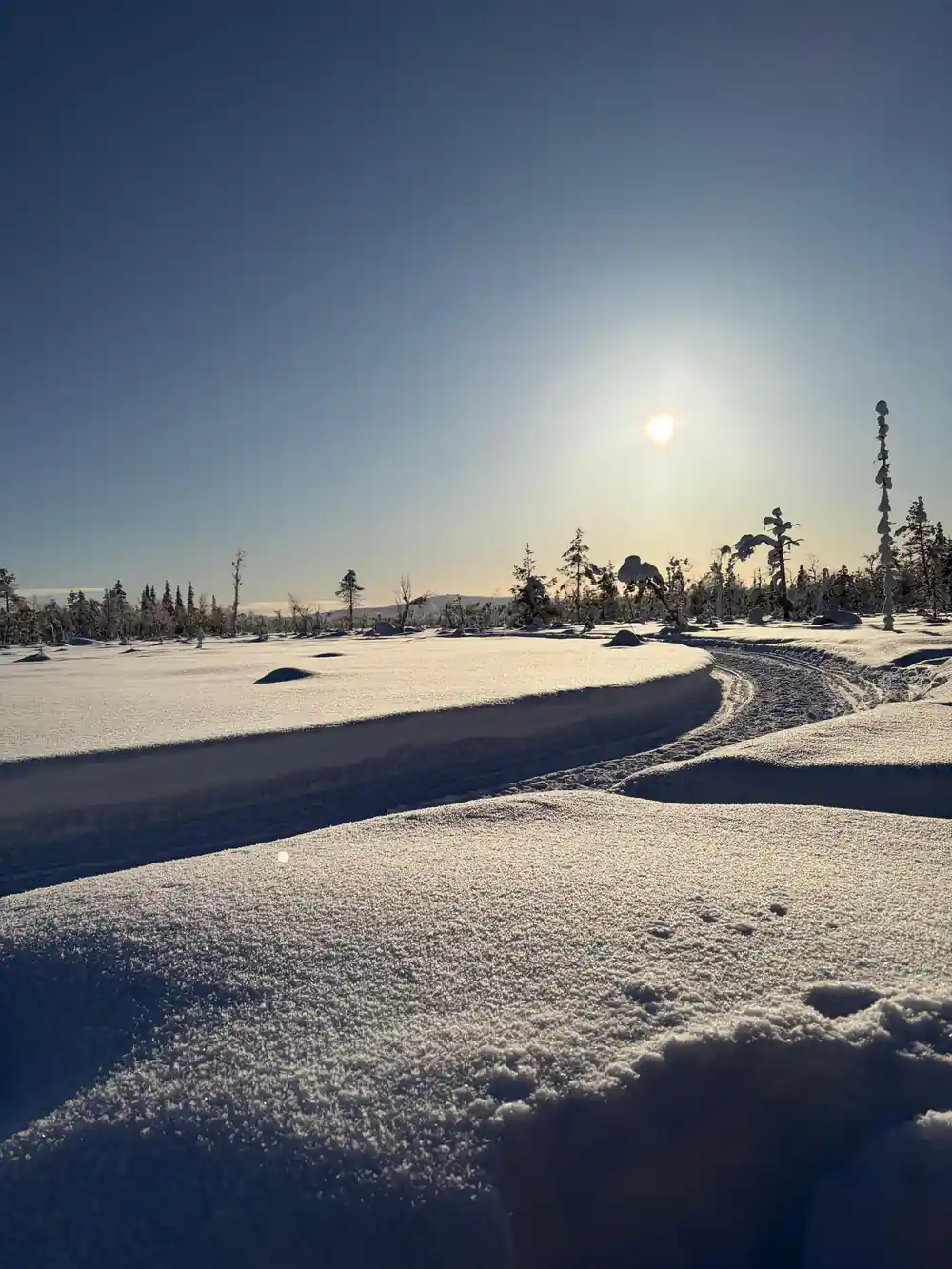
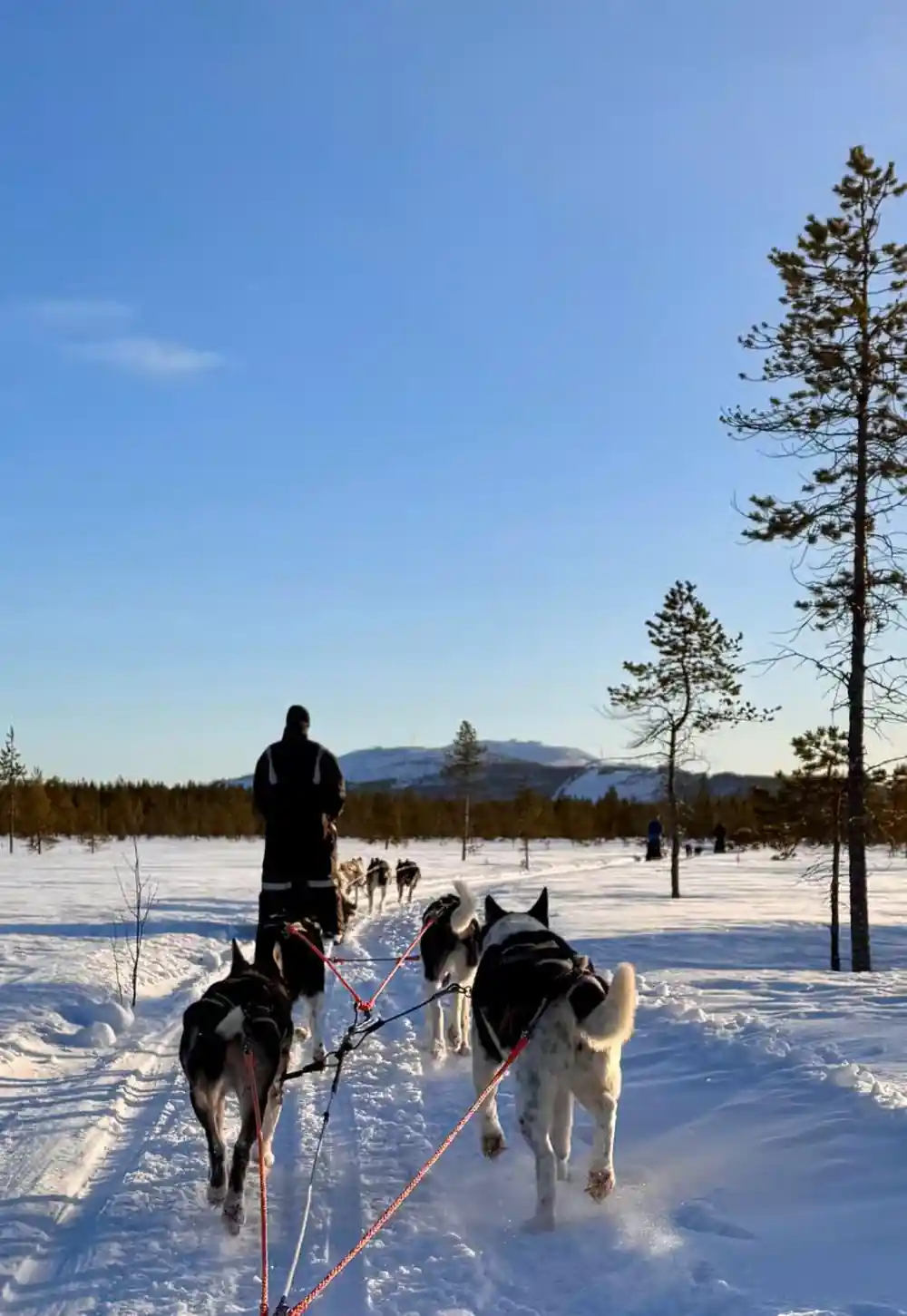
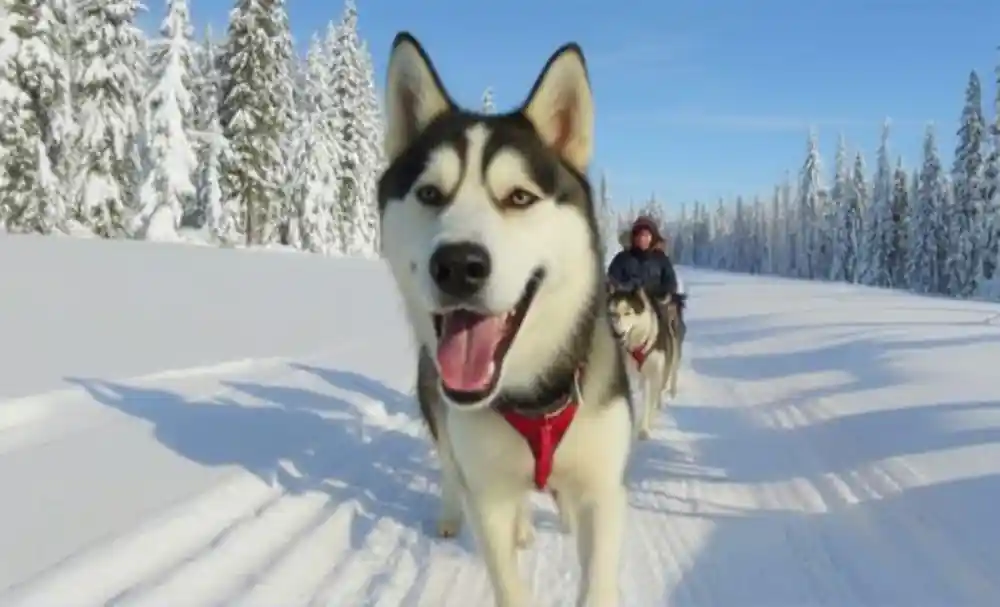
What it looks like from a sled is a plain: absolutely flat, absolutely white, with the treeline standing back on all sides. The change from forest to lake is the moment on the run that people describe when they get back.
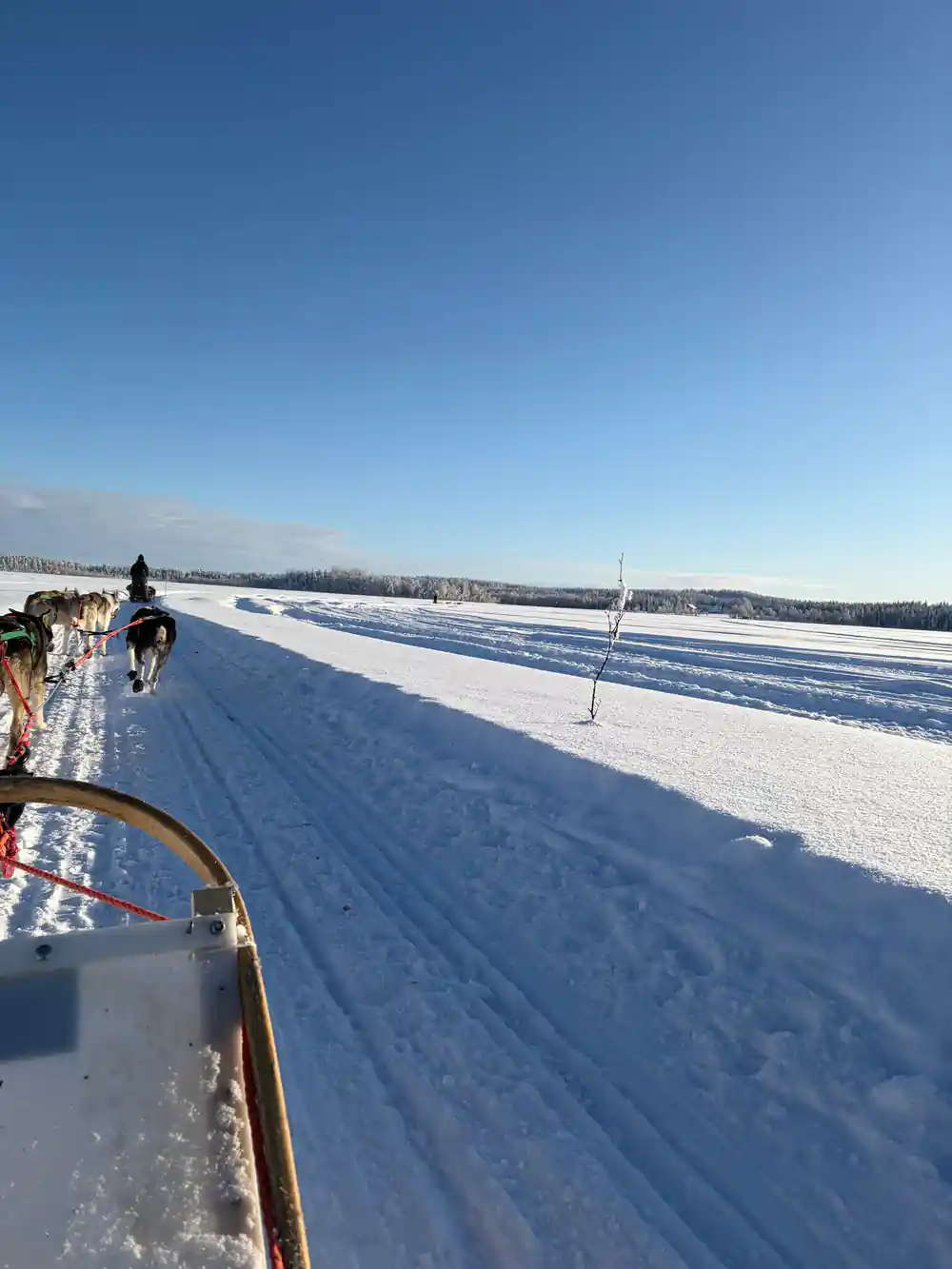
The trail leaving the treeline and opening onto the frozen lake
The forest half
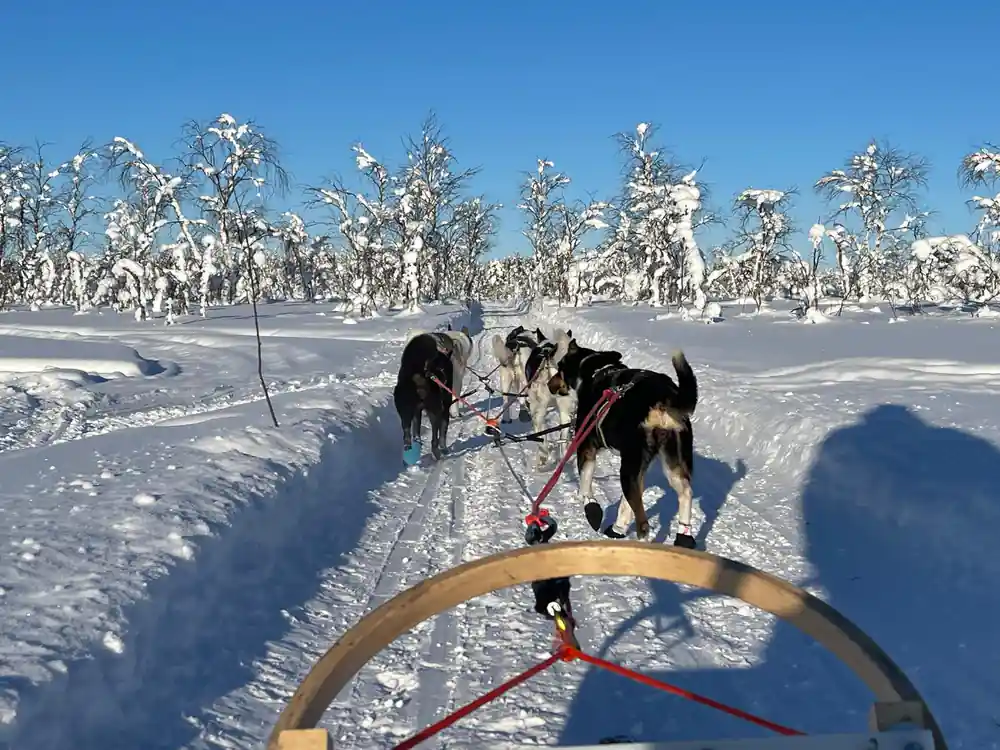
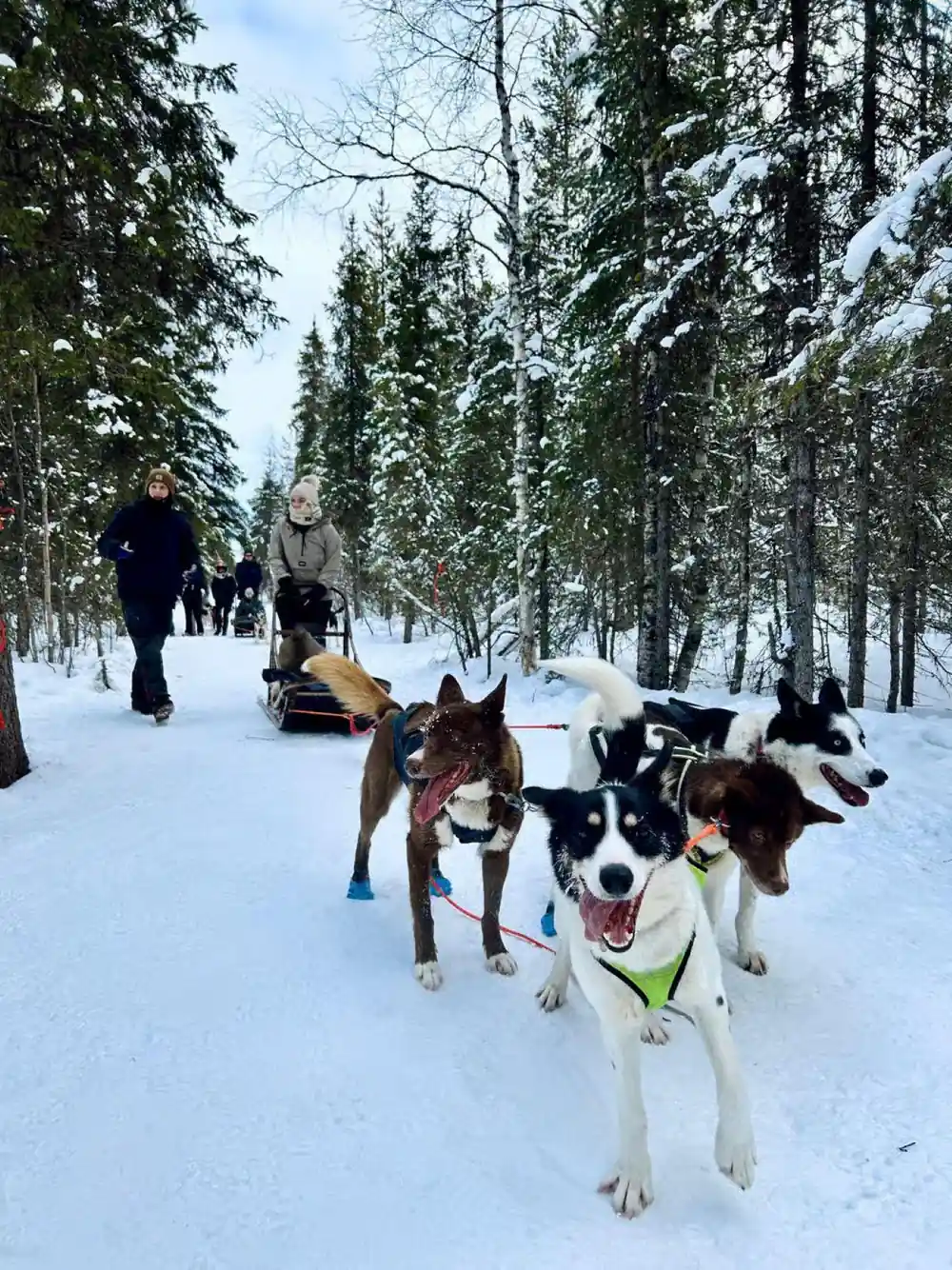
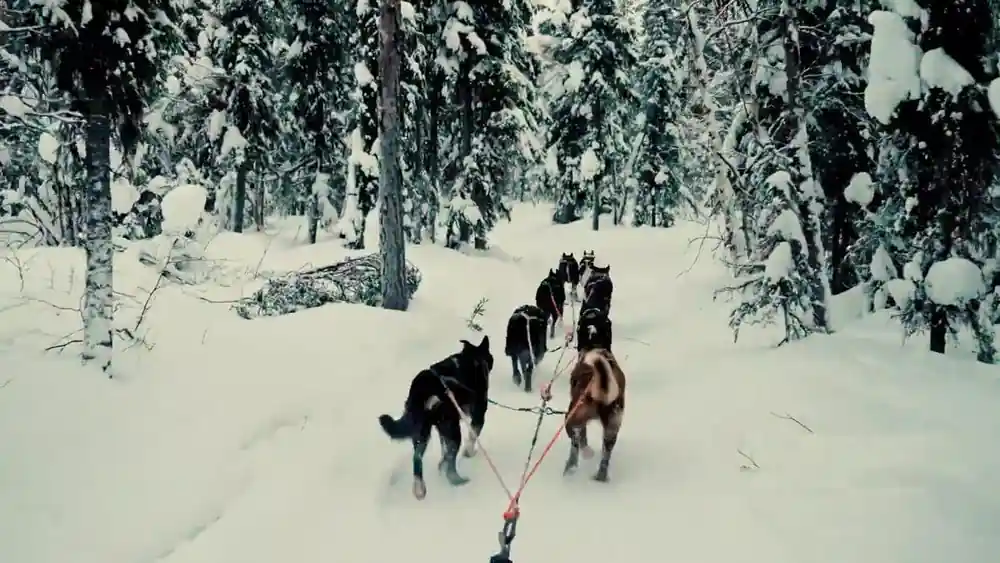
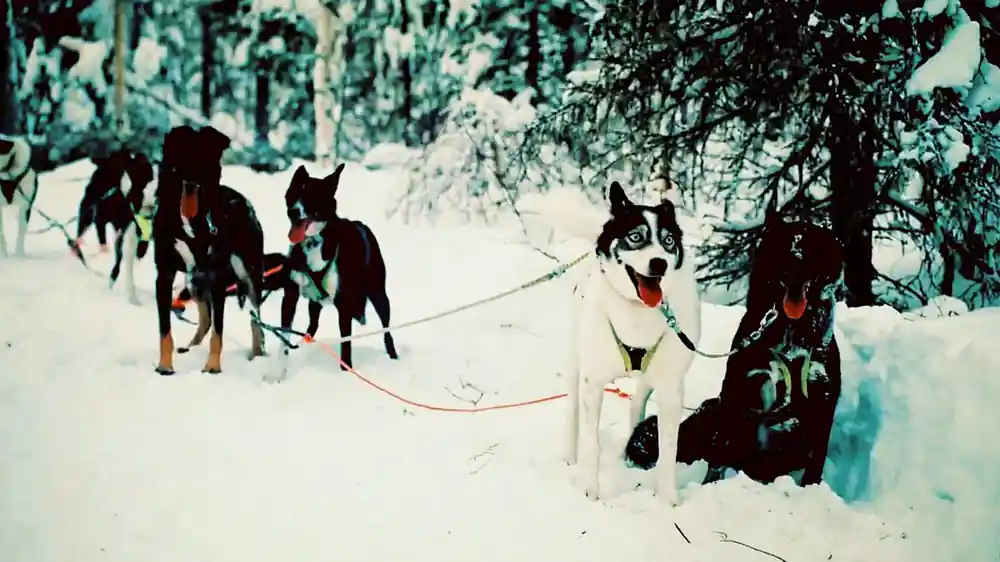
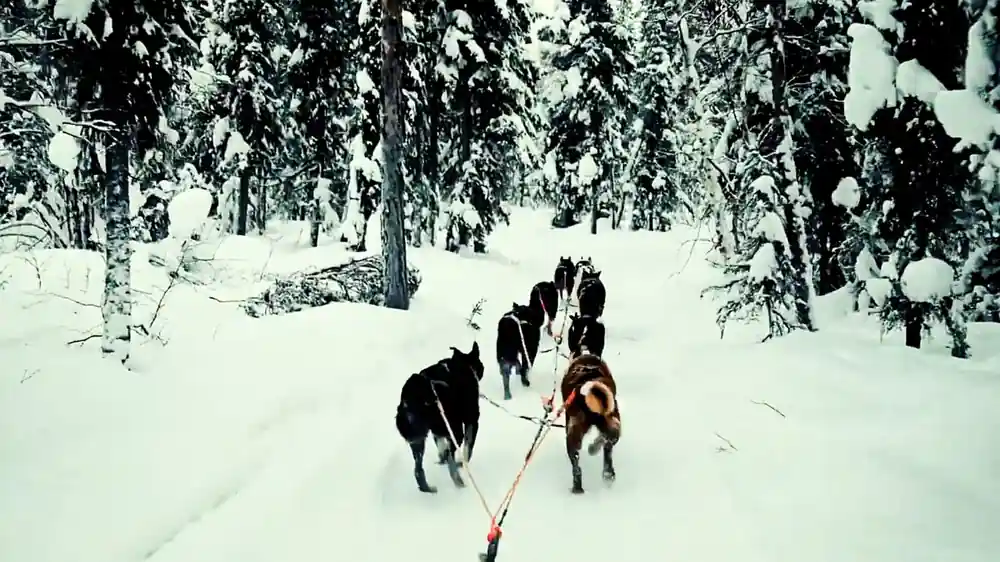
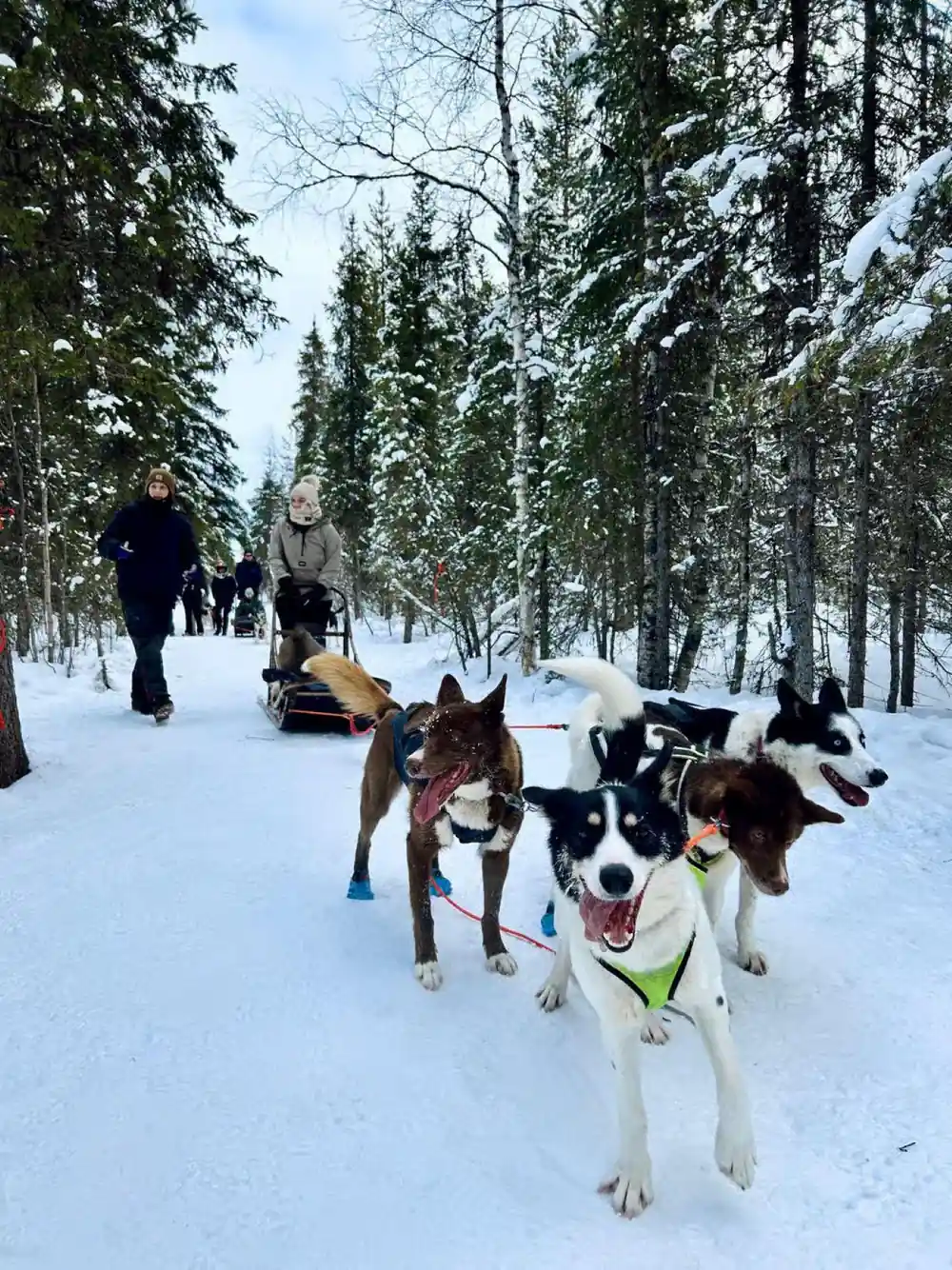
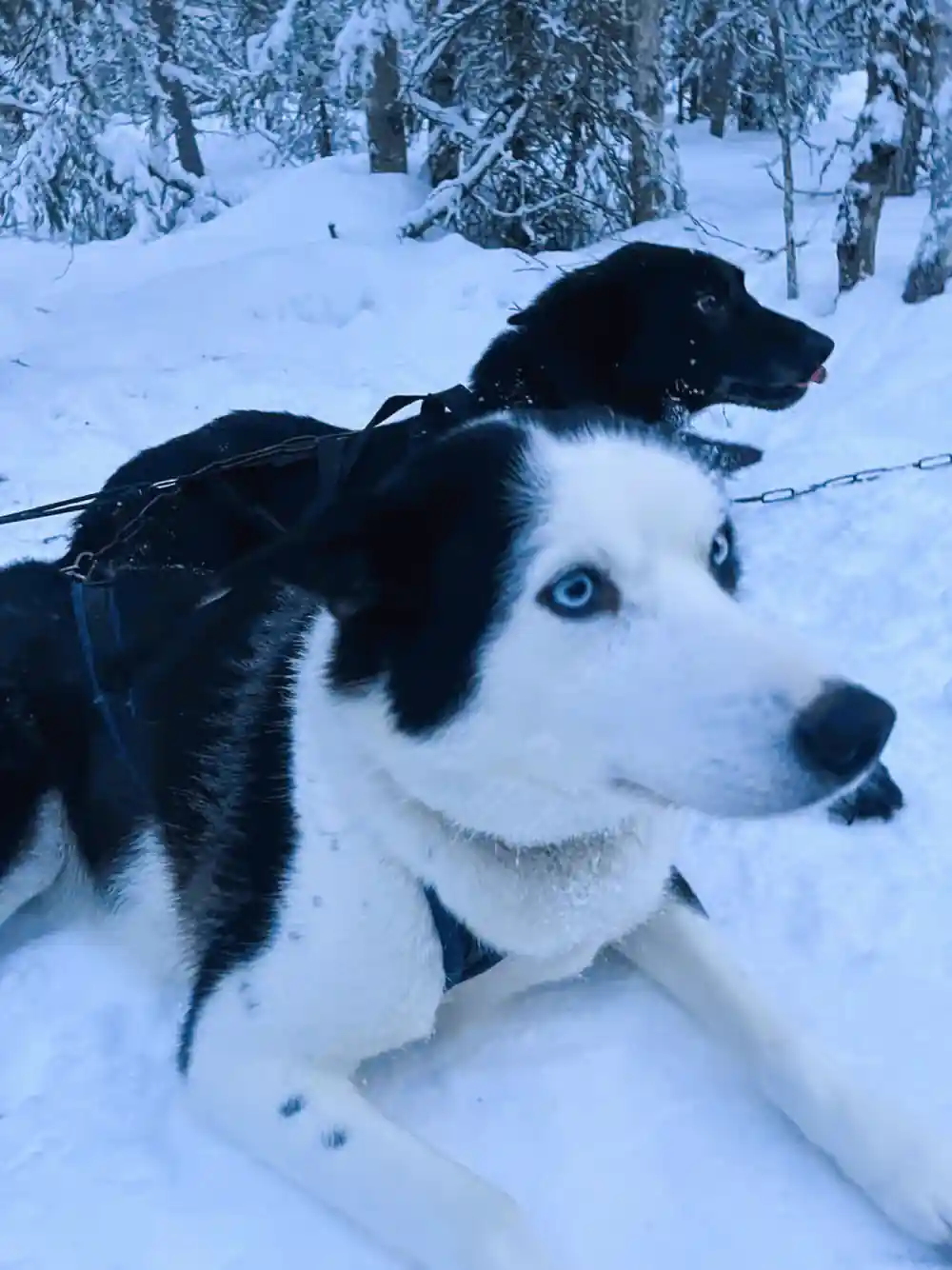
The other half of the route is pine forest carrying a full winter of snow. This is not the sparse, tidy conifer of a plantation. Snow load bends and buries the trees until they are shapes rather than trunks, and the local word for a tree so laden it has lost its outline is tykky.
The trail through it is narrow, and the sensation of speed is much higher than on the lake even though the pace is the same. Trees passing a metre away do that. It is also darker, which in midwinter twilight is considerable.
Between the two you get both halves of what a Lapland winter looks like inside one short run: the enclosed, muffled, close-quartered forest, and then the open, exposed, endless ice.
Five kilometres behind a team
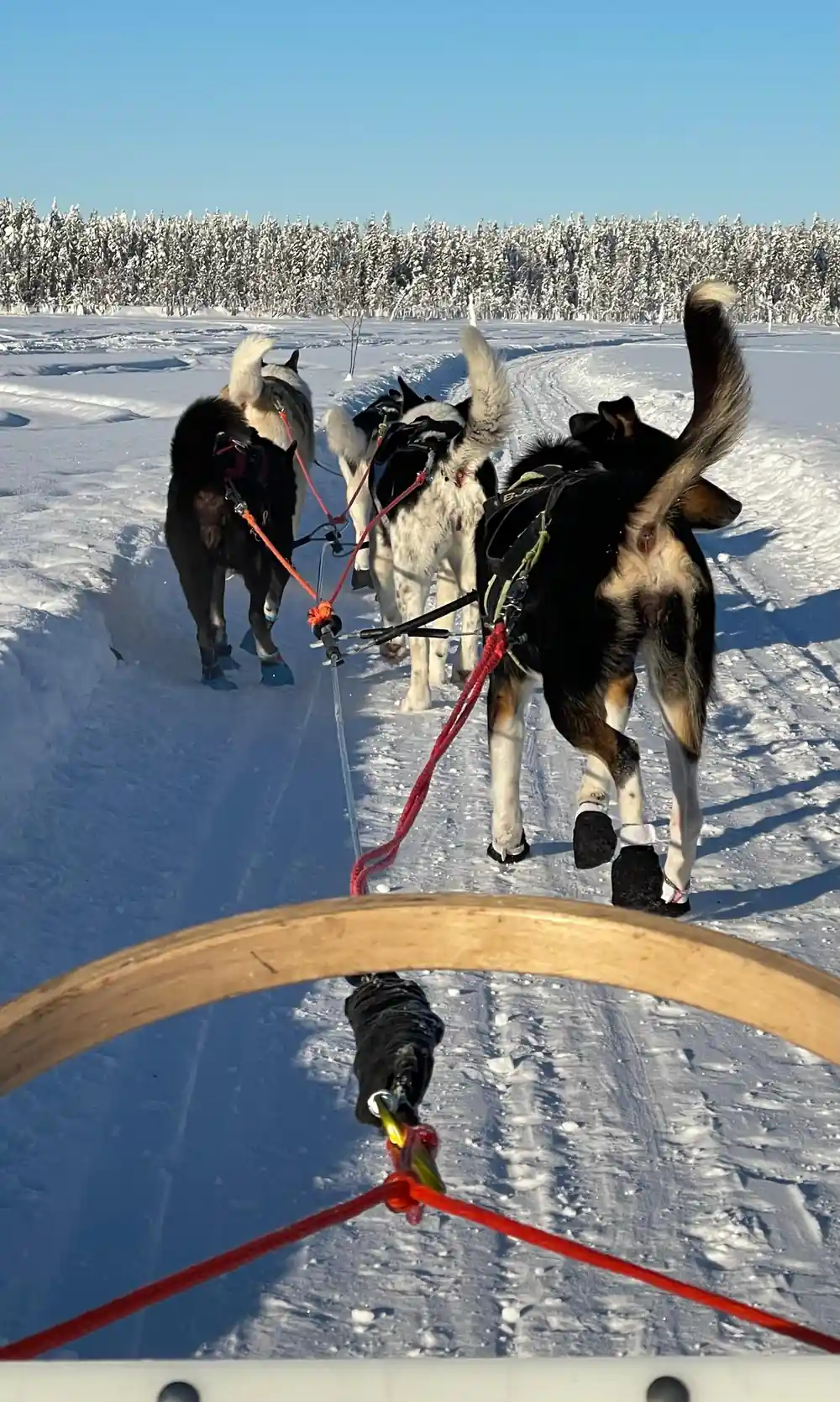
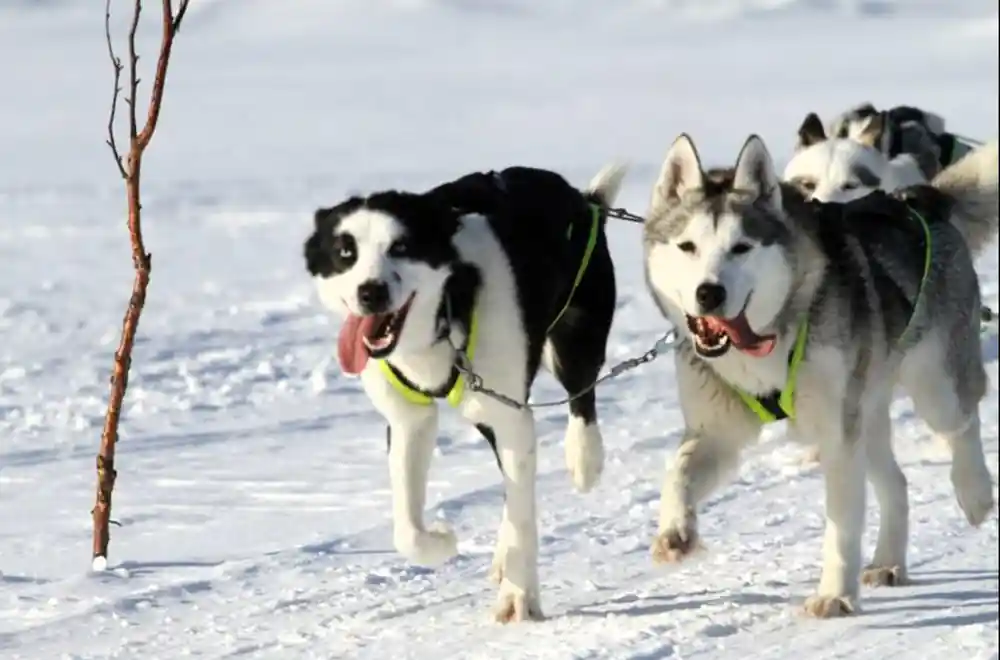
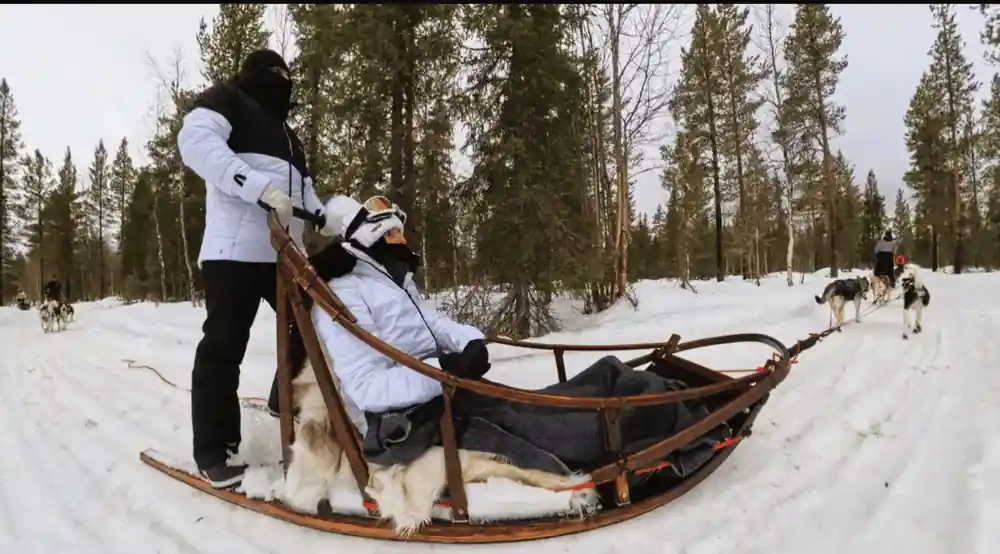
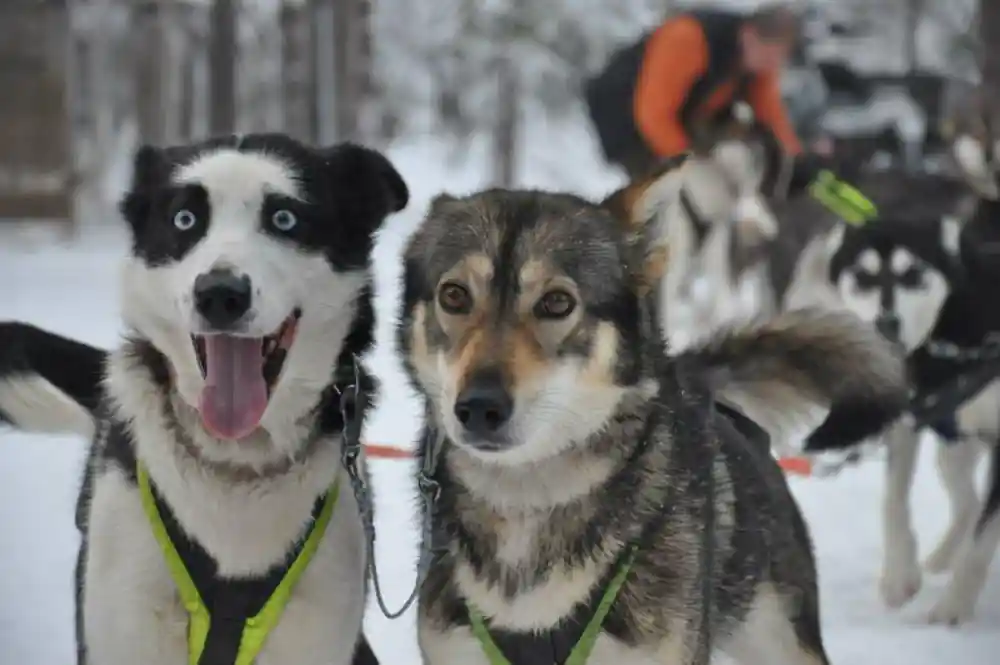
Distance and time do not map onto one another the way people expect. Five kilometres is a short run by sled-dog standards, and a working team covers it at a trot that feels faster than it is because you are a foot off the ground with no windscreen.
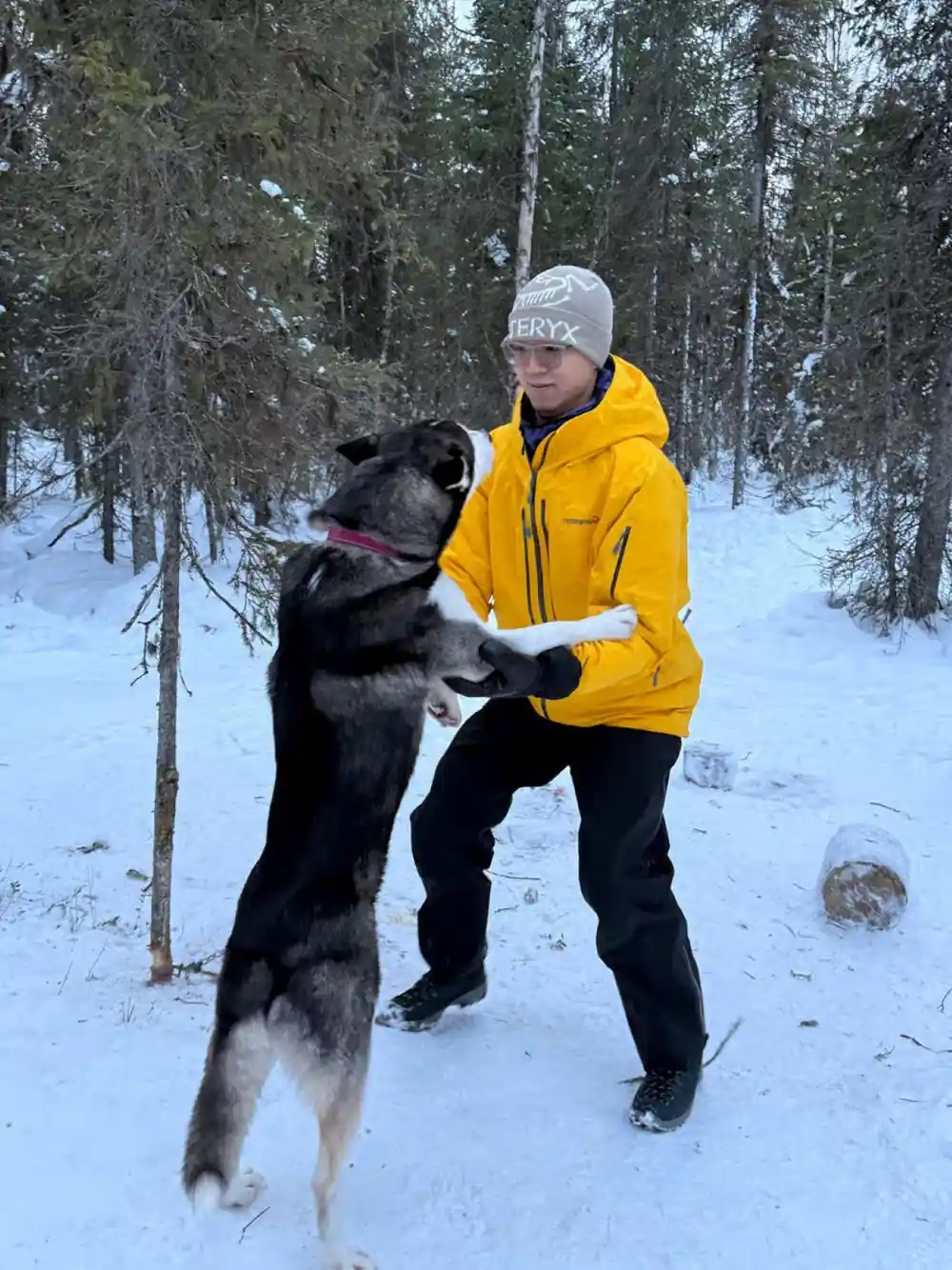
The first stretch is the fastest. Dogs start keen and then settle, and after a few hundred metres the pace becomes steady and the noise drops away. From then on the loudest thing is the runners on packed snow, with the occasional sound of the guide ahead.
It is long enough to learn what you are doing and not long enough to get bored by it, which is a reasonable working definition of the right distance for a first attempt.
The gradient, and why it matters that there is not one
Kittila is fell country. Levitunturi, the hill above the village, is a rounded fell rather than a peak, and the ground around Rautusjarvi is close to flat. The trail has no climb worth the name and no descent to be frightened of.
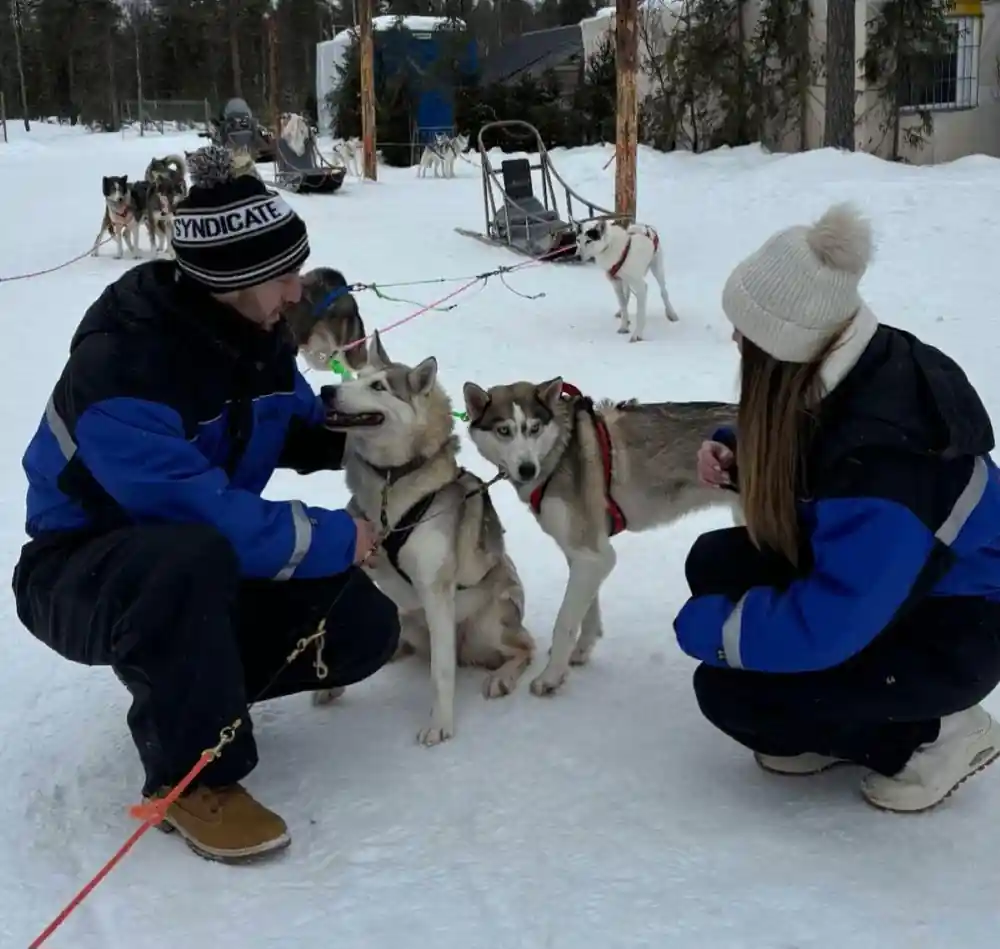
That is the single reason a five-kilometre self-drive run works for people who have never stood on a sled. On a hilly trail the brake becomes a skill; here it is a pedal you stand on when told to. Steering is leaning. The dogs know the route.
The corollary is that this is not a technical experience and does not pretend to be. If you want to learn mushing properly, there are multi-day courses in Lapland that will teach you. This is a taste of it on ground that forgives.
Wildlife, and the odds
Reindeer are the likeliest sighting, and they are not wild in the sense visitors imagine: almost every reindeer in Finland is owned and herded, and they range freely across country like this. Seeing one from the trail is common and not guaranteed.
Beyond that, tracks are more likely than animals. Hare, fox and grouse leave clear prints in fresh snow, and a guide who knows the trail will point them out. Larger animals exist here and are almost never seen from a moving sled.
Beyond that, tracks are far likelier than animals. Hare, fox and grouse all leave clear prints in fresh snow, and a guide who knows the trail well will point them out as you pass.
The light out on the ice
The reason the lake section is the part people remember is the light. Under trees in midwinter twilight everything is dim and blue and close. Out on open ice the same twilight has the whole sky in it, and snow reflects almost all of what falls on it.
In January that means a deep saturated blue that photographs badly and looks extraordinary. In March it means low sun across a flat white plain, which is the light that makes the postcards.
It is also, for exactly the same reason, the coldest part of the whole route. Out on the open ice there is nothing at all standing between you and the moving air.
Five kilometres of forest and frozen lake, driven by you
from US$173Reserve now & pay later