Quick summary
- More runs and more lifts than anywhere else in the country, on a rounded fell rather than a mountain.
- Compact, walkable, and the place every address and meeting point actually refers to.
- The husky booking is short by design, which is the argument for it rather than against it.
- With the most reliable snow between December and March, and the busiest weeks around Christmas.
What Levi is
Levi is the largest ski resort in Finland, built on and around Levitunturi, a fell of about five hundred metres rising directly above the village of Sirkka. It has more runs and more lifts than anywhere else in the country and it hosts World Cup alpine racing most seasons.
It is not an alpine resort and does not try to be. The fell is rounded rather than jagged, the runs are shorter than in the Alps, and the treeline is low enough that a good part of the skiing is open. What it has instead is snow reliability, an airport fifteen kilometres away and a season that runs far later than most European resorts manage.
For a visitor whose main purpose is a husky tour, all of this is context. It is why there is a village here at all, why there are flights, and why a two-hour booking sits inside an infrastructure that can fill the rest of the day.
Sirkka, the village
The settlement at the foot of the fell is Sirkka, and it is where everything actually is: hotels, apartments, restaurants, the shops, the lift base and the meeting points for every activity operator in the area.
It is small and it is walkable. The core is a few hundred metres across and the ski bus covers the rest during the season. Anyone staying in the village can reach the husky tour meeting point on foot, which is the reason a car is not needed for this trip.
The two names cause endless confusion in booking systems and on maps, and there is nothing to be done about it. Sirkka is the village, Levi is the fell and the brand, and they are the same destination.
The season, and the shape of it
Winter operations run from roughly November to April. Snow becomes reliable in December and stays that way through March, and the skiing frequently continues into May on the upper runs when everything below has gone.
Christmas and New Year are the peak: busiest, most expensive, and darkest. Late January through March is the better window for almost everybody, with a full winter of snow, temperatures that are cold rather than brutal, and light returning fast.
The Northern Lights season is a separate question with a separate answer: it runs from late August to early April, because what it depends on is darkness rather than snow on the ground.
The fell above the village, with the lifts running up its shoulder
What else fills a winter day here
A good deal, and most of it is bookable in the village. Snowmobile safaris, reindeer farm visits, ice fishing, snowshoeing, cross-country skiing on a large network of maintained tracks, aurora hunting in the evening, and the downhill skiing the resort exists for.
The village also has the ordinary machinery of a resort: restaurants, a supermarket, equipment hire, a spa or two. This is not a wilderness outpost and it is not pretending to be.
The practical planning point is that most activities are half a day or less, so a day can hold two of them comfortably. A husky booking in the morning and something else in the afternoon is the normal pattern.
How busy it gets
Levi is busy in the way a working resort is busy rather than in the way a famous one is. The peaks are Christmas and New Year, the Finnish school holiday weeks in late February and March, and the World Cup race weekend in November when the village fills completely.
Outside those, and particularly in January, it is noticeably quiet. That is the trade for the darkest month of the year, and for a certain kind of visitor it is an excellent trade.
Outside those weeks, and particularly through January, it is noticeably quiet. That is the trade you make for the darkest month of the year, and for some visitors it is an excellent one.
The top of the fell
Levitunturi is a rounded fell rather than a peak, and the top is reachable by lift through the season and on foot or by ski otherwise. The view from it is the thing that explains the landscape better than any map does: fells running to the horizon in every direction, forest between them, and almost nothing built.
The scale of empty country visible from up there is what most visitors have come for without quite knowing it. Finnish Lapland is not dramatic in the alpine sense and it is very large, and the top of a fell is where that becomes legible.
The sheer scale of empty country visible from up there is what a great many visitors have come for without quite realising it, and a fell top is where that finally becomes legible.
Fitting the husky tour into it
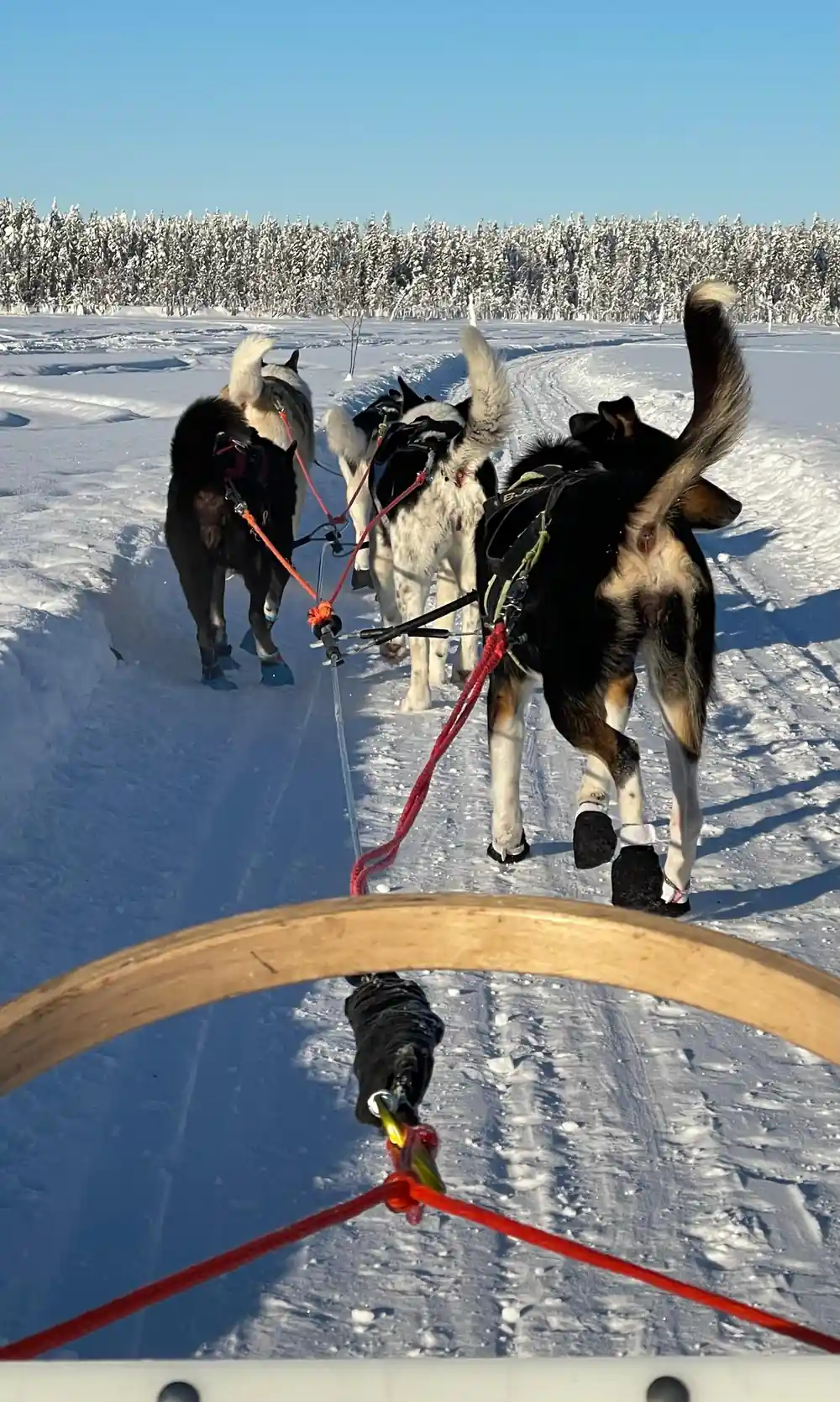
Two hours, meeting in the village, no car required. It is designed to be a piece of a day rather than the whole of one, and that is the correct way to plan around it.
Book it early in your stay rather than on the final morning. A husky tour depends on snow and on conditions on the day, and a booking on your last morning has nowhere to move to if it is cancelled.
And leave the afternoon loose. People come back from a first sled run wanting to talk about it, and that is better done over a long lunch than squeezed between two other bookings.
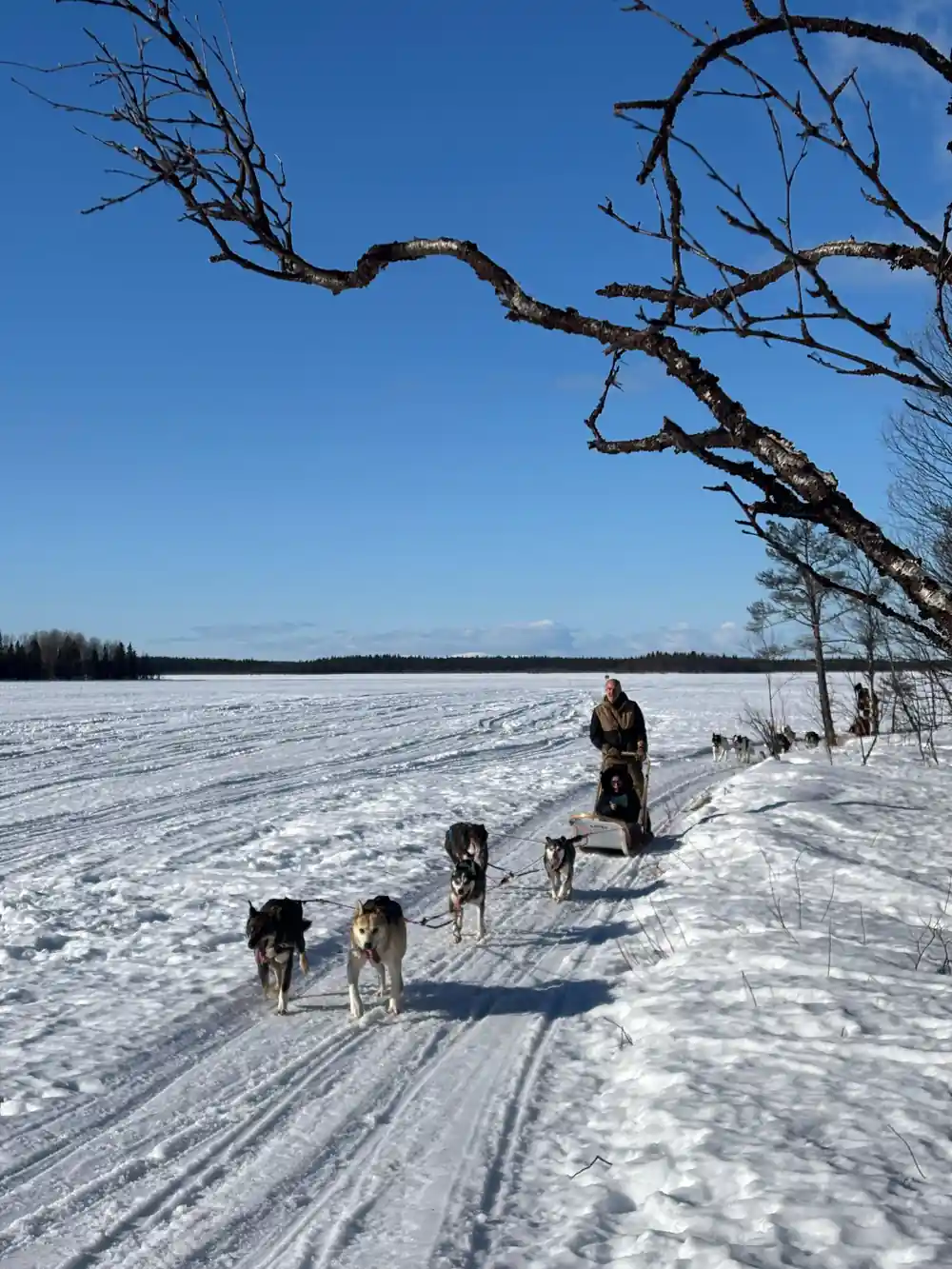
Two hours of the day on a sled, and the rest of it in the village
from US$173Reserve now & pay later