Quick summary
- Not January, though it is close. February averages minus eight and a half by day and minus thirteen and a half at night.
- The ground is reliably white for around six months, which is why the season runs the way it does.
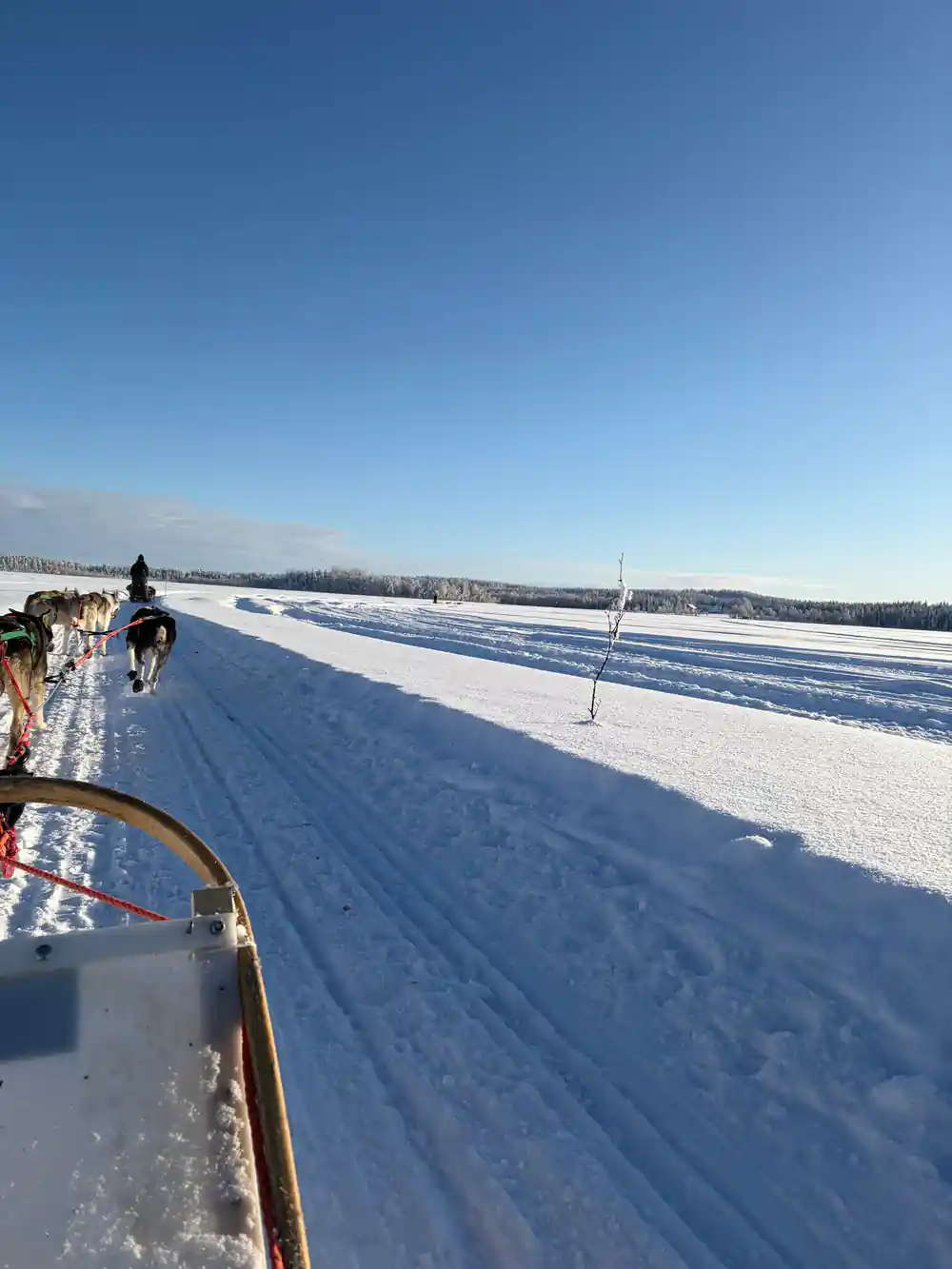
- Standing still on a moving sled at minus fifteen is a different experience from walking a village at minus fifteen.
- July averages seventeen degrees by day. Lapland is not cold all year, it is cold for half of it.
The shape of the year at Levitunturi
The figures on this page come from the weather station on Levitunturi, six kilometres from where the sleds run and 524 metres above sea level. That is close enough to describe the trail and high enough to be a degree or two colder than the village at its foot, which is worth knowing when you compare it against a forecast for Sirkka.
The year divides cleanly. From November to April the mean daily maximum stays below freezing and the ground holds snow. From May to September it is above freezing, often comfortably so, and July averages seventeen degrees by day. Lapland is not a place that is cold all year. It is a place that is cold for half of it and then briefly, surprisingly warm.
For a husky tour only the first half of that year matters, and within it the differences between one month and the next are considerably larger than most visitors expect them to be.
November and December: the season starts, the light goes
November averages minus three and a half by day and minus eight at night, which by Arctic standards is mild. Snow is arriving rather than established, and early in the month the cover can be thin. This is the part of the season most dependent on the year.
December drops to minus six and a half by day and minus eleven and a half at night, and by then the snow is reliable. What December takes away is light rather than warmth: on the fifteenth the sun does not rise at Levi at all. That does not mean darkness, because there are hours of blue twilight either side of noon, but it does mean a tour that runs in something other than daylight.
December is also the wettest of the winter months at 58 millimetres, which at these temperatures falls as snow rather than rain and is a good thing for a trail.
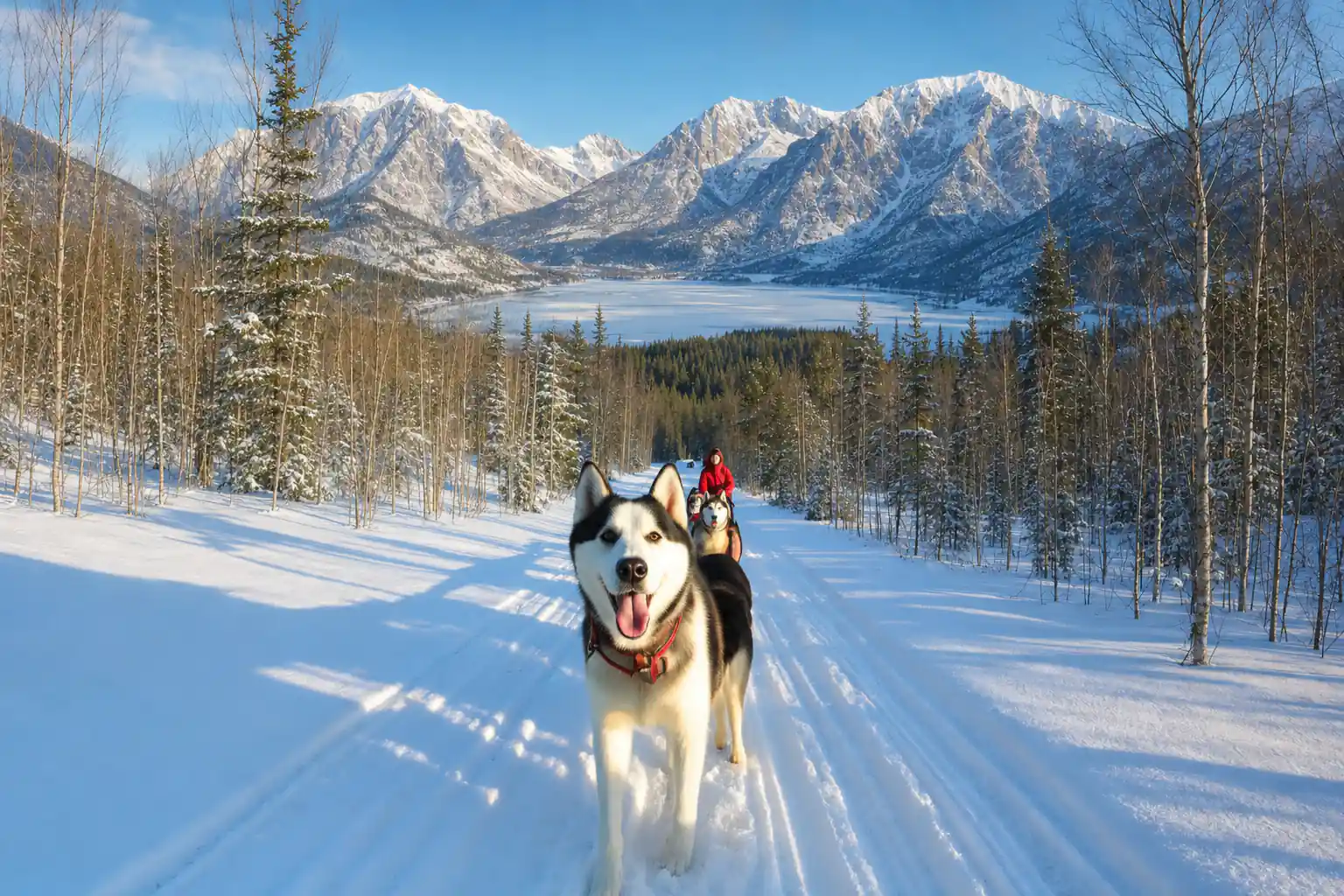
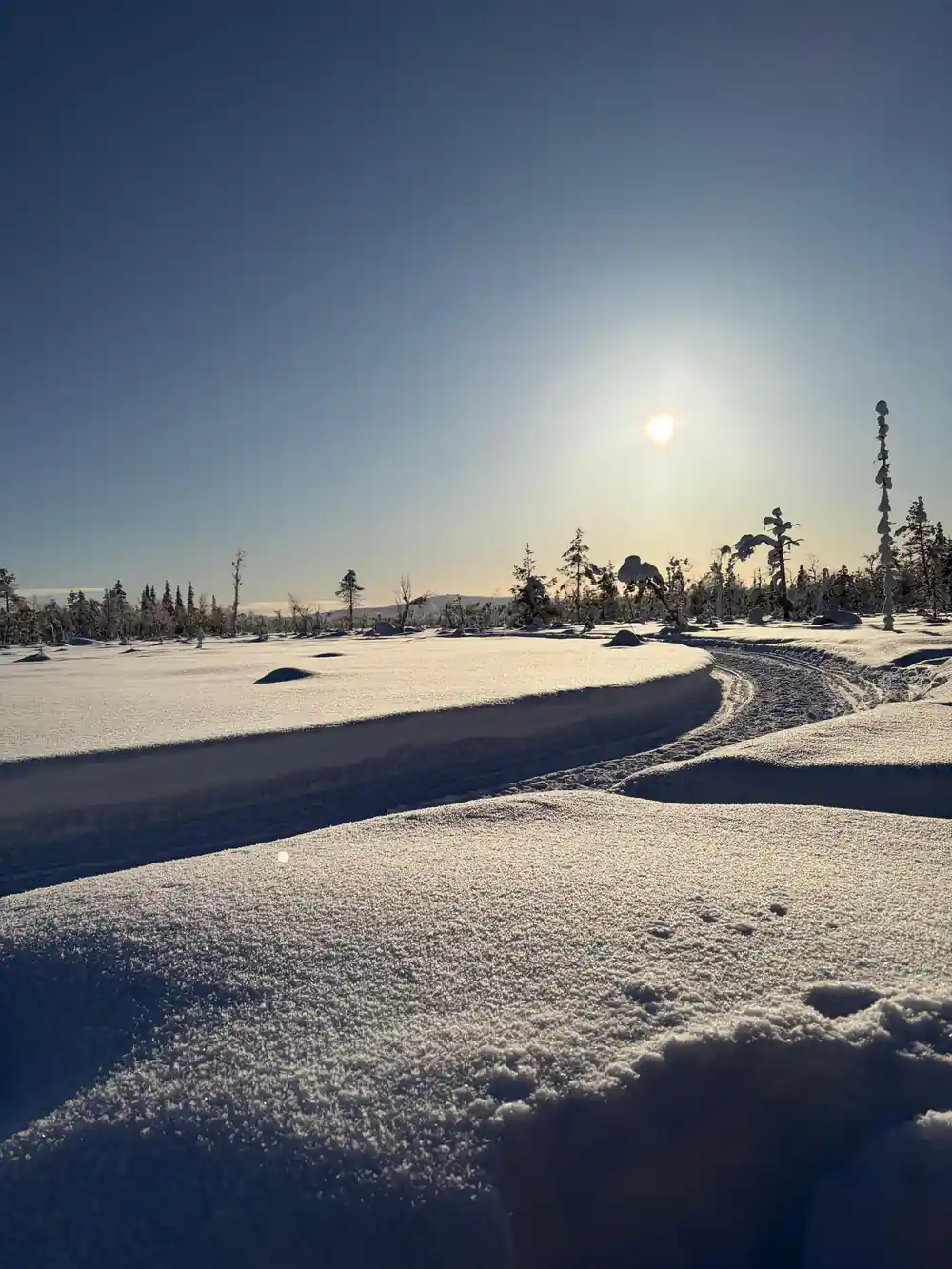
Pine forest under a full winter of snow load, which is what the trail runs through
January and February: the cold floor
January averages minus eight point two by day and minus thirteen point four at night. February goes marginally lower, minus eight point five and minus thirteen point six, which makes it the coldest month of the year here by a small margin. Most people assume January and most people are wrong.
These are averages across thirty years, and averages hide the mornings that matter. A still, clear, high-pressure day in either month can sit ten or fifteen degrees below the mean, and those are the days that produce the photographs: hard blue light, frost on everything, absolute silence.
Precipitation drops away in this part of the winter. January averages 35 millimetres and February 33, the two driest months of the year. Cold air holds less moisture, so the coldest weeks are often the clearest ones.
March and April: the best compromise
March is the month experienced visitors book. It averages minus four and a half by day, still comfortably below freezing with a full winter of snow on the ground, and it brings eleven hours of daylight in the middle of the month against January two and a half.
April is the last of it. The daily maximum creeps above freezing at plus nought point nine, which is enough to soften a trail in the afternoon while the nights still freeze it hard again. The snow is deep but the season is ending, and by the end of the month the operators are winding down.
If you want the combination of reliable snow, workable light and cold that is bracing rather than punishing, March is the answer. If you want the deepest, hardest, quietest version of the Arctic, take February and accept the dark.
-13.6 C
The February overnight average at the Levitunturi station, six kilometres from the trail. January, which most people assume is colder, sits just behind it.
What the temperature does to a person on a sled
The single most useful thing to understand is that the number on the forecast describes standing in a village, not standing on a sled. Two things change it. You are not generating heat, because driving a sled is mostly balance rather than exertion. And you have air moving past you, because the sled is moving.
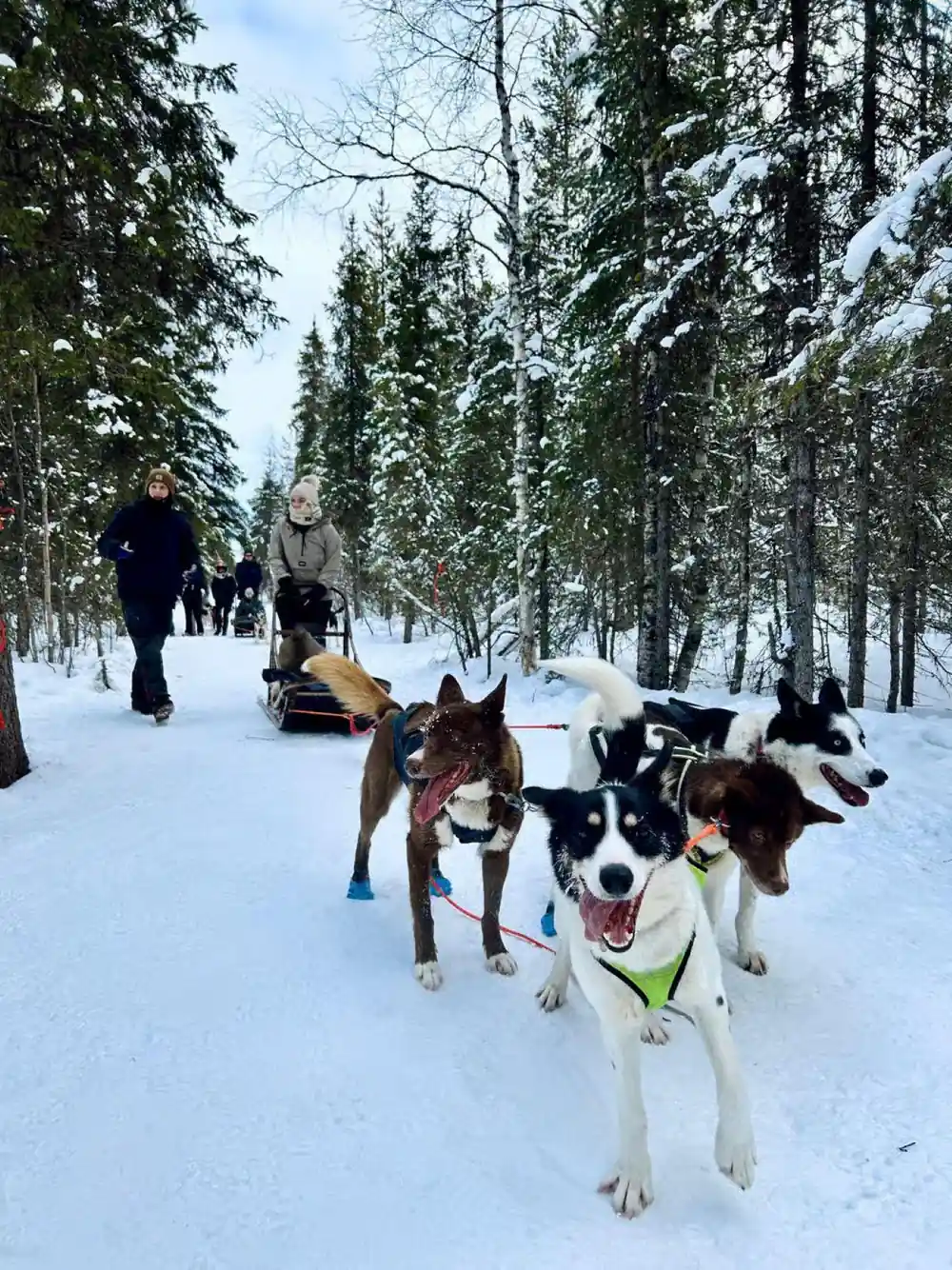
The result is that minus ten on a moving sled is harder work than minus twenty on a walk. Extremities are what suffer: fingers first, then toes, then the tip of the nose and the ears. Nothing about this is dangerous on a five-kilometre run with a guide alongside, and all of it is uncomfortable if you have dressed for the number rather than for the activity.
Layers that are not tight, gloves rather than mittens if you want to work the brake and mittens over the top if you do not, a hat that covers the ears, and a spare pair of gloves somewhere dry. Wet gloves stop insulating almost immediately.
Snow, thaws and whether the tour runs
The tour depends on snow on a trail, not on cold air in general, and those are not quite the same thing. A mid-season warm spell can lift the temperature above freezing for a few days, glaze the surface and change the trail more than a much colder week would.
Kittila gets enough precipitation through the winter to recover from that, and at these latitudes a thaw is usually short. But it is the reason operators make the call on the day rather than promising a season, and it is why the cancellation terms on the booking page are worth reading before you plan a trip around a single activity.
The other half of the same question is early and late season. November snow can be thin and April snow can be soft. The reliable middle is December to March.
Reading a forecast for Sirkka
Forecasts for this area will be given for Sirkka, Levi or Kittila, and they are all describing broadly the same weather. Sirkka is the village, Levi is the fell above it and the resort name, and Kittila is the municipality and the airport. A forecast for any of them is close enough for planning.
The one adjustment worth making is altitude. The station these figures come from sits at 524 metres on the fell; the village is lower and slightly milder. If a forecast for the village says minus ten, the trail is unlikely to be warmer than that and may be a little colder.
And treat wind as the number that matters most. At these temperatures a light breeze changes how the air feels far more than a couple of degrees on the thermometer does.
The season runs on snow, and the snow runs from November
from US$173Reserve now & pay later