Quick summary
- Old enough to be robust and handled safely, young enough to be entirely uninterested in dignity.
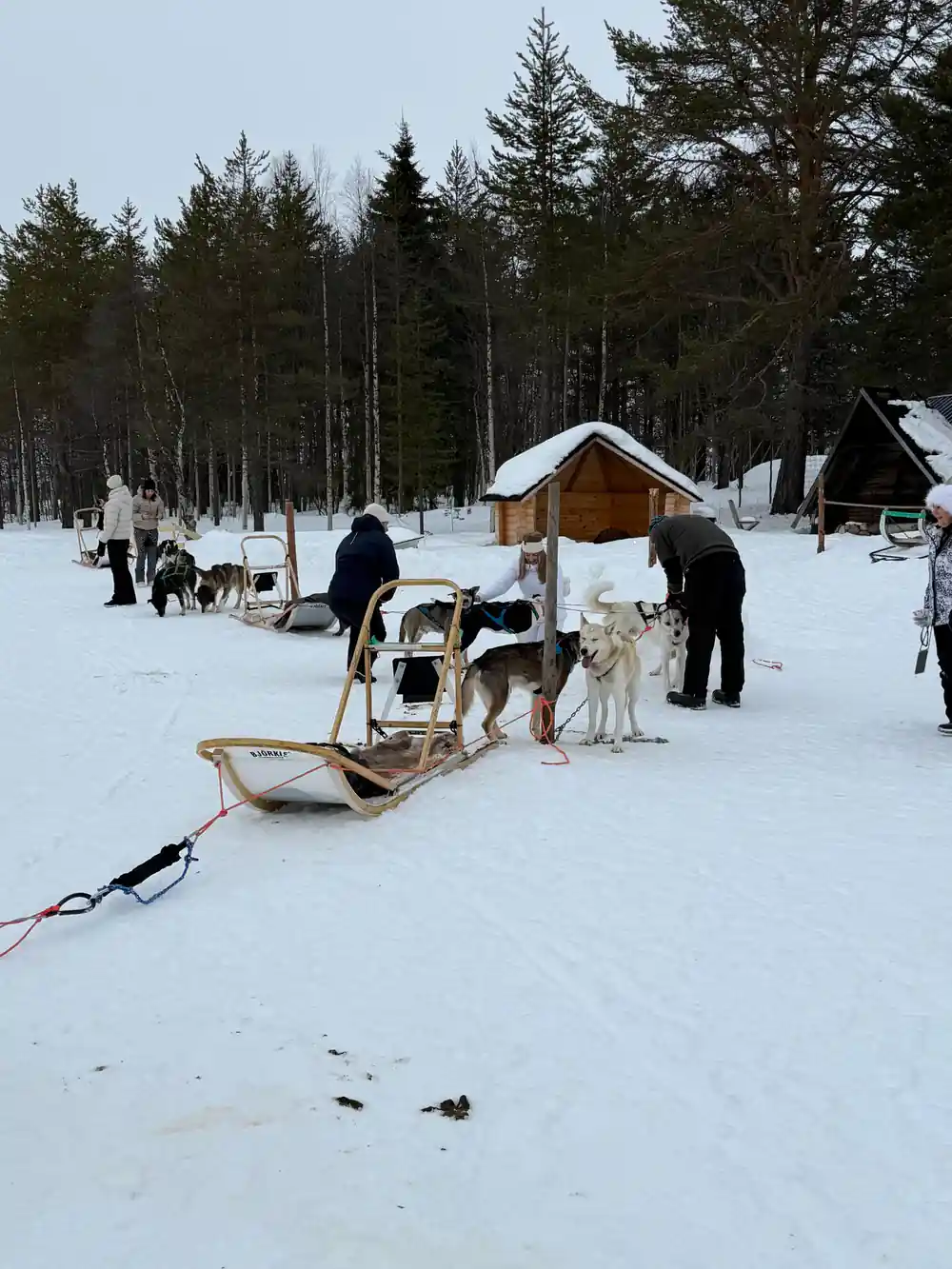
- A young sled dog learns to run in company long before it learns to pull anything.
- Time with the puppies is part of the two hours rather than something sold alongside it.
- It is a statement about what happens when a dog stops running, which is the part of kennel life visitors rarely see.
Why the puppies are on the itinerary
A husky kennel that runs tours through a season needs new dogs coming through it, so there are litters. What is less usual is that time with them is written into the booking rather than being something you might glimpse if you are lucky.
The litter at Levi is around four months old, which is close to the ideal age for this. Younger than that and a puppy is fragile and should be left alone. Older and it is a working adolescent that would rather be running than being held.
For families this frequently becomes the thing the trip is remembered for. Adults book a husky tour for the sledding; a seven-year-old books it, in retrospect, for twenty minutes in a pen with eight puppies.
What four months old means for a sled dog
At four months a husky is somewhere between half and two thirds of its adult height and a good deal less than that in weight. The coat is thickening for its first winter. The feet are large relative to the legs in the way that promises more growth.
Behaviourally it is a puppy in every ordinary sense: it wants to chew, to climb, to be picked up, and to bite gently at whatever is nearest. Nothing about it looks like a working animal yet.
What it does already have is the thing that matters most, which is a desire to be part of a moving group. That instinct is what the whole discipline is built on, and it arrives before any training does.
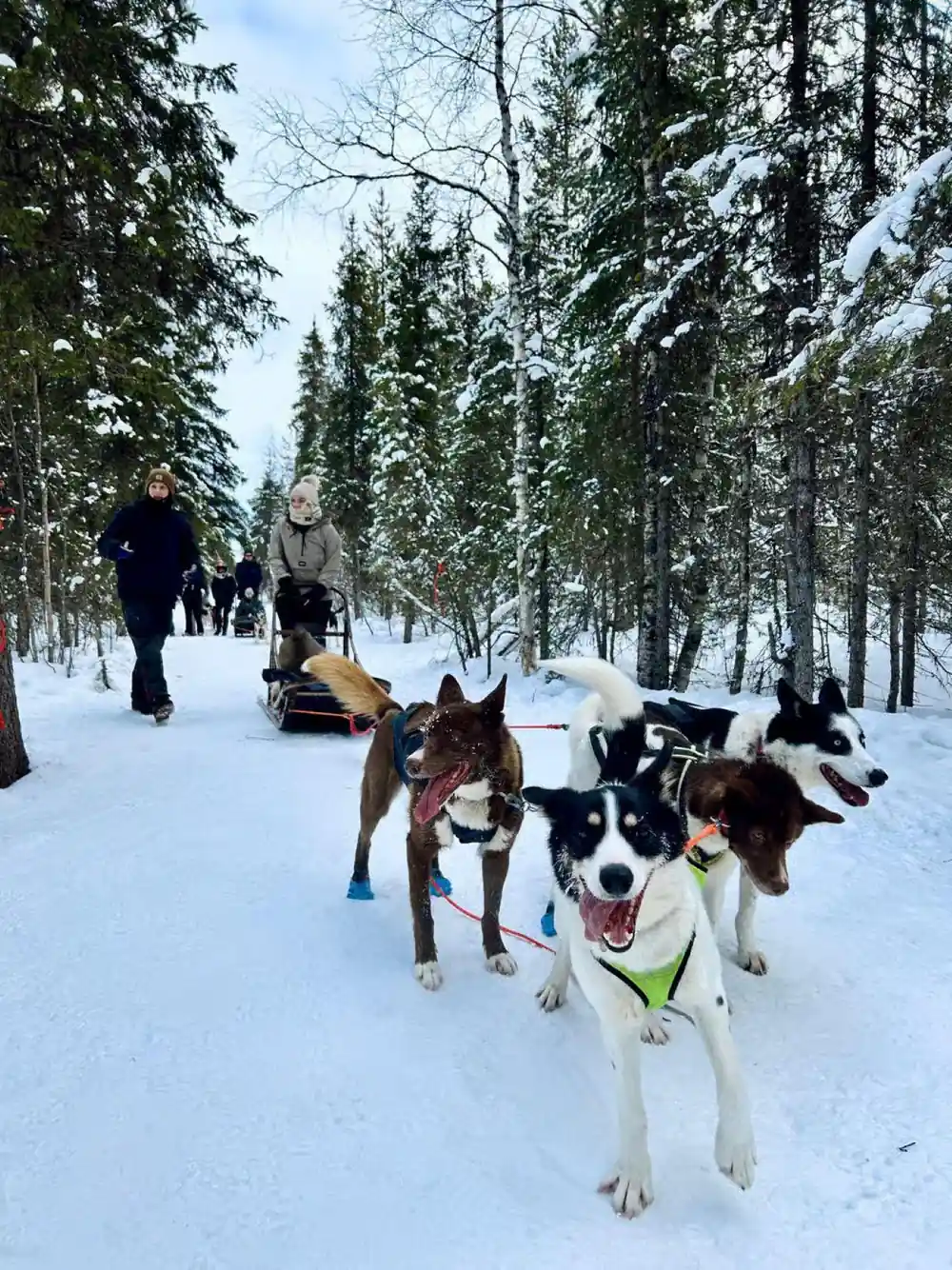
A four-month-old puppy in the kennel yard, thickening its first winter coat
When training actually starts, and what it is
Long before harness. The first stage is simply company: puppies run loose with older dogs and with each other, and learn to move as a group, to read one another and to keep up. None of this looks like training and all of it is.
Harness comes later, and it comes lightly. A young dog is introduced to the feel of a line with no meaningful load, alongside experienced dogs that already know the job, and the lesson it learns first is not pulling but position: this is where you run, this is what the line feels like, this is the pace.
Real work comes later still, and gradually. A sled dog is an endurance athlete and no serious kennel puts weight on an immature skeleton. The build-up is measured in seasons, not weeks.
How a dog learns to run in a team
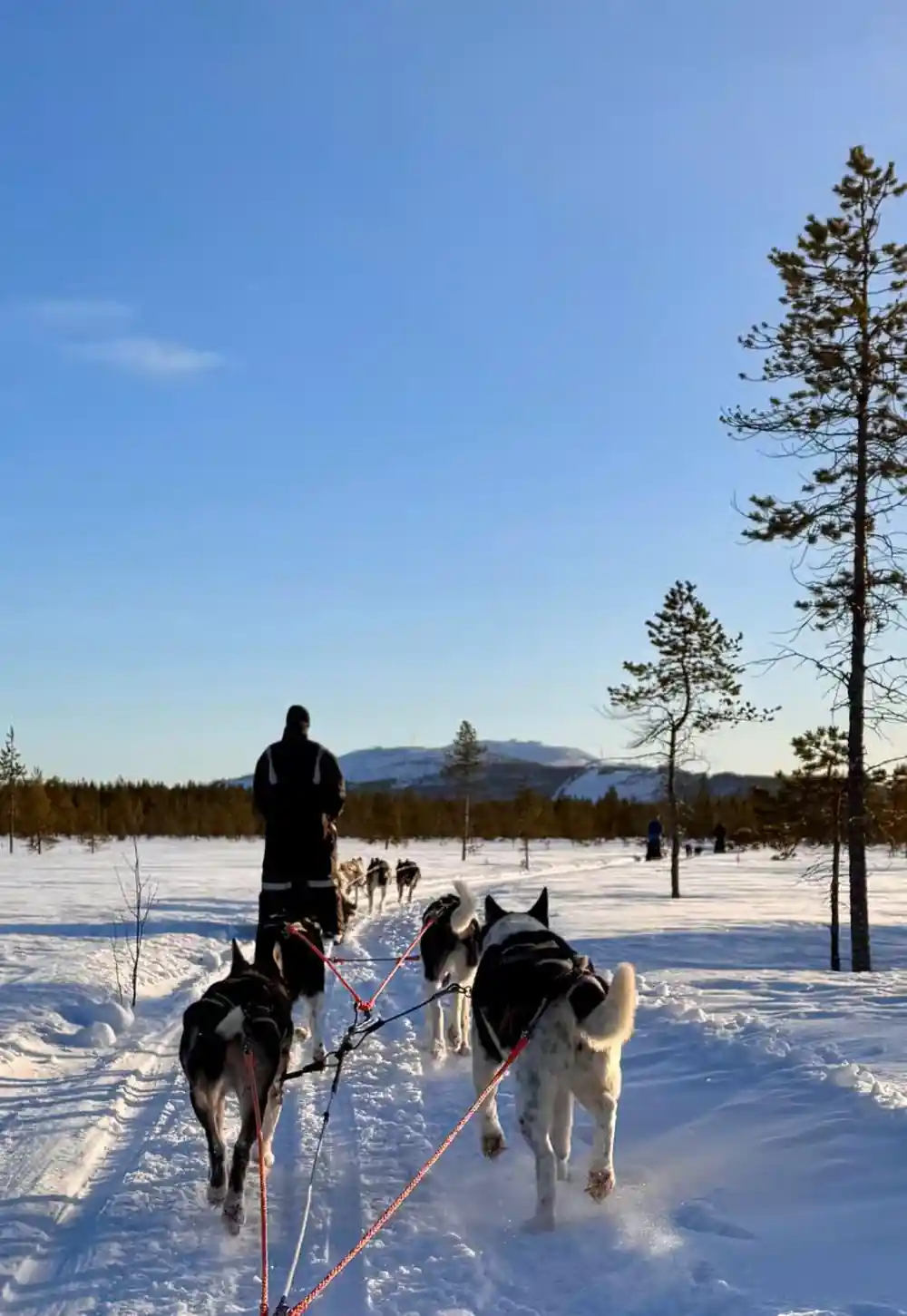
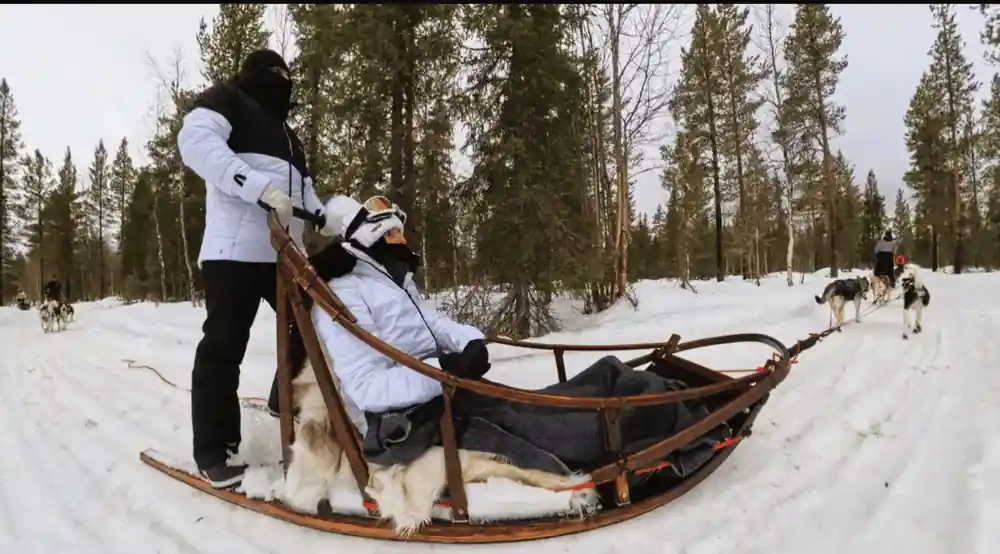
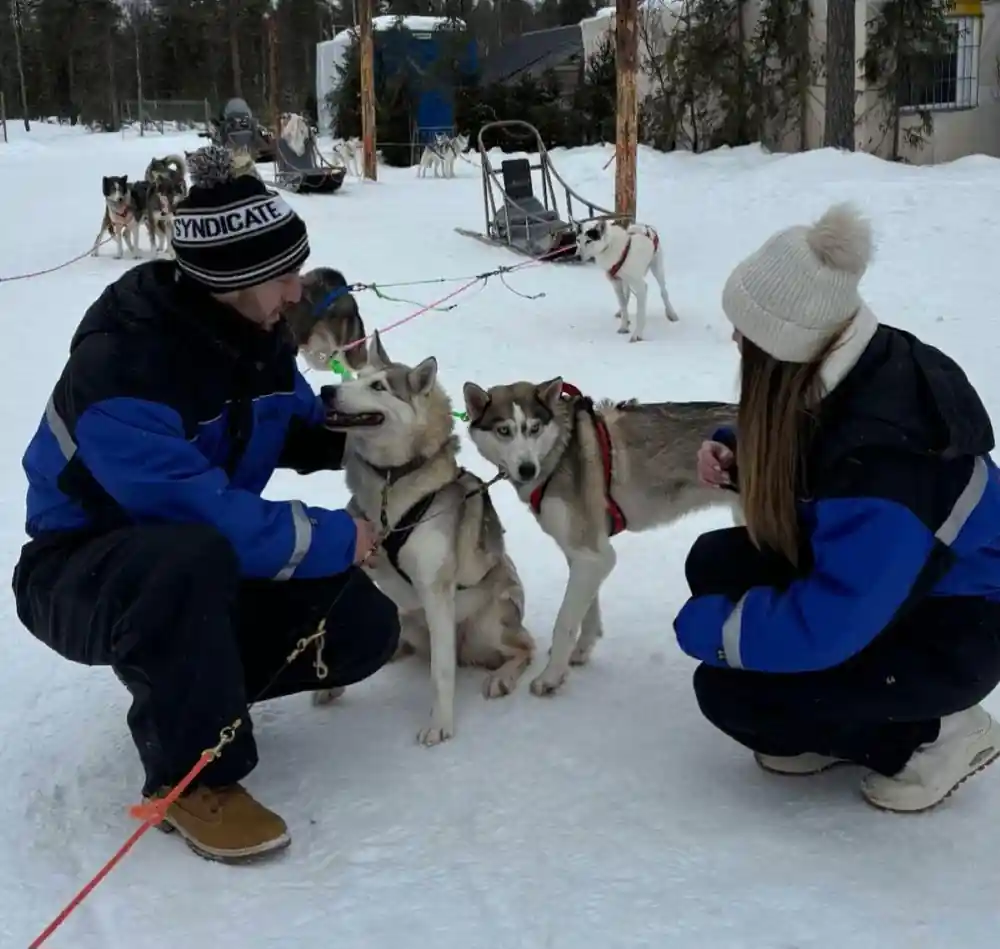
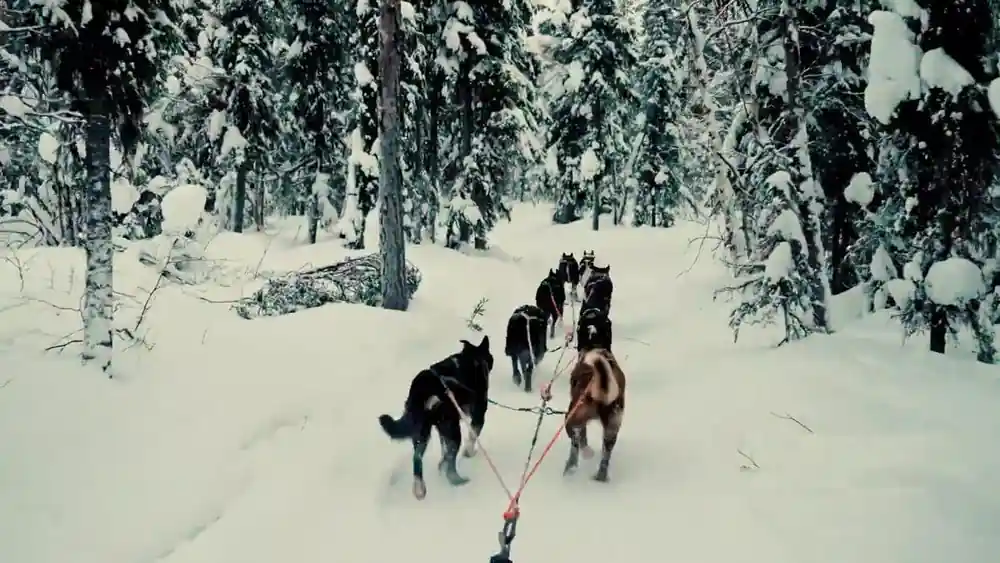
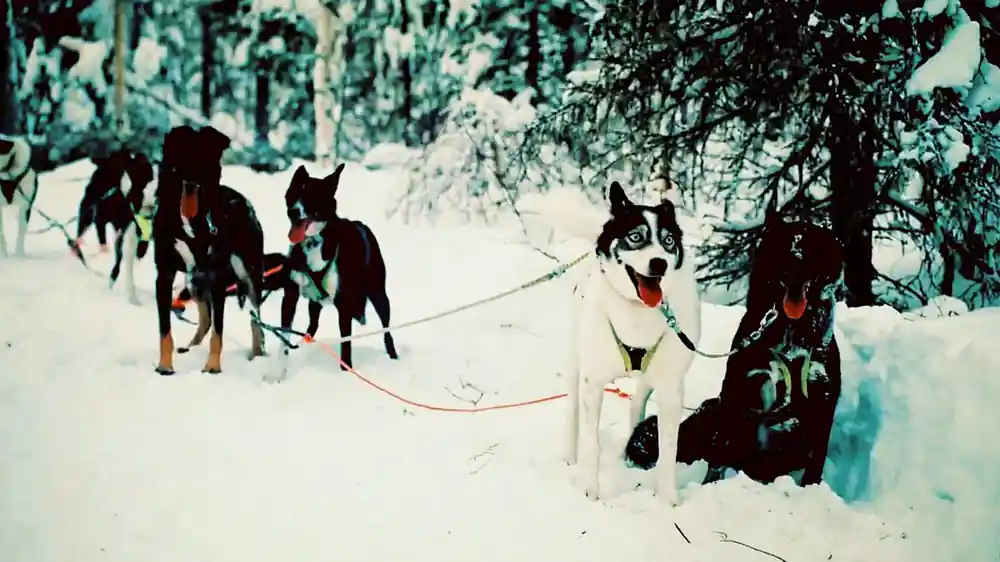
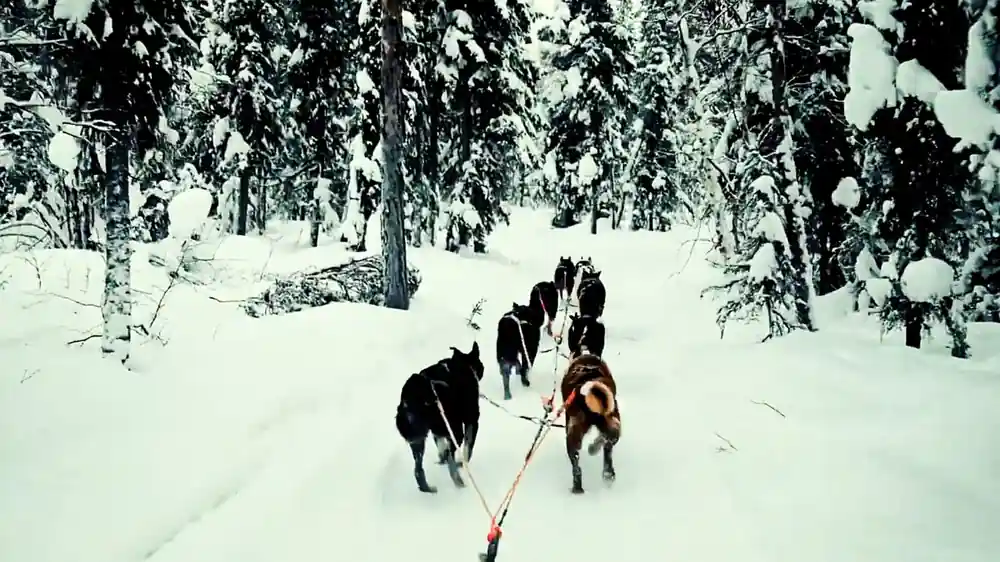
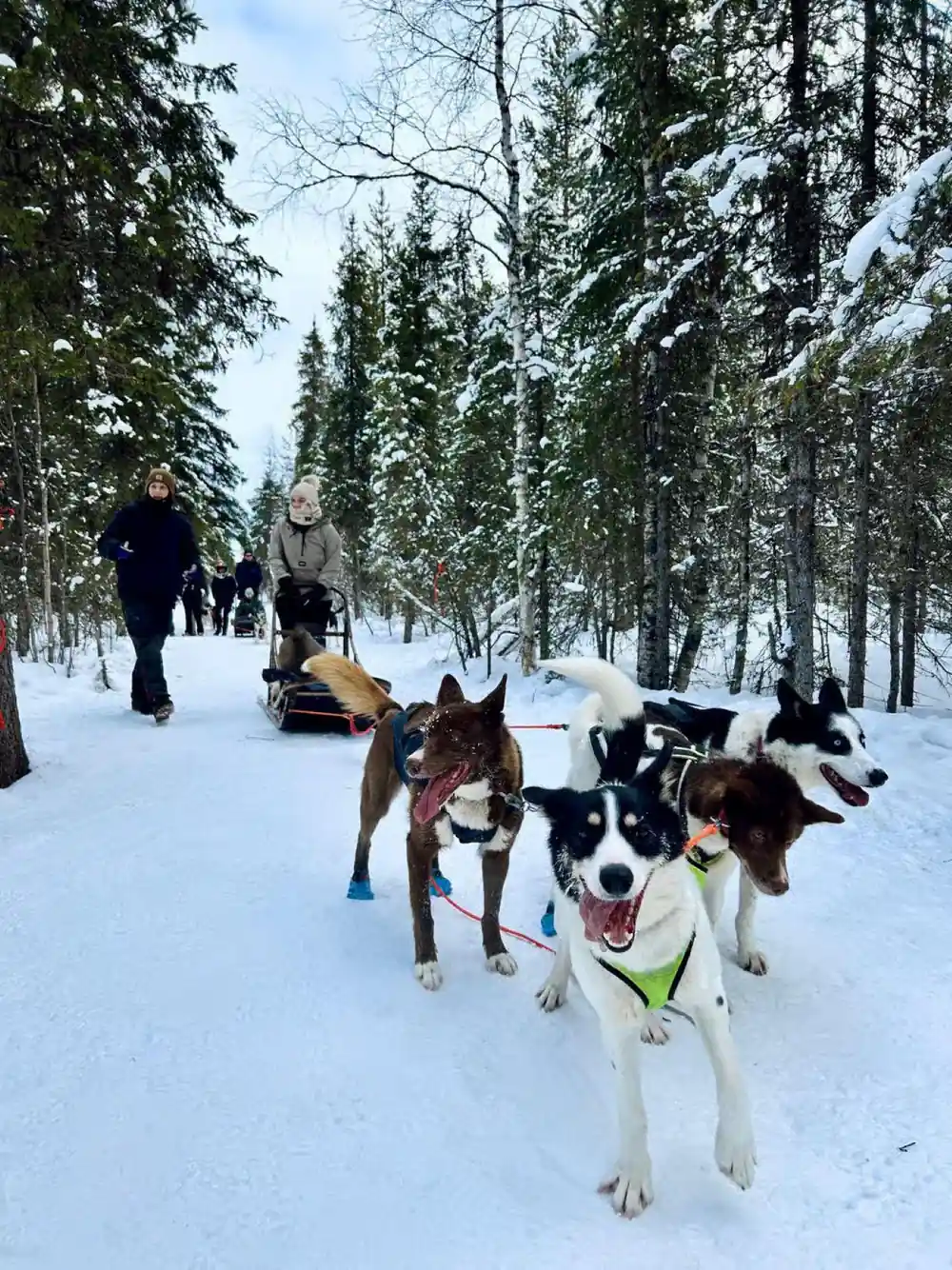
By running beside a dog that already can. Almost everything a young husky knows it learned from an older one: how to hold a line without tangling it, when to pull and when to let the line go slack on a downhill, how to take a turn, what the commands mean.
Position tends to sort itself out over a season or two. A dog that is calm and listens tends towards lead. A dog that is powerful and steady tends towards wheel, closest to the sled. Most run in the middle, which is where the majority of the work happens.
Handlers watch and adjust rather than deciding in advance. The inclination of the dog itself is a large part of what determines where in the team it eventually ends up running.
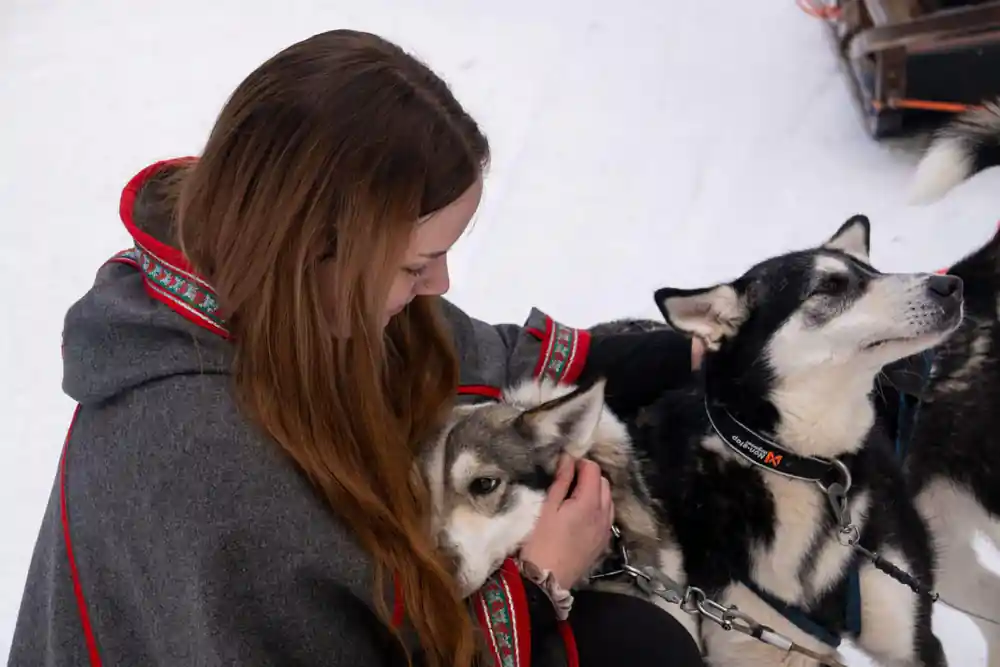
Alaskan, Siberian, or a mix
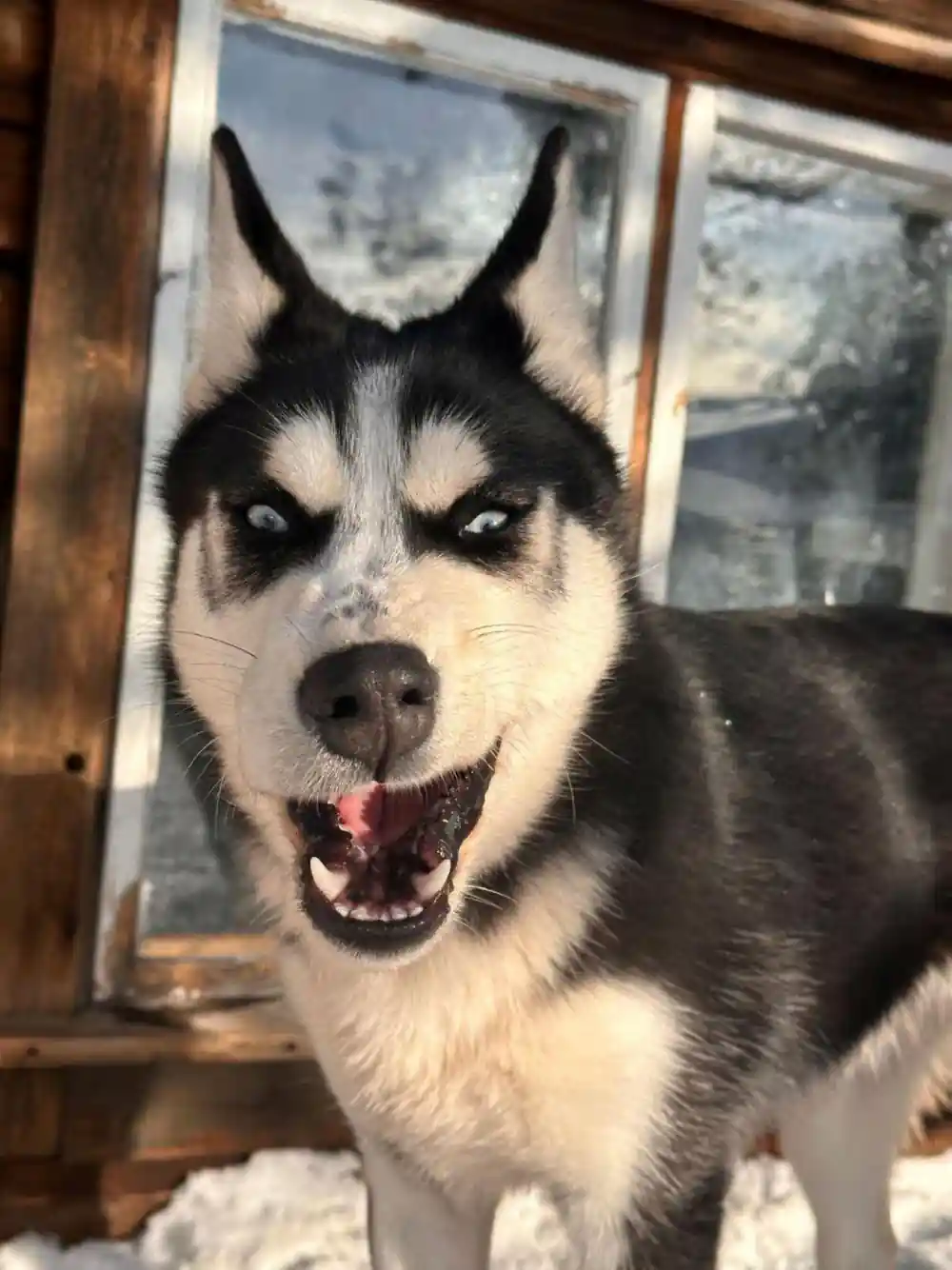
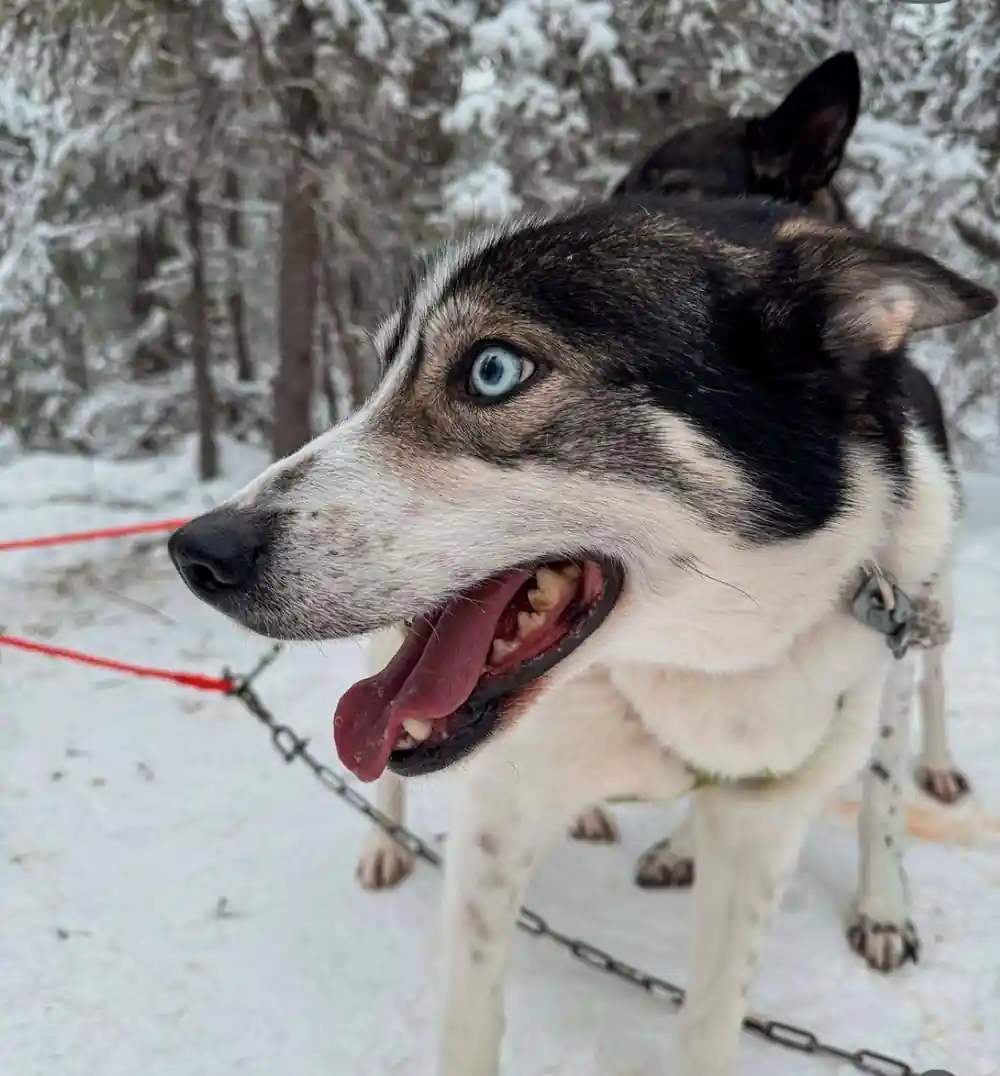
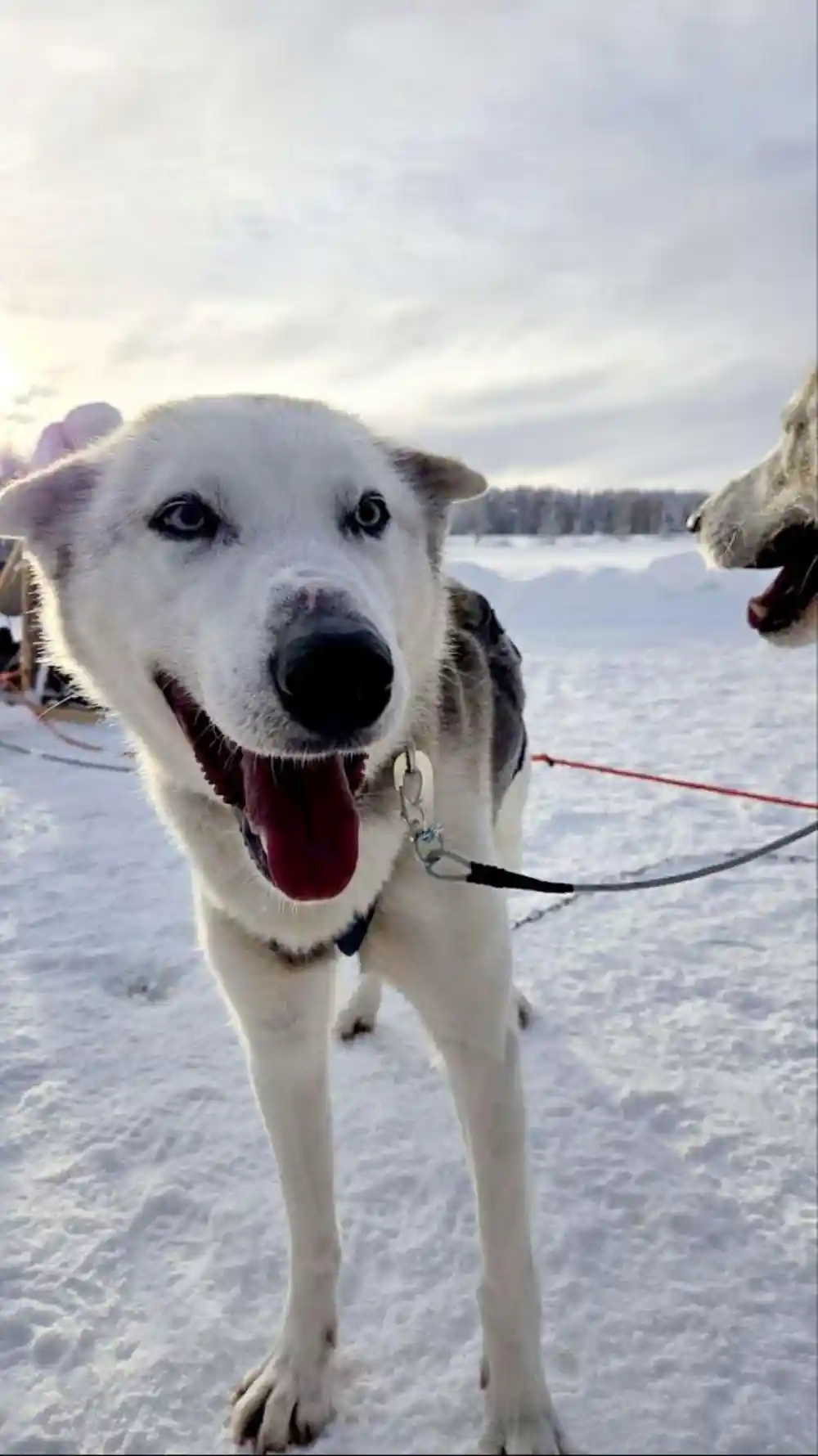
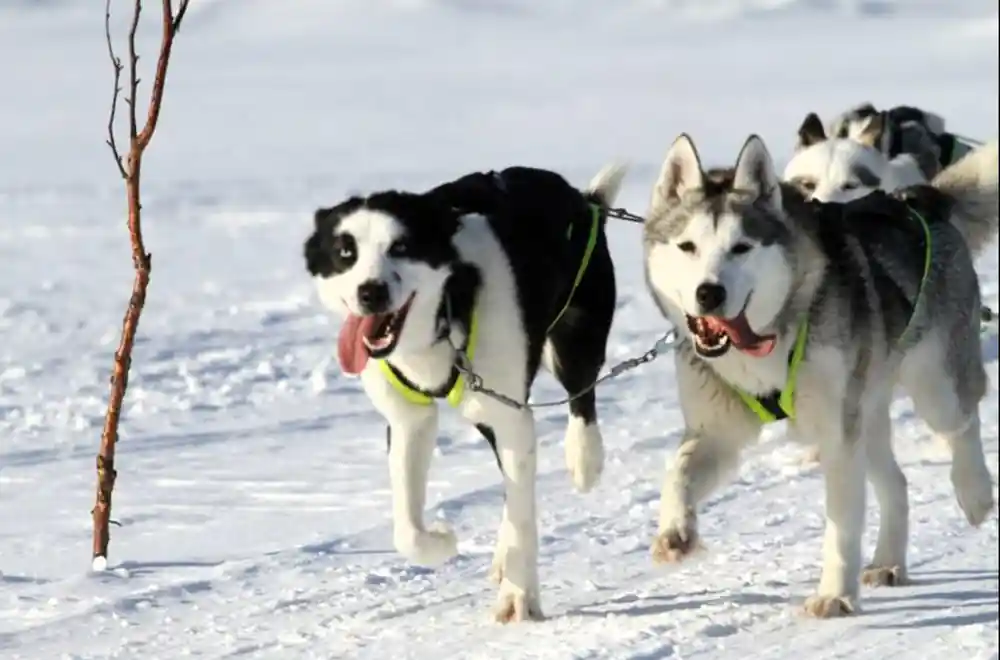
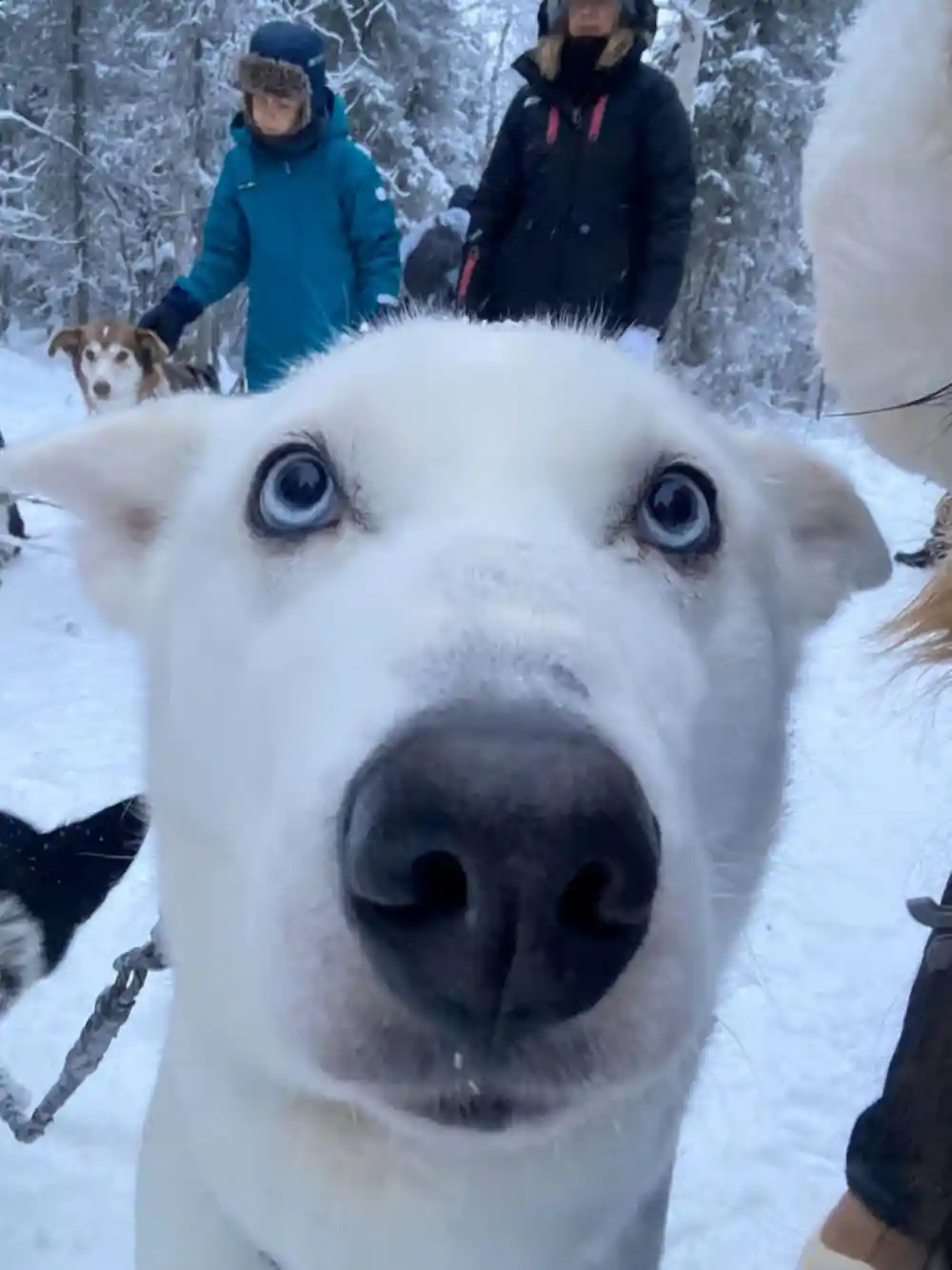
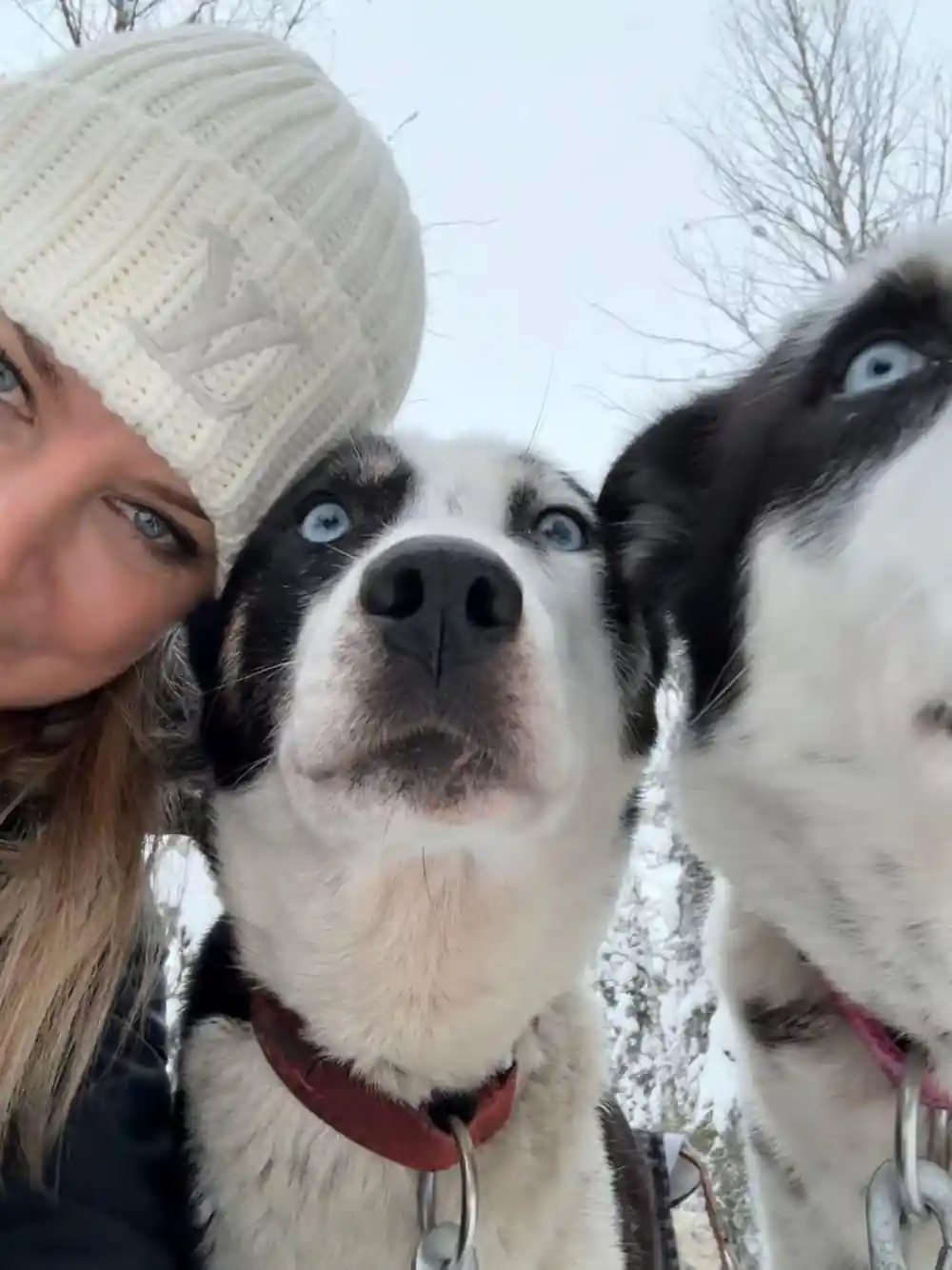
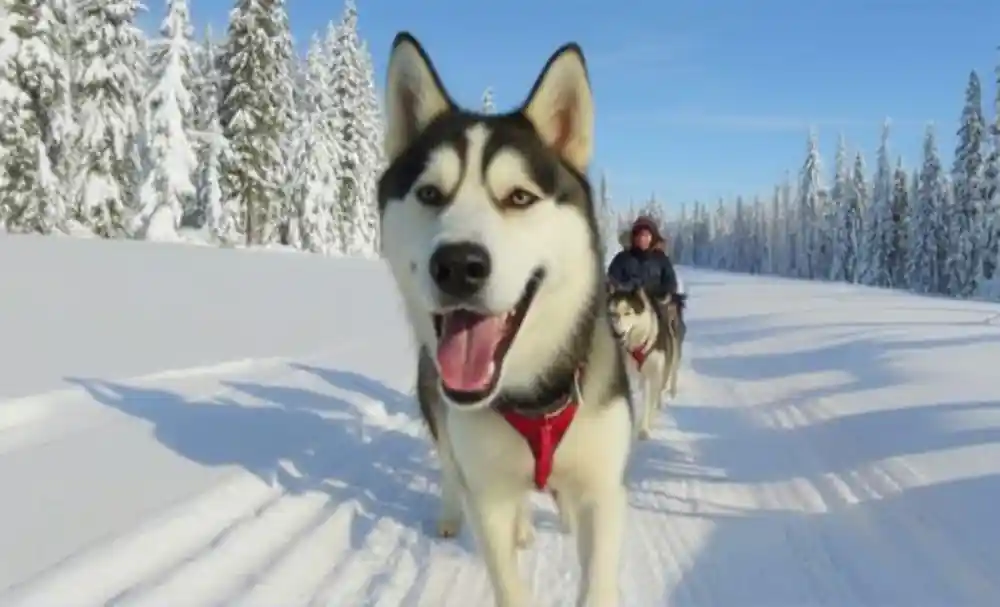
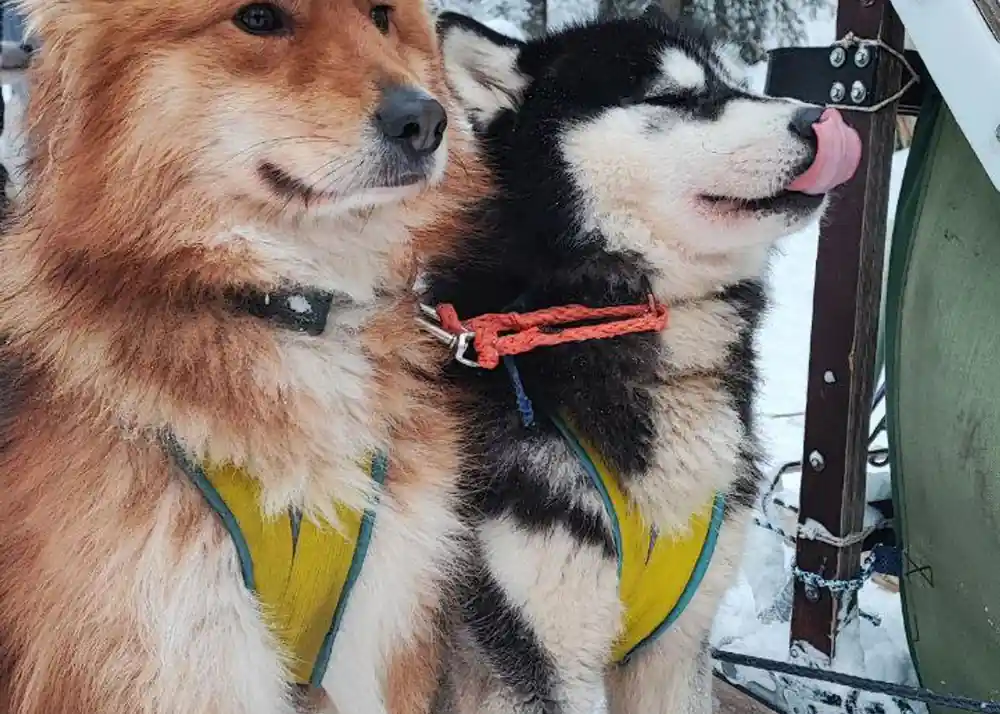
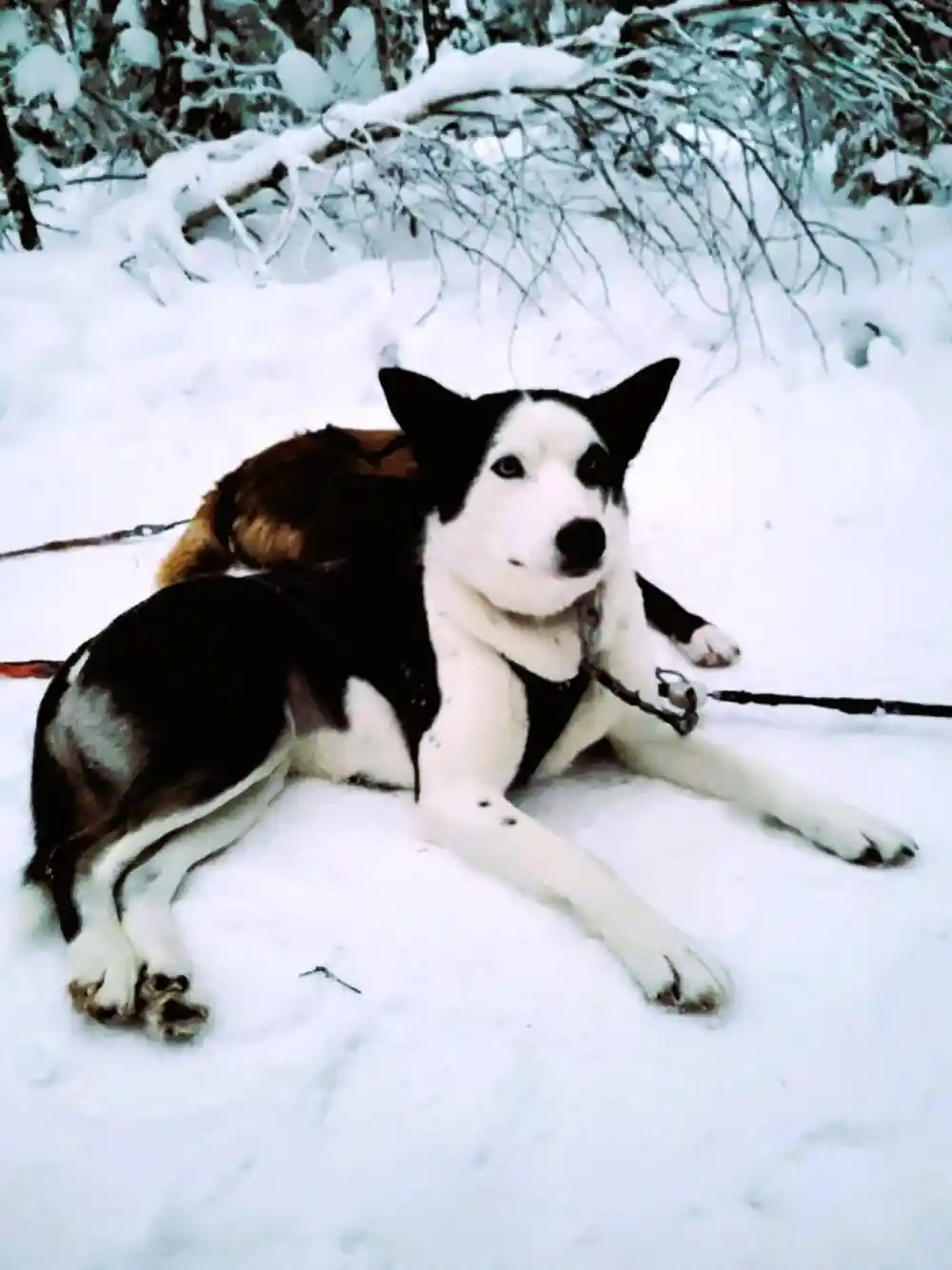
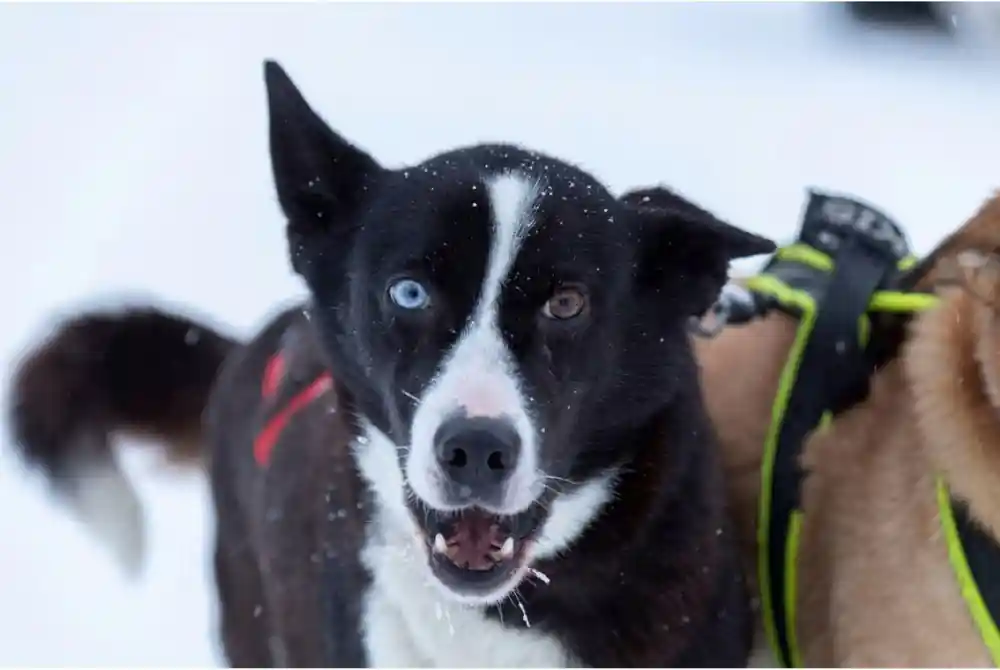
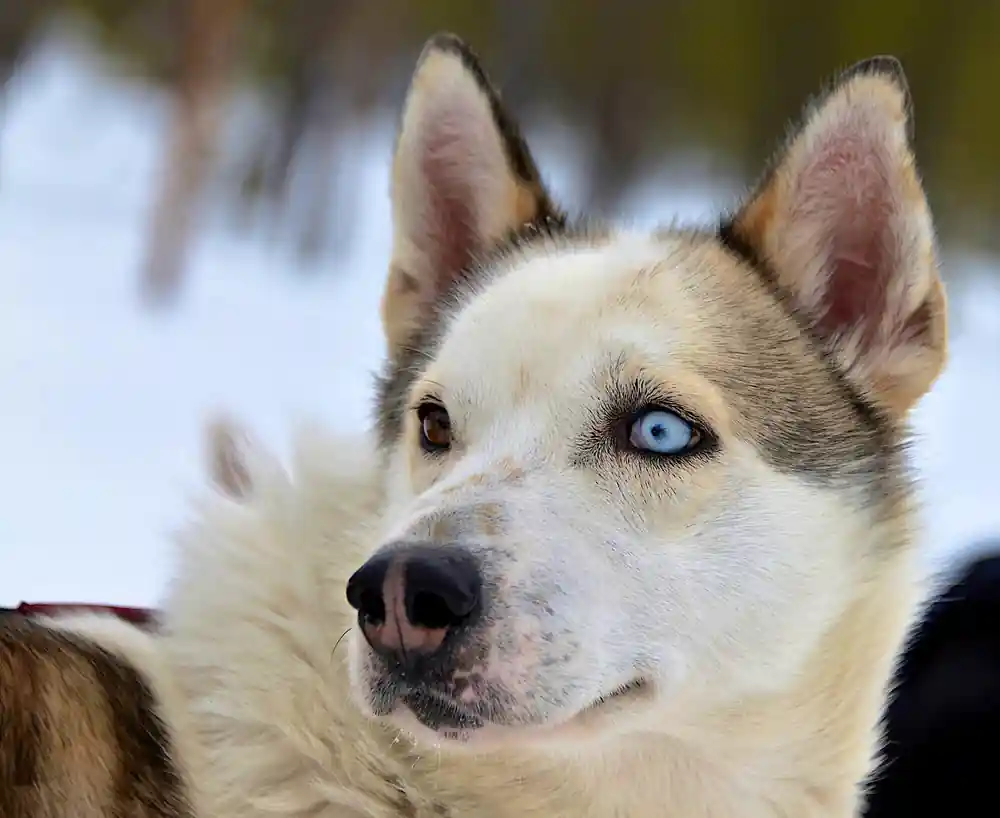
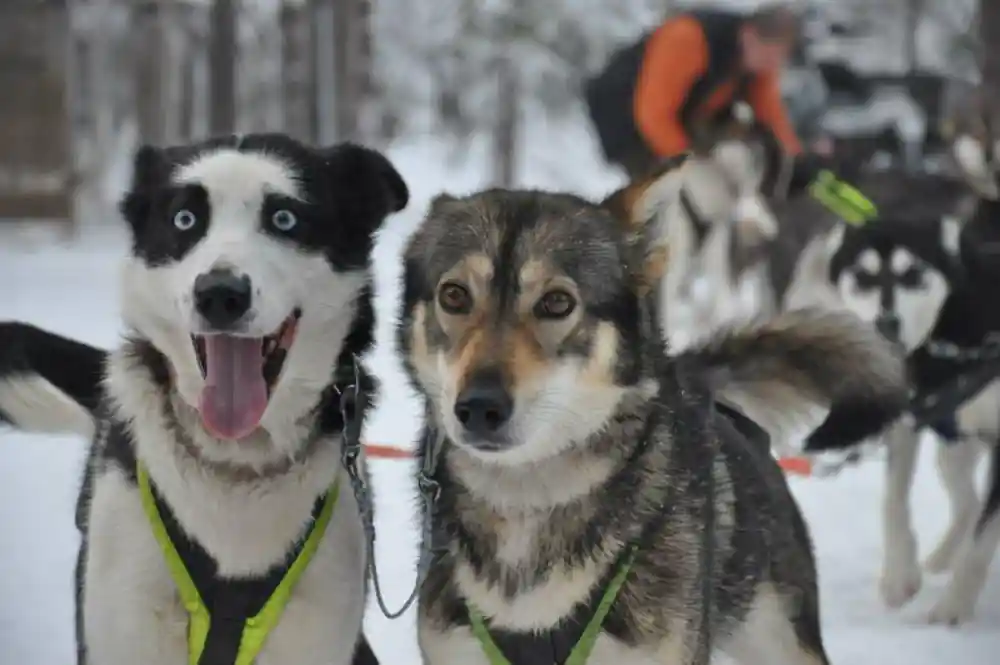
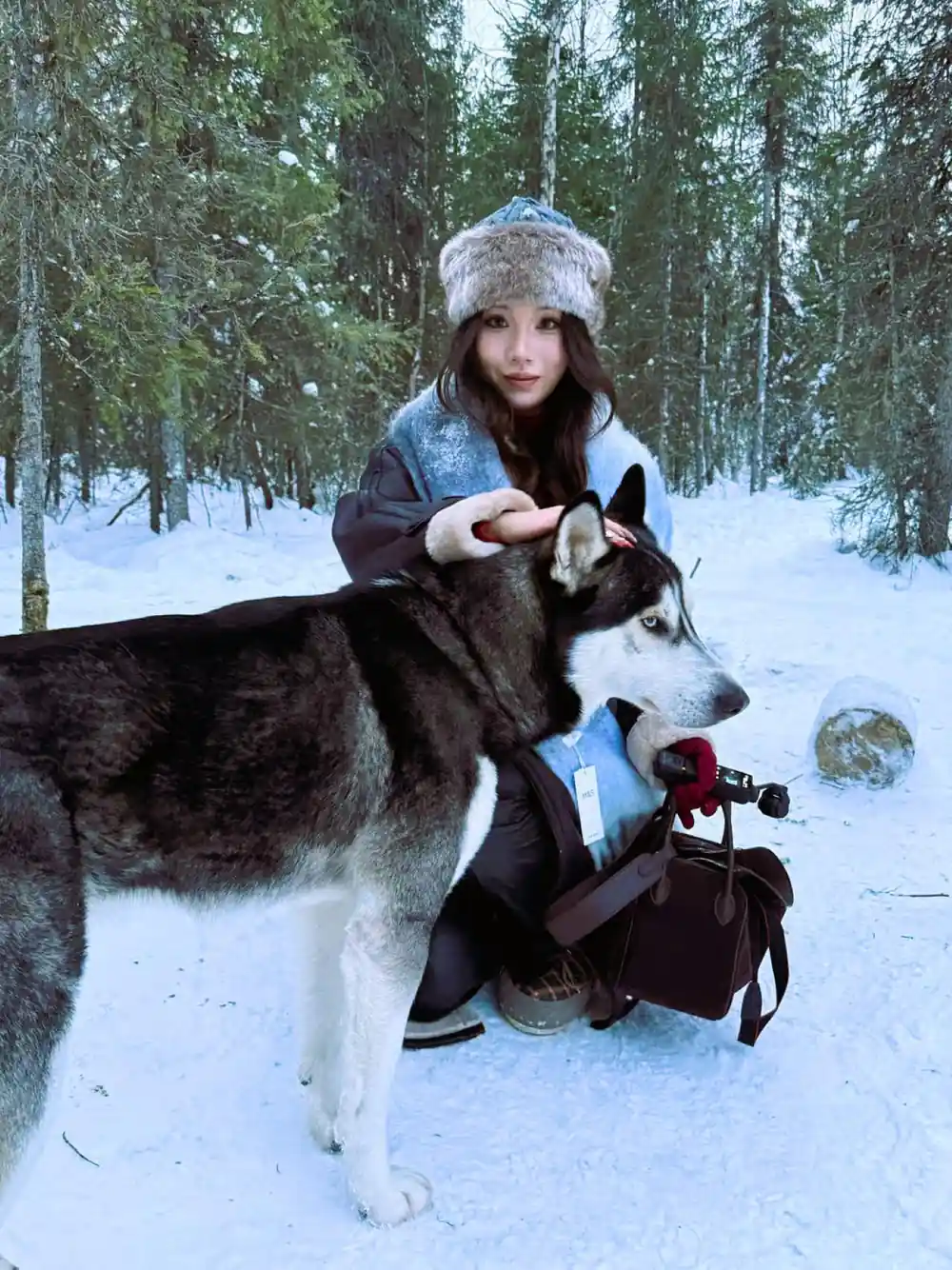
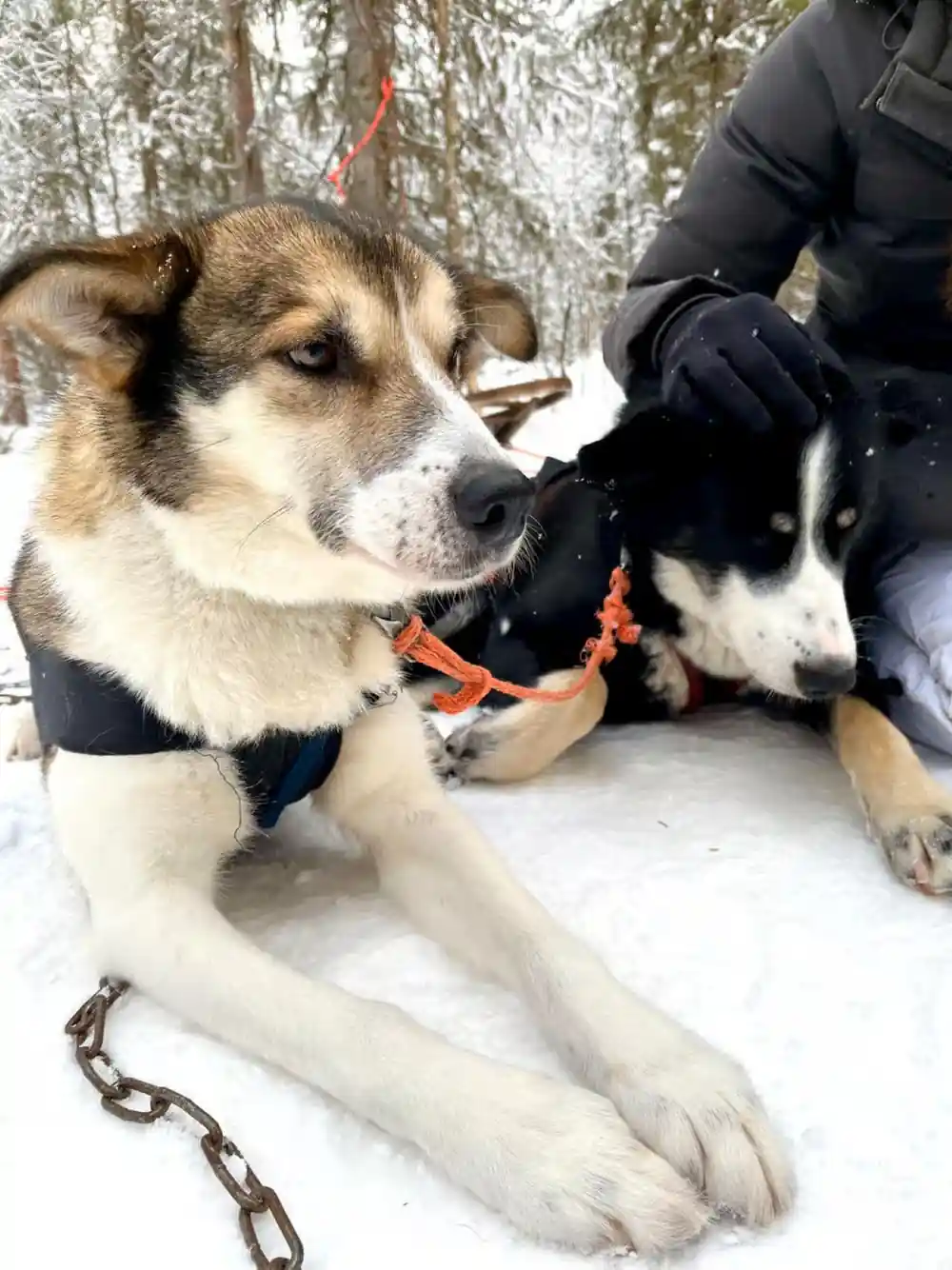
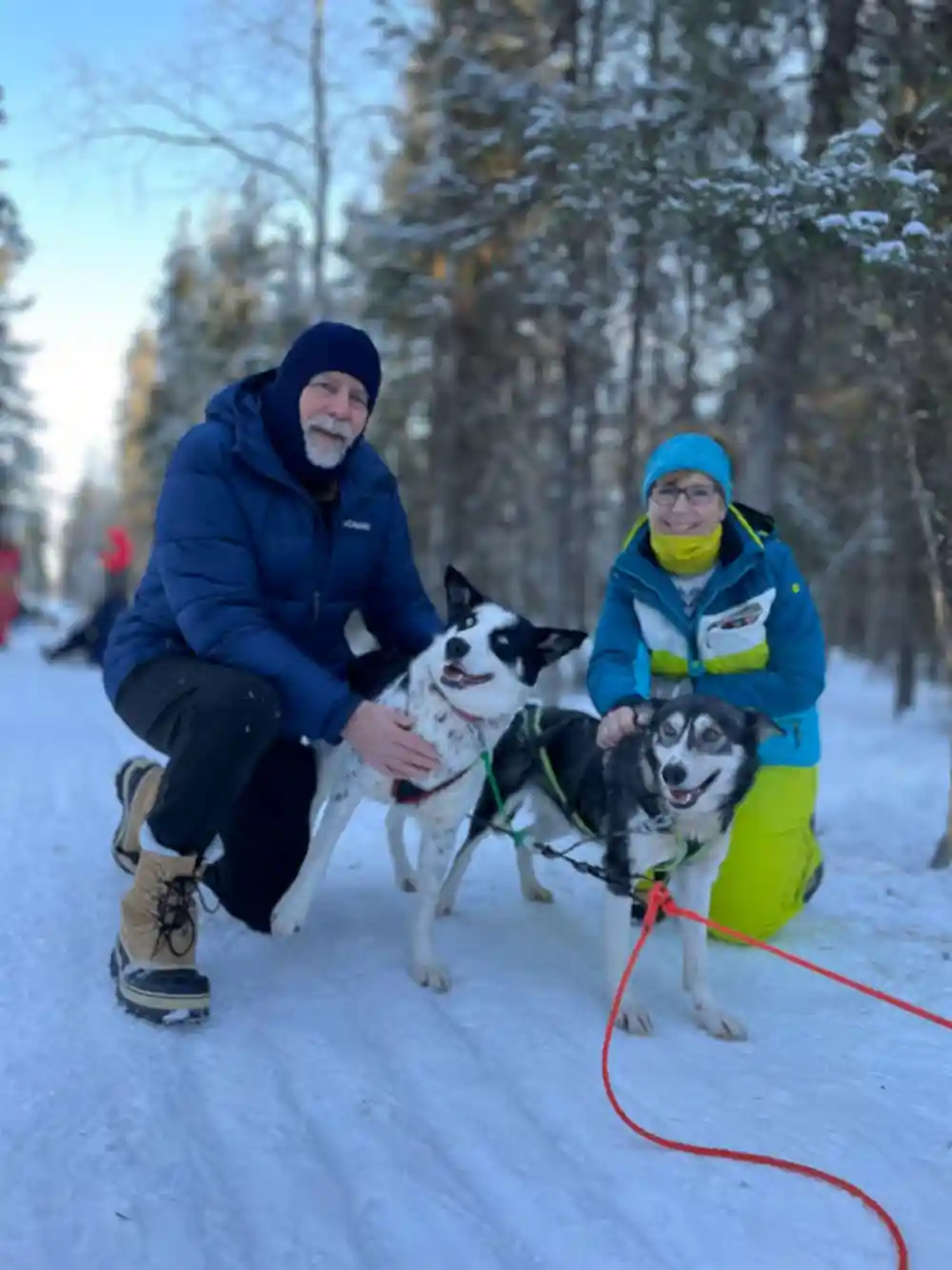
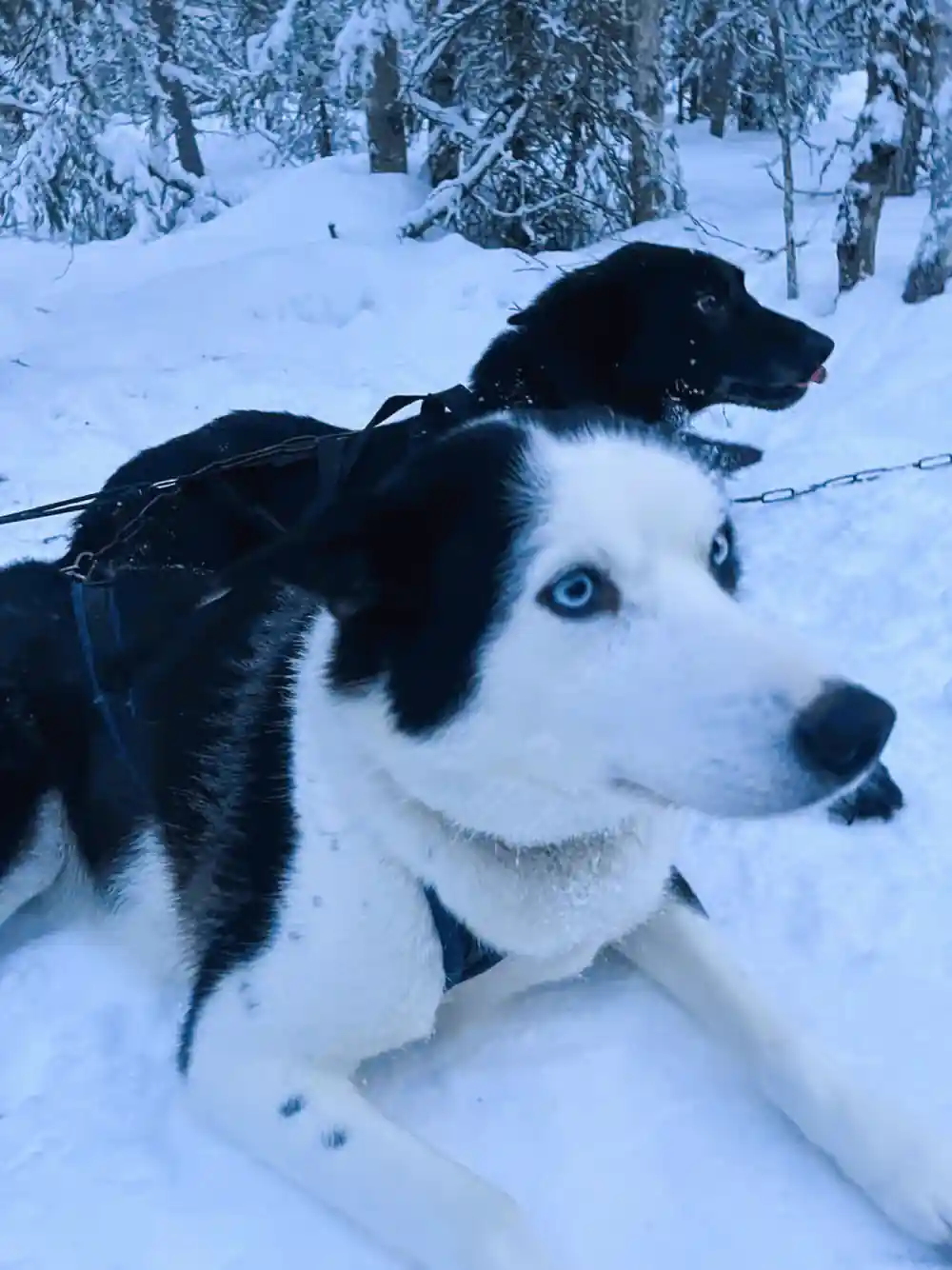
This kennel runs both, so a litter can be either or a cross. Siberian puppies look the part immediately: dense coat, symmetrical markings, sometimes the pale eyes. Alaskan puppies look like whatever they look like, which is the entire point of an Alaskan husky.
That variety in a single pen is a good illustration of the difference between the two, and it is easier to see in puppies than in adults. Ask which is which while you are in there.
None of it predicts very much about the dog. A plain-looking puppy out of a working line may well turn out to be the strongest runner in a litter of far handsomer ones.
Children, and the sensible way to do this
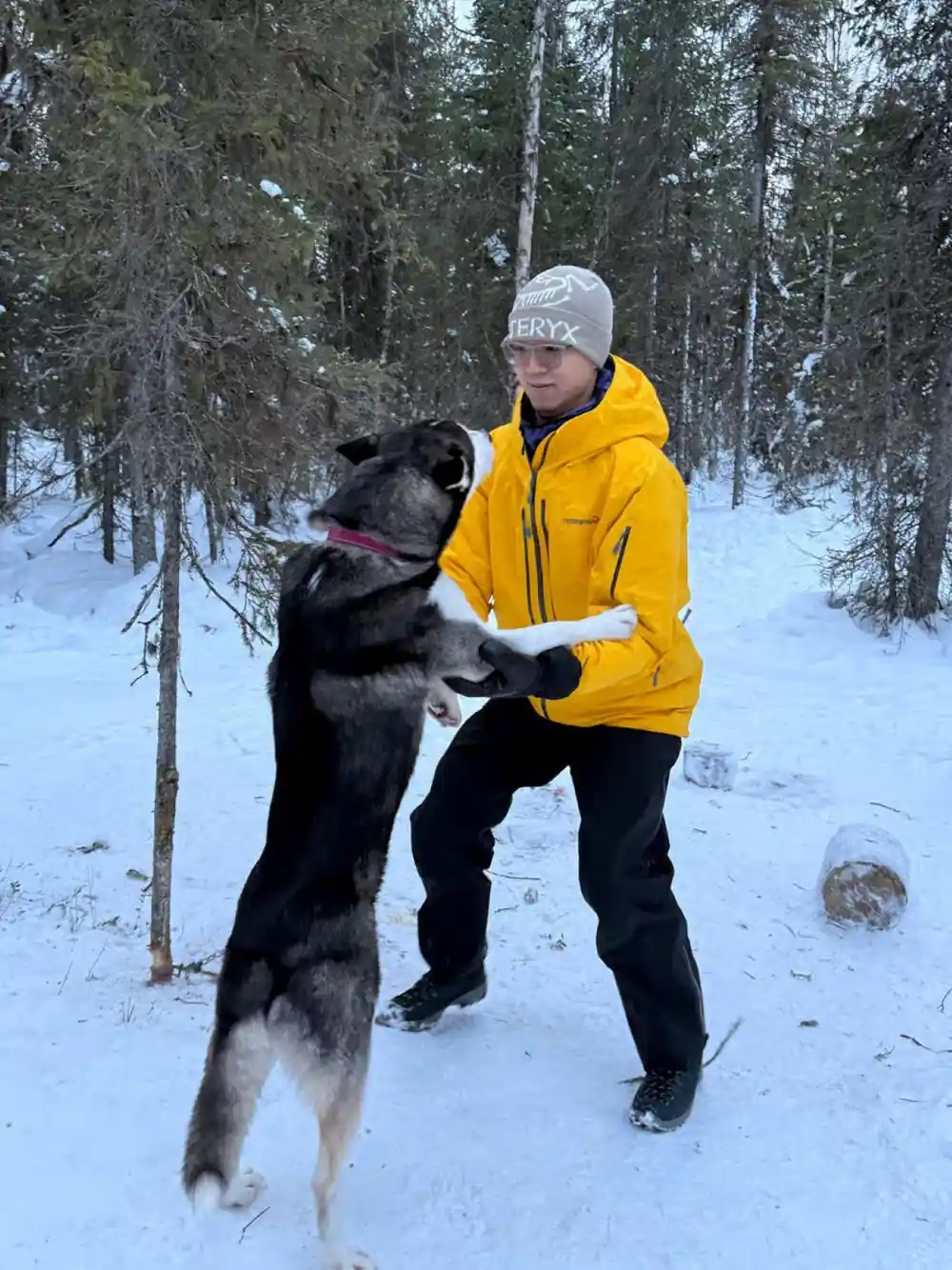
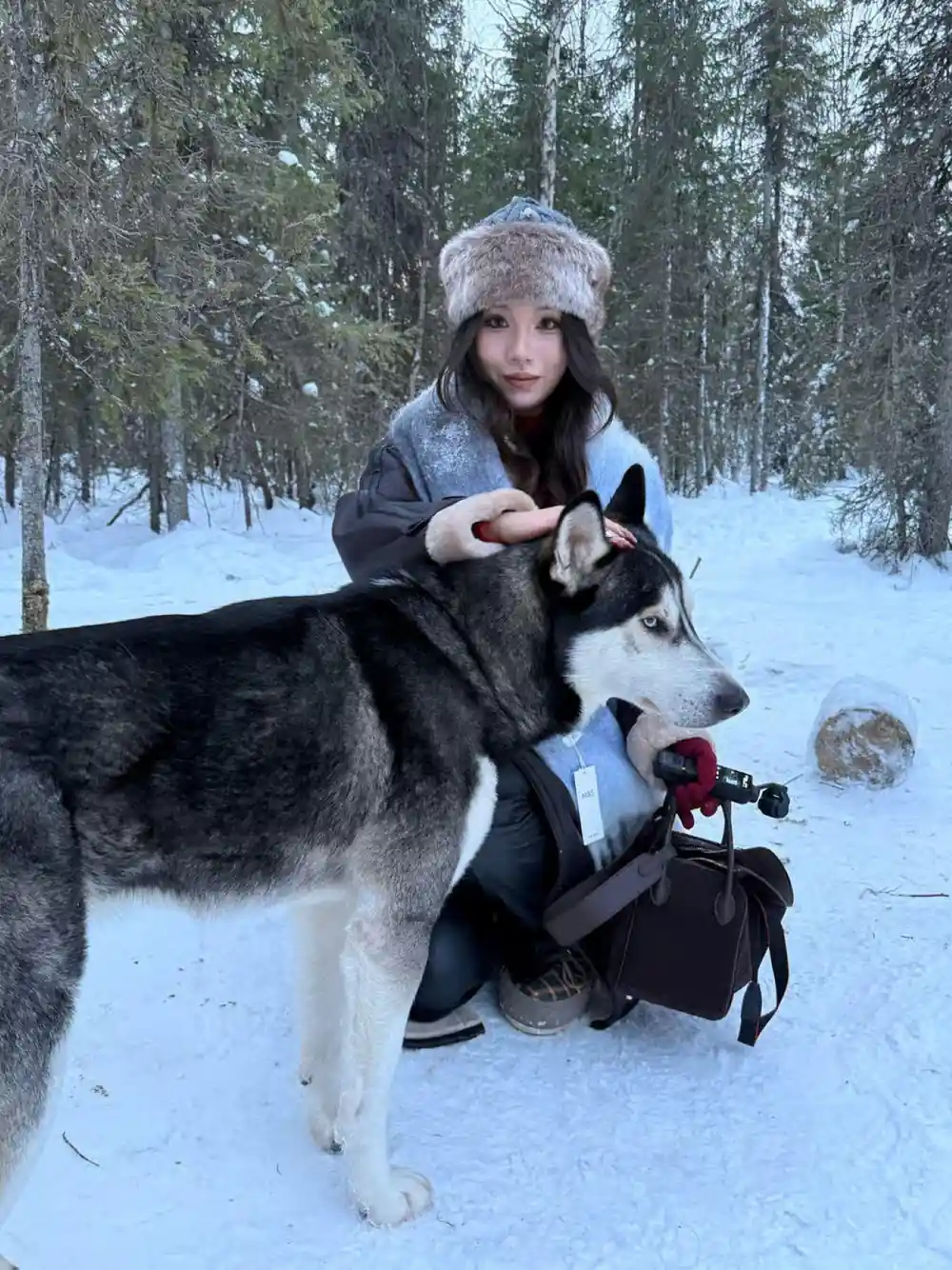
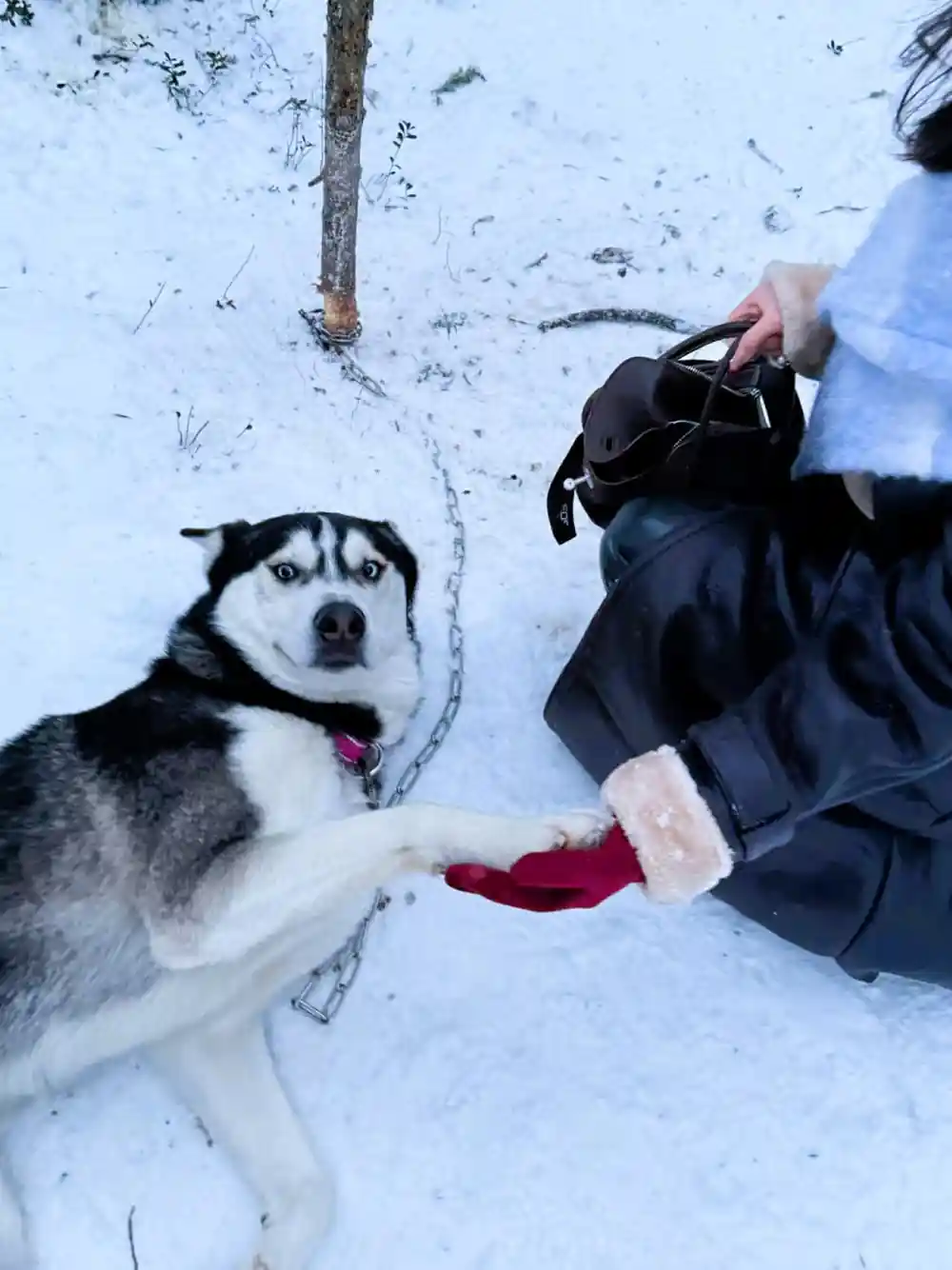
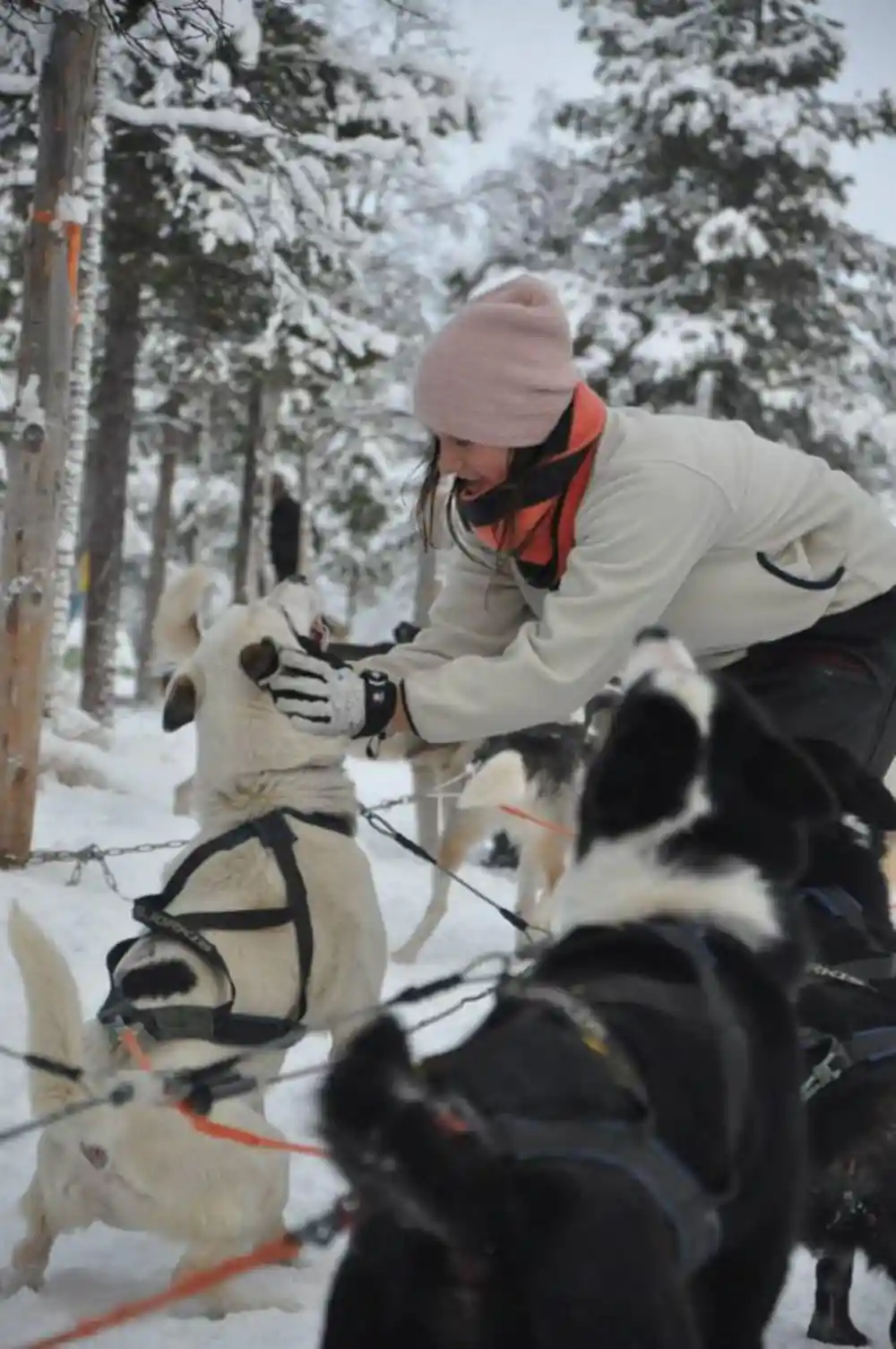
Puppies are robust at four months and they are still puppies. The rules are the ordinary ones and worth saying out loud to a child before going in: sit rather than stand, let the puppy come to you, support the body when you pick one up, and put it down when it wants down.
The one thing worth watching is enthusiasm rather than roughness. A child who is thrilled tends to squeeze, and a puppy that is being squeezed will wriggle rather than complain. The handlers watch for exactly this and will say so kindly.
Wash your hands afterwards, which is sensible around any animal at all and is somehow forgotten far more often in a kennel than it ever is on a farm or in a petting zoo.
What a no-kill kennel is committing to
The operator states a no-kill policy, and it is worth understanding what that claim is actually about. It is not primarily about puppies. It is about the other end of a working life.
A sled dog runs for a limited number of seasons and then does not. In an operation that treats dogs as equipment, that is a problem to be disposed of. A no-kill commitment says instead that a retired dog stays, is kept, and is rehomed rather than discarded, which means feeding animals that no longer earn anything.
It is the single most useful question a visitor can ask at any husky kennel anywhere, and the answer tells you a great deal in one sentence. Ask what happens to the dogs when they stop running.
The litter is part of the booking, not an extra
from US$173Reserve now & pay later